


 173 / 336

[
] 173
L
egal
F
ramework
at
the
N
ational
/I
nternational
L
evel
change at the national level – is to strengthen the governance of
waters crossing sovereign borders. The task is formidable. Of the
263 transboundary river basins and 200 or more transboundary
aquifers, only around 40 per cent have water sharing agreements
in place. These shared resources directly provide water for almost
half of the world’s population within 145 countries, and indirectly
benefit others through the goods and services produced therein.
Effective transboundary water governance arrangements provide
an important basis by which to maintain peace and security,
foster sustainable development and respond to the likely impacts
of climate change. However, major challenges remain because, as
UN-Water observes, “existing agreements are sometimes not suffi-
ciently effective to promote integrated water resources management
due to problems at the national and local levels.”
In the case of transboundary water, while there are still many chal-
lenges ahead, it is important to recognize that significant progress has
also been made. At the global level, the Convention on the Law of the
Non-navigational Uses of International Watercourses was adopted by
the United Nations General Assembly in 1997, and will soon enter into
force. This global framework instrument sets out the main substan-
tive and procedural legal norms for ensuring that transboundary
waters are shared in an equitable and reasonable manner. A further
framework instrument of note is the 1992 United Nations Economic
Commission for Europe Convention on the Protection and Use of
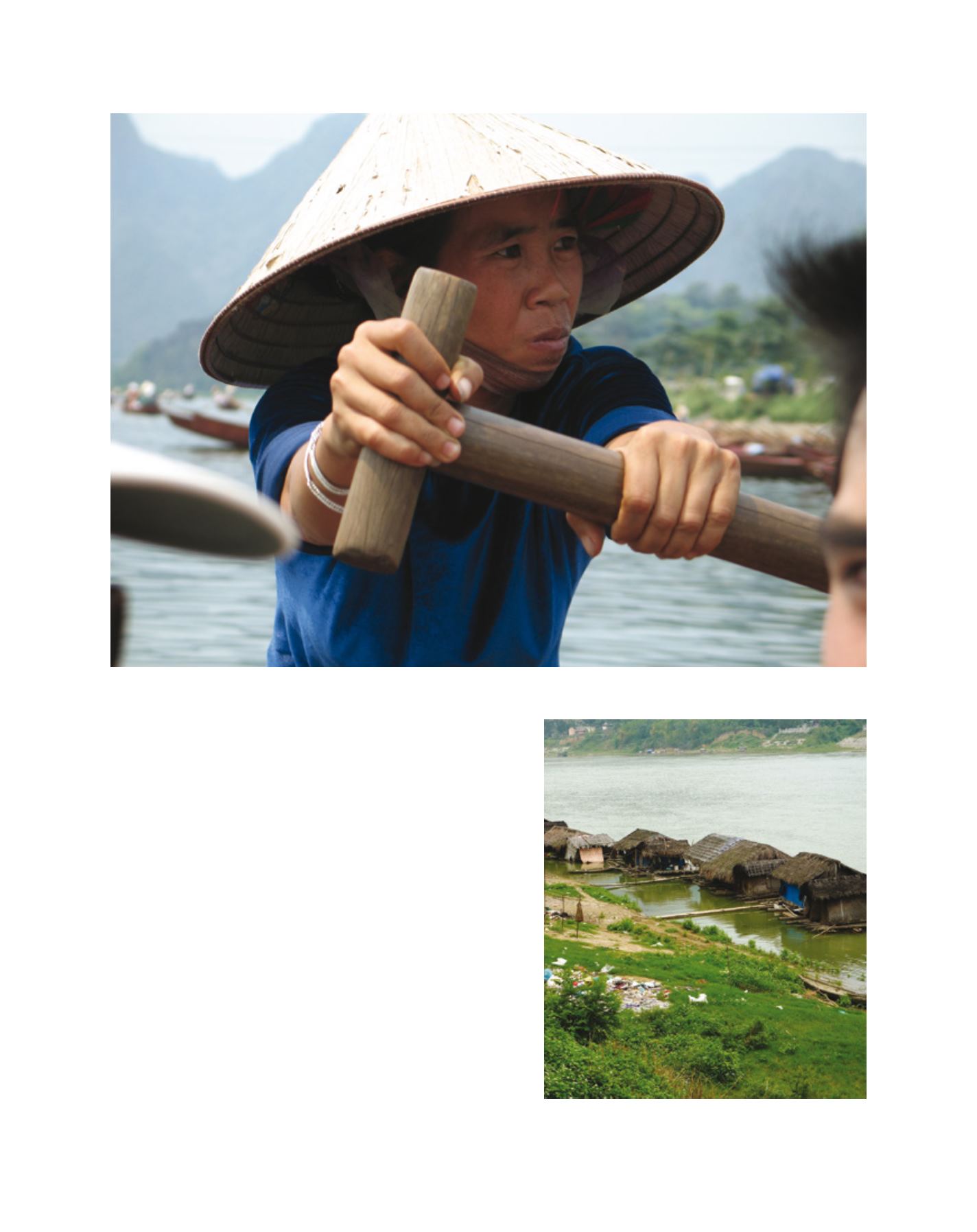
River Dwellings on the Red River, Viet Nam. Strengthening the
governance of transboundary waters is a major challenge
Image: G. Gooch
A woman boat rower on the Day River, Viet Nam. Water management should address the activities and involvement of local communities
Image: G. Gooch