


 4 / 168


Foreword
[
]4
MARGARETA WAHLSTRöM, SPECIAL REPRESENTATIVE OF
THE SECRETARY-GENERAL FOR DISASTER RISK REDUCTION (SRSG)
In recent decades, there has been a steady rise in the number of disasters and of people affected by them. Recent events in Haiti,
New Zealand and Japan confirm the current trend that has seen the economic cost of disasters rising 14-fold since the 1950s.
Small countries are particularly vulnerable, as disasters have significant impacts on GDP and other macroeconomic factors.
The growth of populations and assets at risk, and the projected increases in extreme events due to climate change, imply that
costs will continue to climb.
There are many tools and techniques available to reduce the risk of disasters. However, most Governments and local
authorities are faced with difficult decisions regarding investment in water management, infrastructure, hazard early warning
systems and control of building design, construction and maintenance.
Anecdotal evidence has long suggested that projects to reduce disaster risks have a high ratio of benefits to costs. Landmark
studies have confirmed this, making compelling cases for the economic rationale behind this type of investment. The recent
report by the United Nations and the World Bank, ‘Natural Hazards, UnNatural Disasters’ substantiates the fact that, faced with
complex choices and competing priorities, Governments and local authorities are not sufficiently equipped for effective spending
to reduce risk from natural hazards. Cost-benefit analysis, an essential tool for prioritizing spending, also remains underused.
As a result, at the national and local levels, disaster risk reduction is often perceived as a concept rather than an
investment. There remains little recognition in the ranking of priorities for governments and the effectiveness of different
types of spending and regulatory mechanisms are insufficiently understood.
Fortunately, the
Hyogo Framework for Action 2005-2015: Building the resilience of nations and communities to disasters
provides a comprehensive global agenda for the reduction of disaster losses and disaster risks. It has been endorsed by the
General Assembly and widely adopted by governments, organizations and civil society as the principal guide for policies and
programmes to reduce disaster risks.
As a multi-stakeholder, UN-based, international mechanism, the ISDR system enables Governments, mayors and other
decision makers to take action towards disaster risk reduction and to implement the Hyogo Framework. Its principal forum
is the Global Platform for Disaster Risk Reduction, which brings together Governments, UN and civil society organizations to
review progress, advocate actions, and guide future directions and coordination.
Other relevant activities by the ISDR system and secretariat include the preparation of the Global Assessment Report on
Disaster Risk Reduction, which provides in-depth analysis of progress by countries in the implementation of the Hyogo
Framework. In the latest iteration of the report, countries reviewed progress on the levels and types of national investments
in disaster risk reduction. A similar process is being initiated to allow local authorities to monitor the effectiveness of their
spending to reduce natural hazard risk.
The publication of
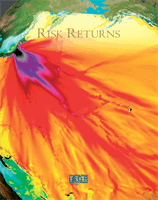
Risk Returns
is therefore a timely compilation of experiences and practices from ISDR partners. At a
time when the synergies between the issues of disaster risk reduction and climate change are becoming increasingly relevant,
understanding how to invest effectively to reduce disaster risk and facilitate climate change adaptation could lead to a
substantial reduction in losses of the social, economic and environmental assets of communities and countries.
Margareta Wahlström
Special Representative of the Secretary-General
for Disaster Risk Reduction (SRSG)