


 3 / 208


Foreword
[
]3
Sustainable development meets the needs of people and the planet today without compromising the ability of future
generations to meet their own needs. Seen as the guiding principle for long-term global development, sustainable
development consists of three pillars: economic development, social development and environmental protection.
At the United Nations Conference on Sustainable Development (Rio+20), world leaders, along with thousands of
participants from governments, the private sector, non-governmental organizations and other groups, will come together
to shape how we can reduce poverty, advance social equity and ensure environmental protection on an ever more
crowded planet.
The Conference, which will take place in Brazil from 20-22 June 2012, marks the twentieth anniversary of the 1992
United Nations Conference on Environment and Development in Rio de Janeiro and the tenth anniversary of the 2002
World Summit on Sustainable Development in Johannesburg.
Rio+20 is envisaged as a Conference at the highest possible level, including heads of state and government or other
representatives, and will result in a focused political document. It will focus on the two themes of a green economy in
the context of sustainable development poverty eradication and the institutional framework for sustainable development.
The preparations for Rio+20 have highlighted in particular seven areas that need priority attention: decent jobs, energy,
sustainable cities, food security and sustainable agriculture, water, oceans and disaster readiness.
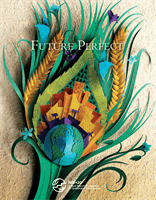
The publication of
Future Perfect
is intended to raise awareness about sustainable development and inspire all
stakeholders committed to the success of and follow-up to Rio+20. The stories that comprise the publication come from
governments, major groups of society and other stakeholders. The many contributions provide a mosaic of views about
the future we want.