


 7 / 196

[
]5
Acknowledgements . . . . . . . . . . . . . . . . . . . . . . . . . . . . . . . . . . . . . . . . . .
3
Foreword by Walter J. Ammann, Chairman of IDRC Davos 2008
and President of Global Risk Forum (GRF) Davos . . . . . . . . . . . . . . . . . .
4
Statement from Sálvano Briceño, Director, Secretariat of the
International Strategy for Disaster Reduction . . . . . . . . . . . . . . . . . . . . .
8
Statement from Badaoui Rouhban, Chief, Section for Disaster Reduction,
UNESCO, Paris . . . . . . . . . . . . . . . . . . . . . . . . . . . . . . . . . . . . . . . . . . . .
9
Statement from Achim Steiner, Executive Director of the
United Nations Environment Programme . . . . . . . . . . . . . . . . . . . . . . .
10
Statement from Martin Dahinden, Director General of the
Swiss Agency for Development and Cooperation . . . . . . . . . . . . . . . . . .
11
Statement from Walter J. Ammann, Chairman of IDRC Davos 2008
and President of Global Risk Forum (GRF) Davos . . . . . . . . . . . . . . . . .
12
Today’s education for tomorrow’s disaster risk reduction . . . . . . . .14
Sálvano Briceño, Director, Secretariat of the United Nations International
Strategy for Disaster Reduction
Ecosystems and community resilience:
the co-benefits of partnerships . . . . . . . . . . . . . . . . . . . . . . . . . . . .18
Glenn Dolcemascolo, Jen Stephens and Andrew Morton, UNEP; Carolin
Schaerpf, United Nations International Strategy for Disaster Reduction
Preparing now – international cooperation for future resilience . . .22
Tony Pearce, Director General, Emergency Management Australia,
Attorney-General’s Department, Australian Government
Rising to the disaster-resilience challenge . . . . . . . . . . . . . . . . . . . .27
David Applegate, National Science and Technology Council’s Subcommittee
on Disaster Reduction, USA
US Grand Challenges for Disaster Reduction: interagency priority
actions for human and ecosystem health hazards . . . . . . . . . . . . . .29
Nathalie Valette-Silver, National Oceanic and Atmospheric Administration,
National Ocean Service, and Josephine Malilay, Centers for Disease Control
and Prevention, National Center for Environmental Health; Human and
Ecosystem Health Working Group of the Subcommittee on Disaster
Reduction, USA
Rapidly increasing disaster risks demand innovative, evolutionary
disaster management technologies . . . . . . . . . . . . . . . . . . . . . . . . .33
Ray Shirkhodai and Joseph Bean, Pacific Disaster Center
Restoration programme from giant earthquakes and tsunamis . . . . .37
Prof. Teruyuki Kato and Prof. Kenji Satake, Earthquake Research Institute,
The University of Tokyo; Prof. Fumihiko Imamura, Graduate School of
Engineering, Tohoku University
Understanding communities’ needs for information and education . . .41
Alison Cottrell and David King, Centre for Disaster Studies, James Cook
University, Australia
All natural hazards risk awareness in Australia:
examples of community engagement . . . . . . . . . . . . . . . . . . . . . . . .45
Dr Ray Canterford, Jim Davidson, Jim Elliott, Dr Graham Mills, John
Nairn and Alan Sharp, Australian Bureau of Meteorology
Safety at sea – building resilience and capacities of
small-scale fishers in South Asia . . . . . . . . . . . . . . . . . . . . . . . . . . .49
Yugraj Singh Yadava, Director, Bay of Bengal Programme
Inter-Governmental Organisation
Working with communities to Get Ready and Get Thru . . . . . . . . .54
John Hamilton, Director, Ministry of Civil Defence & Emergency
Management, New Zealand
Building inherent resilience . . . . . . . . . . . . . . . . . . . . . . . . . . . . . . .58
Manu Gupta, Sustainable Environment and Ecological Development
Society, India
New forms of private-public risk transfer:
making societies more resilient . . . . . . . . . . . . . . . . . . . . . . . . . . . .62
Reto Schnarwiler, Head, Business Development Governments, Swiss Re
A model for learnership training programmes in disaster
management at higher education level: a South African case study . . .65
A.J. Jordaan, University of the Free State; D. Pillay, Council for Scientific
and Industrial Research, and J. Madiba, Department of Science and
Technology, South Africa
Supporting community resilience – the approach of the
International Federation of Red Cross and Red Crescent Societies . .68
Mohammed Omer Mukhier and Kenneth Westgate, International
Federation of Red Cross and Red Crescent Societies
Climate change and disaster related risks to
human health in South Asia . . . . . . . . . . . . . . . . . . . . . . . . . . . . . .72
C. Sharma, M.K. Tiwari, S.C. Garg and Vikram Kumar, National Physical
Laboratory, New Delhi, India
Contents
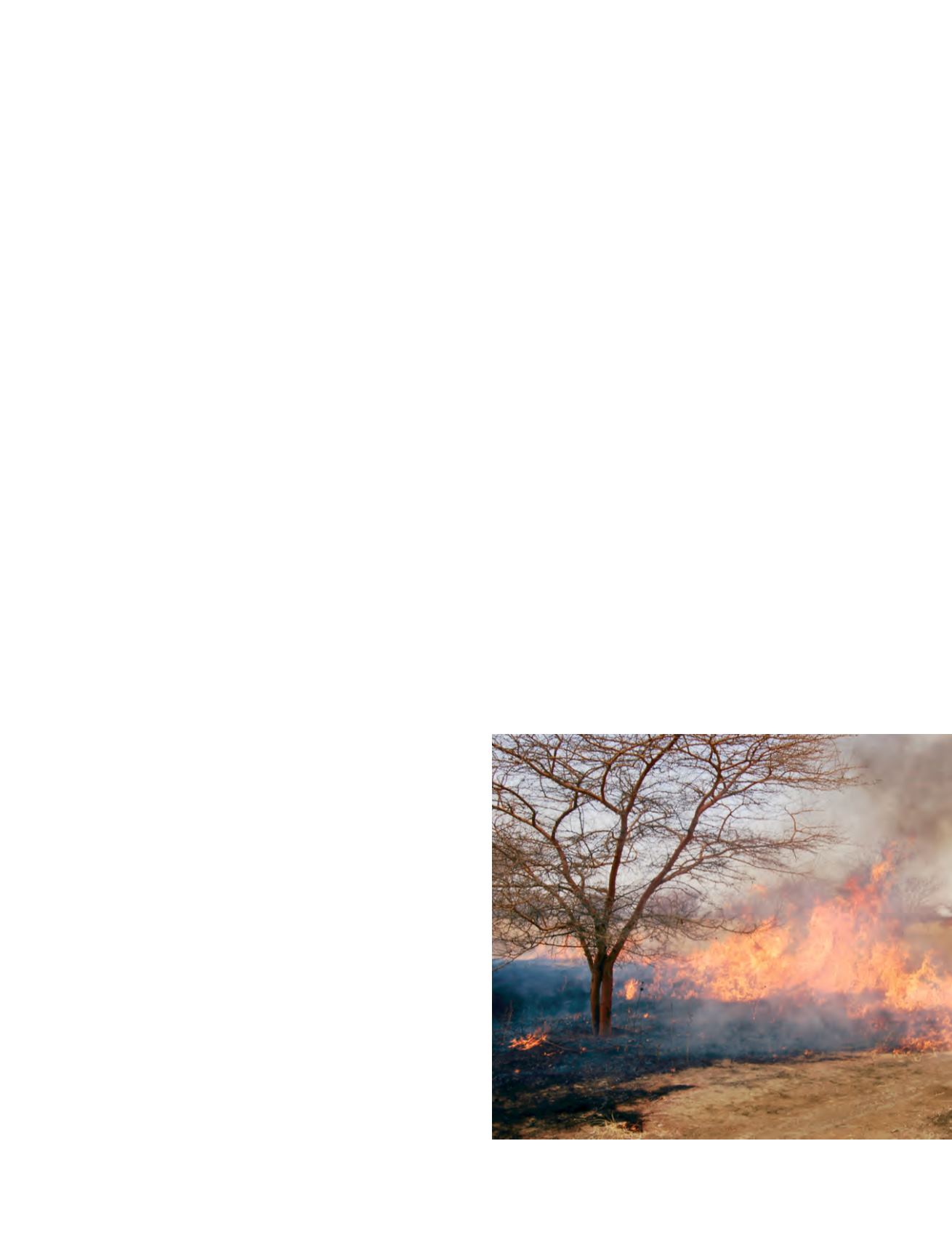
Image: UNEP