



 62 / 336

[
] 62
T
ransboundary
W
ater
M
anagement
In the 1990s, environmental degradation saw a
1,000 km-long toxic blue-green algae bloom in the
Darling River system and increasing algal blooms
throughout the whole Murray-Darling Basin.
Increasing water demand was also contributing
to rising water salinity, declining biodiversity and
less frequent beneficial flooding in floodplains and
surrounding streams. Recognizing this, govern-
ing jurisdictions agreed to cap their allocations for
consumptive use from the system at 1994 levels. The
cap meant that new surface water demand could only
be satisfied through trading. This important policy
decision recognized that the limits of sustainability
had been overreached.
This period was also marked by significant micro-
economic reform in Australia and water became part of
that broader appetite for national change. In 1994, all
governments committed to the Council of Australian
Governments Water Reform Framework, which was
designed to make water management more environ-
mentally sustainable and economically efficient. The
key elements of subsequent reforms were founded
in that agreement. They included recognition of the
water needs of the environment, handing irrigation
systems over to irrigators to manage, tradable water
rights, and the separation of the regulatory, policy and
service delivery functions of water authorities.
In the 1990s the nation began to feel the effects of
what would become the 12-year-long ‘Millennium’
drought, triggering a renewal of focus on effective
management of Australia’s resources. In some commu-
nities, the drought came close to putting water for basic
Australia, like other countries, faces increasing pressures for water
to be made available for productive agriculture, economic growth,
the growing needs of cities and the environment. Not only are the
demands on water resources escalating, but a changing climate
means that in many regions there is less water to go around.
Managing water and supply security in Australia is a shared
challenge. It has many players, very different local circumstances
and no single government agency has sole authority.
Unlike international transboundary water issues that focus on
intercountry negotiations, Australia’s transboundary water issues
are domestic – but no less complex. Under Australian water laws
it is not the federal government that determines the conditions on
which water is available for use, but the six state and two territory
governments. Local government also has an important role in water
delivery, stormwater and drainage, which increasingly feature in
urban supply and demand management.
Yet there are national imperatives for water management. Most
notably in Australia, these have been to share physical water
resources among states, to protect nationally significant environ-
mental assets and to foster interstate water markets. Attempts to
achieve these goals have been complicated by different legislative
and administrative arrangements between states, and by the different
character of hydrological systems and water-dependent ecosystems
both within and between states.
Following the federation of Australia’s states in 1901, initial
steps towards intergovernmental cooperation on water resources
focused on developing water supply systems and increasing water
storage capacity. By the 1980s, the limitations of this approach were
being observed in many parts of rural Australia – with diminishing
returns on subsidized infrastructure, rapidly rising water extrac-
tion challenging the capacity of water systems, and increasing and
obvious environmental degradation.
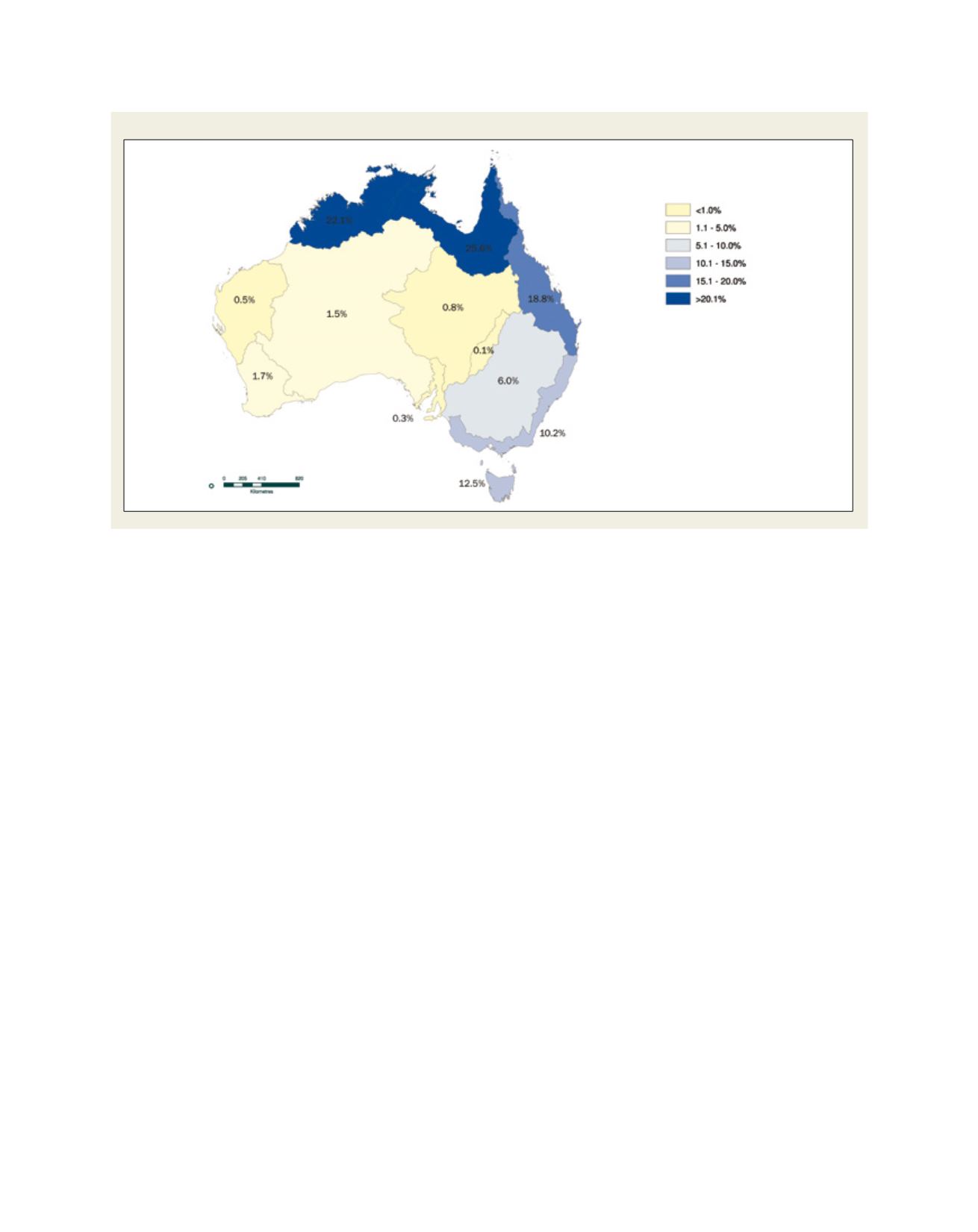
Distribution of Australia’s mean annual run-off
Source: Water and the Australian Economy, April 1999