



 101 / 218

[
] 101
I
N
1903 W
ILBUR AND
O
RVILLE
W
RIGHT
, brothers with a
passion for aeronautics, wrote to the weather bureau at
Kitty Hawk, North Carolina, to ask for guidance on winds
and conditions at the site that they had chosen for the first
powered flight. It was the first step in a long-standing rela-
tionship between meteorology and aviation.
Aviation was perhaps the first industry with a formal deci-
sion-making process based on weather information. The
effective decisions of air crews, operations control and dispatch
departments of airlines all use current and forecast weather
conditions to calculate the required amount of fuel, the neces-
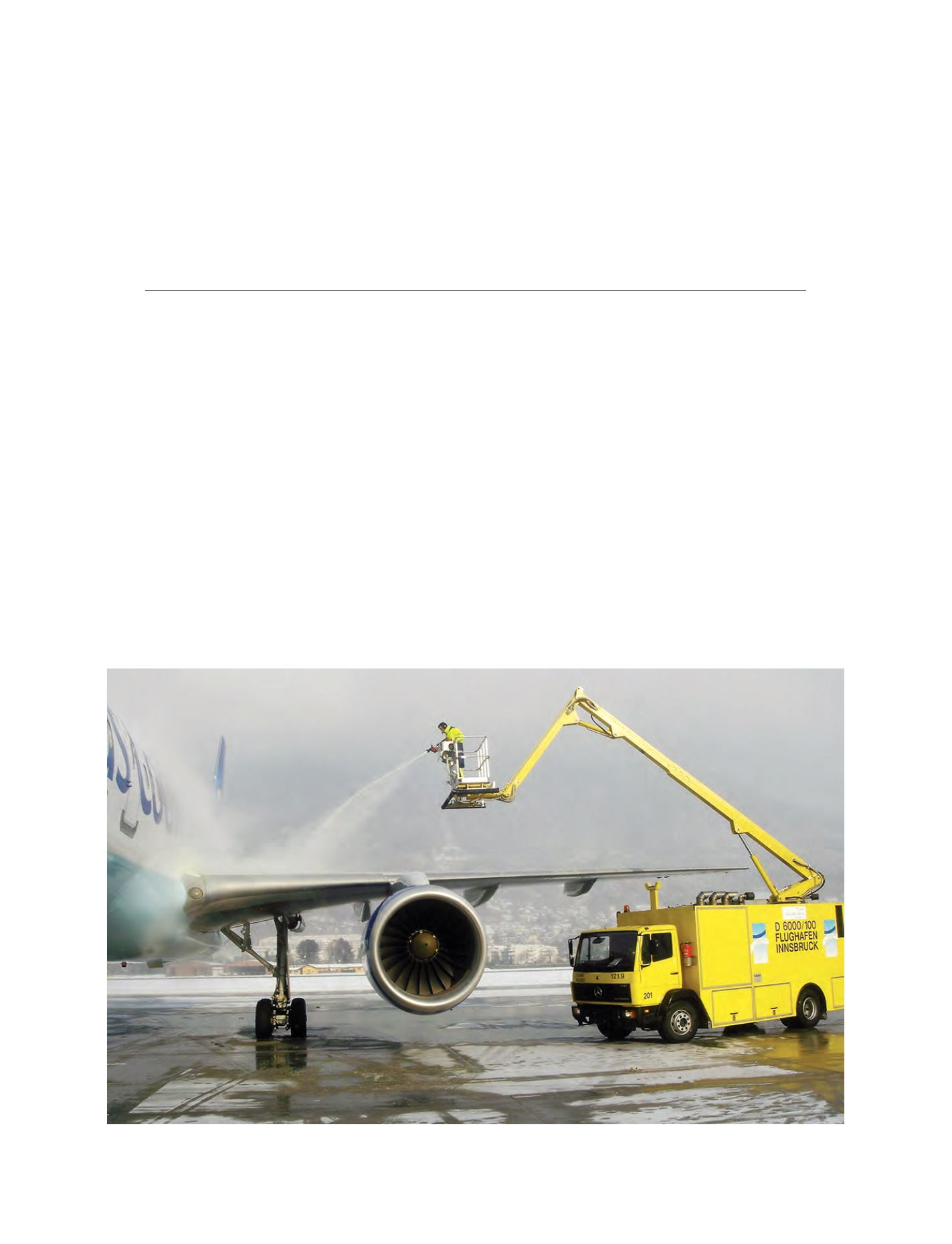
sary safety measures such as ground de-icing, and even the
appropriate time to serve meals considering predicted periods
of turbulence.
Aviation safety and weather information
Aviation has come a long way since the days of spruce-built
single-engine flying machines, but to this day a significant
proportion of aircraft accidents, particularly in general avia-
tion, involve weather conditions as a major contributing
factor in the causal chain. Even major jet-propelled airlin-
ers are still at risk from phenomena such as thunderstorms
and hail; wind shear and turbulence, severe in-flight or
ground icing (the last crash landing of a jet airliner due to
icing happened only two years ago). Even though complete
losses of aircraft have become very rare due to weather causes
alone, hundreds of passengers suffer injuries during inci-
dents of severe turbulence, particularly if they ignore the
recommendation to wear a seatbelt at all times. Also the
Aviation meteorological services:
pioneers in supporting decision making for
safe, efficient and economic air transport
Dr Herbert Puempel, World Meteorological Organization Secretariat
The de-icing of an aircraft at Innsbruck Airport, Austria
Photo: Armin Stotter, Head of Passenger Services, Tiroler Flugahfen Ges., Innsbruck, Austria