



 99 / 218

[
] 99
E
NERGY PRODUCTION IN
Iceland is primarily from renew-
able sources. The primary energy supply is made up of
55 per cent geothermal, 16 per cent hydropower and 29
per cent fossil fuels. About 81 per cent of the production of
electricity is from hydropower. Hydropower is highly depen-
dent on runoff from ice caps and glaciers, which cover about
11 per cent of Iceland and receive about 20 per cent of the
precipitation that falls on the country. They store, in the form
of ice, the equivalent of 15–20 years of annual average precip-
itation over the whole country. Substantial changes in the
volume of glacier ice may, therefore, lead to large changes in the
hydrology of glacial rivers, with important implications for the
hydropower industry and other water users. Glacial runoff is
particularly important for the hydropower industry because
hydropower plants use runoff from highland areas, where glac-
iers tend to be located.
The consequences of climate change for the Nordic Energy
sector, in particular for the use of renewable energy sources, have
been investigated in several collaborative Nordic research
projects, the most recent of which is Climate and Energy (CE),
which was financed by Nordic Energy Research under the Nordic
Council of Ministers. The main national hydrological and mete-
orological institutes in the Nordic countries have in these
projects joined forces with the energy industry to assess the
impact of climate change on the energy system and to advise the
industry regarding adaptation to long term changes in climate
and water resources. This paper describes the main results of
glaciological investigations within the CE project with empha-
sis on implications for the hydropower industry in Iceland.
1
Role of glaciers
The effect of climate warming on glacial runoff includes an initial
increase in total runoff and peak flows, and a considerable ampli-
fication in the diurnal runoff oscillation, followed by significantly
reduced runoff totals and diurnal amplitudes as the glaciers
retreat. In addition to the direct effect on runoff caused by glacier
mass balance changes due to variations in climate, feedback
effects caused by glacier dynamics may lead to migration of ice
divides, sub glacial watersheds and changes in sub glacial water
courses. This can in some cases cause very large relative changes
in the discharge of rivers that comes from glacier margins, with
implications for bridges, roads and other infrastructure.
The effect of climate change on
glaciers and hydropower in Iceland
Tómas Jóhannesson, Icelandic Meteorological Office
Árni Snorrason, Hydrological Service Division, National Energy Authority
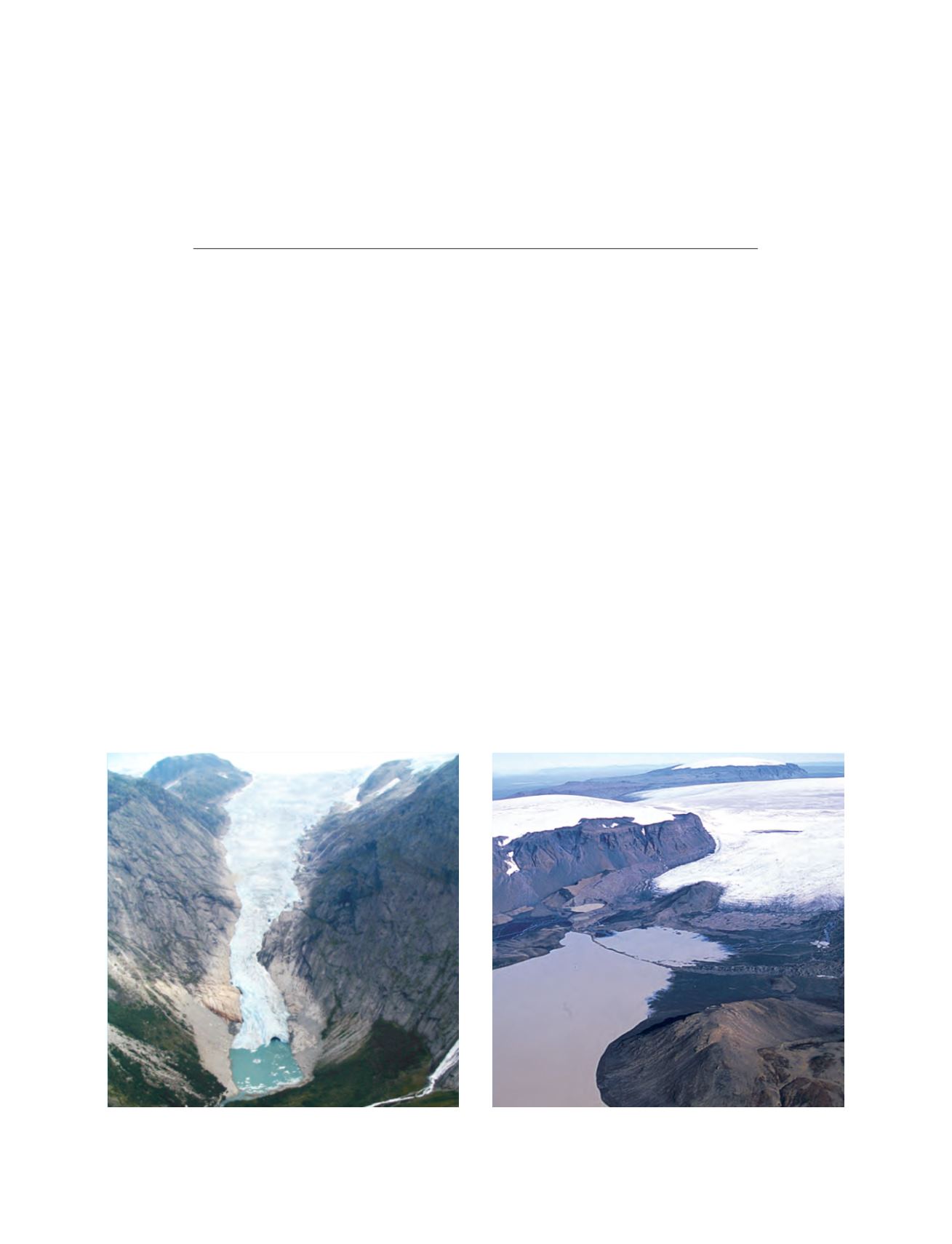
The forefields of Brikdalsbreen in western Norway (left) and an outlet glacier on the south side of the Langjökull ice cap in western Iceland (right)
show clear signs of past changes in the position of the glacier margin
Photo: Kjøllmoen, 2006
Photo: Oddur Sigurðsson, 2003