



 94 / 218

[
] 94
E
NERGY IS A
global trillion-dollar sector that includes both
non-renewable (oil, gas, coal) and renewable
(hydropower, solar, wind, geothermal, biomass)
resources. It covers a wide range of activities, from energy
resources exploration, extraction, storage and transport, to
electricity production, transport and distribution.
1
It is also
characterized by industrial competitiveness and its influence on
political, economic and strategic decisions. An optimal and
cost effective management of the energy sector is crucial for
national and global economies and development.
Between 1973 and 2004, global energy consumption
increased by 66 per cent and there has been a three-fold multi-
plication of the generation of electricity.
2
Over the next 30 years,
global electricity demand is expected to double, and it is antic-
ipated that the global primary demand for energy will expand
by about 60 per cent. Two-thirds of this increase will concern
the developing world, mostly India and China. Fossil fuels will
continue to dominate the global energy mix, raising questions
about the sustainability of the current energy system.
3
The energy sector is highly dependent on climate conditions
and water resources, whatever the particular field of activity,
means of production or timescale. Moreover, the rising use of
renewable energy, while desirable to mitigate the effects of
climate change, will make energy production and distribution
increasingly dependent on climate conditions.
4
Weather, climate and water information are very important
in short- and medium-term energy management processes.
Extreme events such as heat or cold waves, windstorms or
floods can have major impacts on production units and elec-
trical grids, but ‘normal’ weather variations also have an impact
on load level, production capacity, transport and distribution.
For example, a temperature anomaly of minus one degree
Celsius in winter in France corresponds to an increase in
production of 1,500 megawatts, equivalent to the capacity of
Weather, climate and water information
and the energy sector
Dr Laurent Dubus, EDF R&D
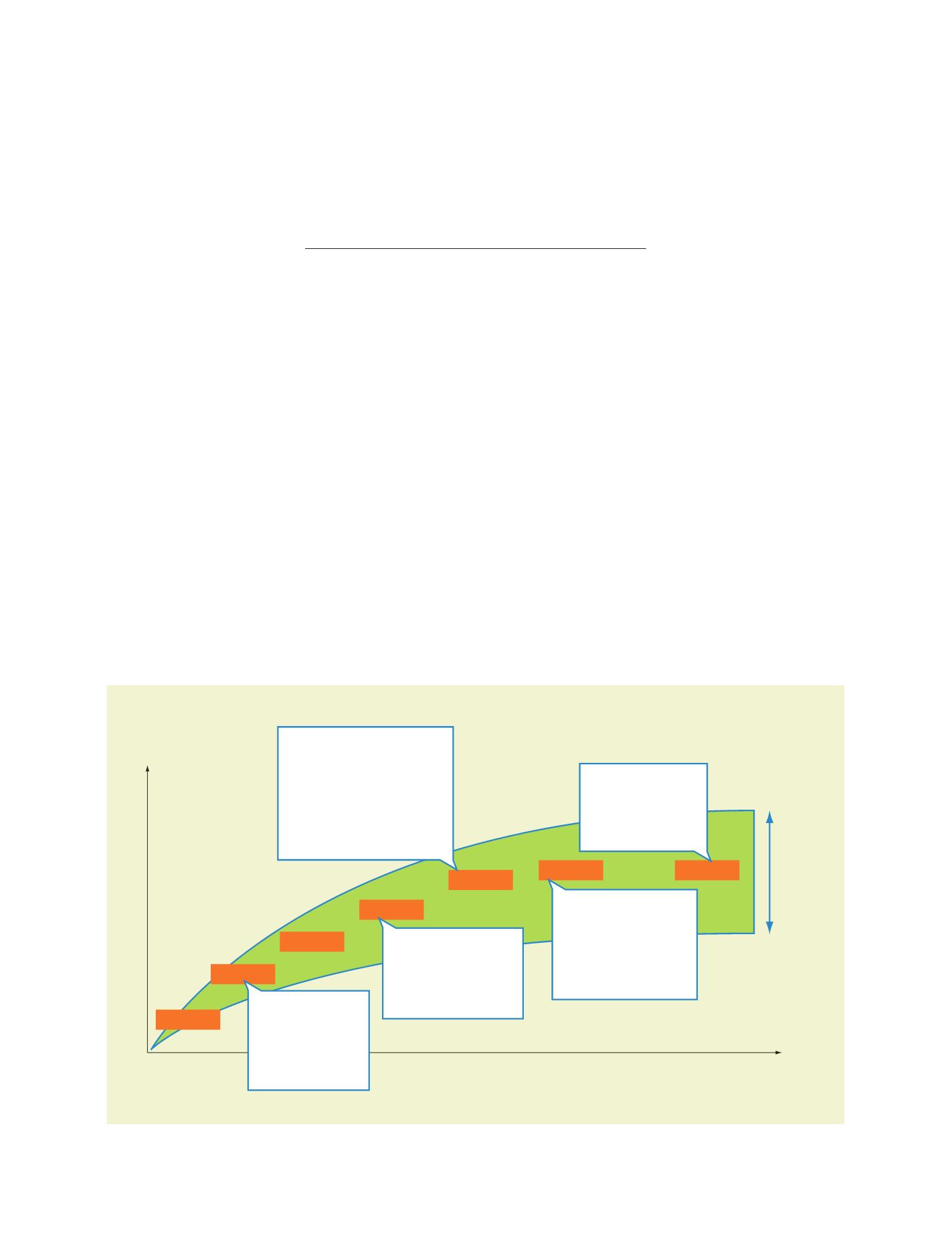
Energy operations aided by reductions in environmental forecast uncertainty
Source: Courtesy of M.G. Altalo, Science Applications International Corp.
Forecast lead time
Forecast uncertainty
Minutes
6-10 days
8-14 days
Months
Seasons
Years
Hours
• Tariff calling
• Utility grid management
• Wind generation dispatch
• Hydro supply management
• Ship/tanker routing
• Refining operations management
• Pipeline laying logistics
• Customer billing service
• Pump load forecasting
• Fuel supply forecasting
• Energy switching strategy
• Distributed generat. management
• Maintenance scheduling
• Sequestration timing
• Inventory management
• Pipeline throughput management
• Sales/earnings forecasting
• Energy storage replenishment strategies
•‘Flexible’ energy production and delivery
• Storage requirements needs assessment
• Storage logistics planning
• Regional energy management planning
• Stockpile planning
• Seasonal demand forecasts
• Delivery rate setting
• Hydro regional water management strategy
• Compliance projections estimates
• Infrastructure design
• Regional infrastructure plan
• New storage capacity plans
• Mitigation strategy design
• Plant/infrastructure siting
• Energy grid adaptation plans
• Energy policy setting
• Load balancing
• Electricity pricing/trading
• Outage/surge management
• ‘Intelligent’ infrastructure
• ‘Neck’ metering
• Dispatch management
• Hazard response
• Platform operations
Forecast
uncertainty
Critical forecast periods
Sub day, 2-4 day, 90 day