


 116 / 218

[
] 116
In every one of the 1.4 million square feet [or 150,000 square
metres] of building projects that the enterprise is executing
today, BCIL has looked at implementation that pursues a four-
pronged strategy for bringing natural resource efficiency:
• Environmental compatibility
• Economic efficiency
• Endogeneity
• Equity.
These are addressed while focusing on two primary ideas:
1. How to improve transport energy within our campus areas
2. Building efficiencies in home energy use – this covers better
washing machines, refrigerators, air-conditioners and water
coolers; smarter lighting systems; efficient cooking systems
and water heating systems.
BCIL’s adherence to these values, as a profit-making company,
is non negotiable. BCIL is about the human spirit; our mission
statement is merely a hollow catchphrase. As an organization,
we have pushed the boundaries of economic possibility, always
knowing that we will not bend to curtail that spirit or the soul
of our company.
With this bedrock foundation, we have created an entirely
new business model in India, which offers us the opportunity
to grow exponentially as an organization. If the past five years
has shown a cumulative growth rate of a staggering 5,000 per
cent – from USD500,000 to USD25 million – the next three
years (financial years 2007-2010) will take us to a top line
revenue, on projects that are already committed to being
executed, to the region of USD150 million. The bulk of the
revenues today arise out of sustainable buildings, while our
businesses in areas of sustainable built environment – water
supply to the urban and rural poor; organic farm products that
enhance growth potential and improve soils; and afforestation
with corporate partnerships – are all well on the way to becom-
ing robust revenue models over the coming years.
While many analysts have successfully outlined contours of
such strategies for the building industry as a view from the sky,
little is available in the world from companies that have success-
fully created projects and management systems that recognize
these imperatives at the stages of design, architecture, and
further down into the various components of execution.
There is either a fixed mindset that refuses to comprehend
the compatibilities that lie between successful business models
and ecological compatibility, or there is an unwillingness to
invest in innovation and incubation that can show the way for
the future. The idea in itself is not new, of course. Inventors
like Thomas Alva Edison in the late nineteenth century regret-
ted their inability, or lack of time to work on technological
directions for such a future: “We’re like tenant farmers,” said
Edison, “chopping down the fence around our house for fuel
when we should be using nature’s inexhaustible sources of
energy – the sun, wind and tide.” With breathtaking foresight,
Edison added, “I’d put my money on solar energy. What a
source of power! I hope we don’t have to wait until coal and oil
run out before we tackle that. I wish I had more years left.”
Case study: T-Zed
The T-Zed campus is the first of its kind. Located at Airport
Whitefield Road, Bangalore, this five-acre site comprises 95
homes built on the principles of sustainable resources.
Every aspect of T-Zed has been designed to conserve natural
resources and to have minimal impact on the environment. In
these homes, built-in, customized environment-friendly (brine-
based), zero electricity fridge-freezers, fully controlled
air-conditioning based 100 per cent on fresh air, and built-in
energy-efficient lights are among the features that help to bring
down energy consumption in the home while preserving
comfort levels and ensuring market value.
At another project of ours, BCIL Collective, we have devised
air conditioning systems that keep homes dust-free and cool
0
50
100
150
200
250
300
350
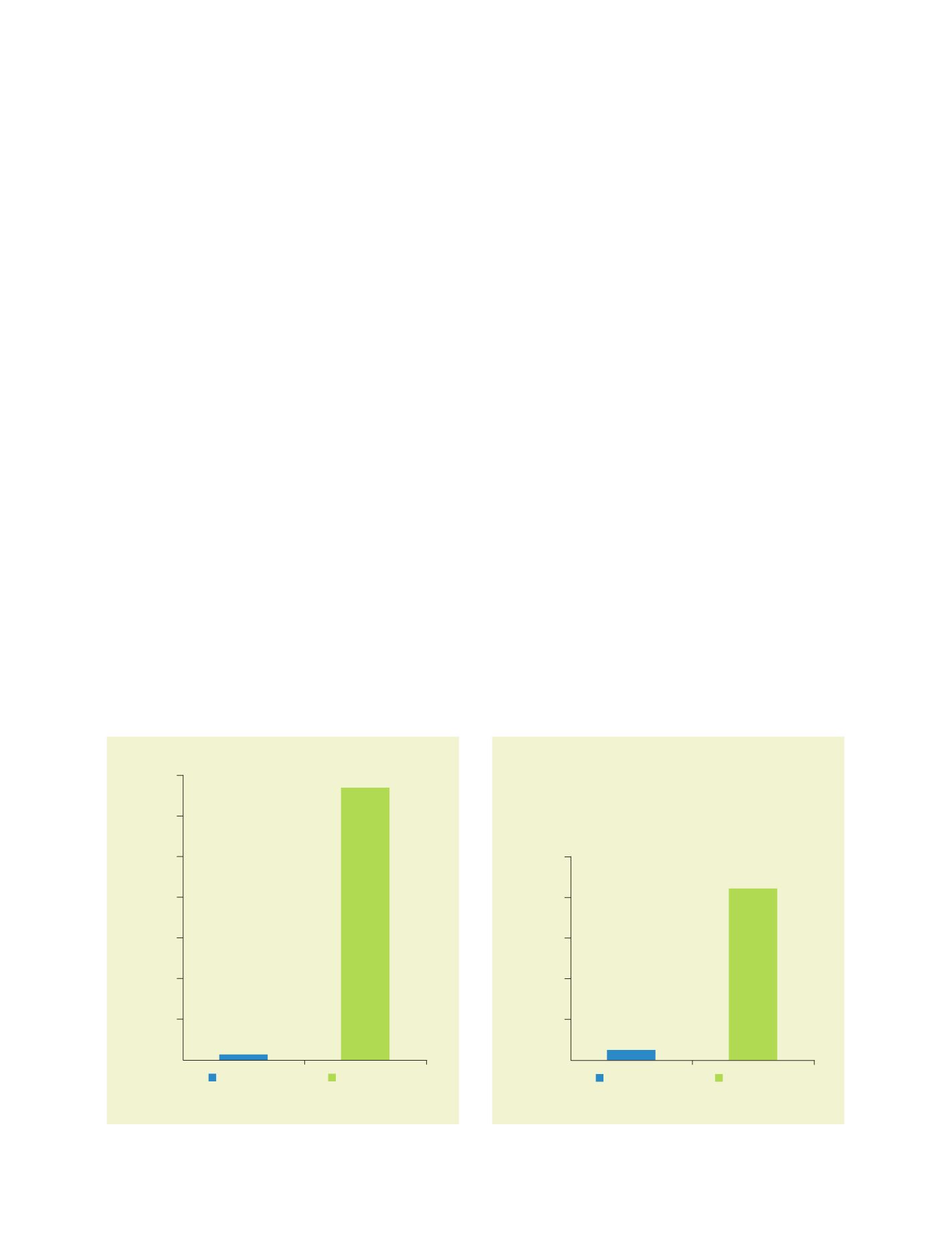
Zed solar
water heating
Conventional
hot water geysers
CO2 emissions – MT
1.71
337.32
Water heating
Street lights
Source: BCIL
0
5
10
15
20
25
Zed LED/CFL
street lights
Halogen lamps
CO2 emissions – MT
1.66
20.81
Source: BCIL