


 163 / 336

[
] 163
WaterCredit: solving the global water crisis
through community collaboration, government
engagement and economic stimulation
Gary White, CEO; Stephen Harris Jr, Grants Manager; and Rosemary Gudelj, Manager of Public Affairs,
Water.orgT
he global water, sanitation and hygiene (WASH) crisis is
acute. According to the Joint Monitoring Programme, at
least 11 per cent of the world’s population – 780 million
people – still lack access to improved drinking water and 37
per cent – 2.5 billion people – lack access to proper sanitation
facilities. Lack of WASH access constitutes a ‘silent emergency’
in which people are denied access to one of the most important
determinants of public health. The human toll of this global
challenge includes illness, reduced income for families and even
the death of an estimated three children every minute.
Diarrhoeal diseases kill more than 2 million people every year
and 5,000 children under the age of five a day. The World Health
Organization (WHO) estimates that other water-borne diseases
infect about 10 per cent of the population of the developing world,
causing malnutrition, anemia and stunted growth. Over and above
the severe loss of life, water- and sanitation-related diseases severely
constrain productivity and take a significant economic toll on
affected populations. WHO estimates that improved
water and sanitation services would yield avoided
health-related costs of US$7.3 billion per year, and
US$750 million from gained adult working days.
Although the world met the Millennium Development
Goal (MDG) target of halfing the proportion of people
without sustainable access to safe drinking water early
in 2012, water and sanitation access is not advancing
quickly enough to meet the needs of billions of people.
Though many issues contribute to this challenge, a
major bottleneck is simply lack of household finan-
cial liquidity. Globally, people are spending up to 20
per cent of their income on water because long-term,
sustainable solutions (such as household water connec-
tions or rainwater harvesting tanks) are not affordable
due to the up-front cost. However, the poor who are
classified as living in the ‘base of the pyramid’ (BOP)
are able to pay for these WASH products and services
F
inancing
C
ooperation
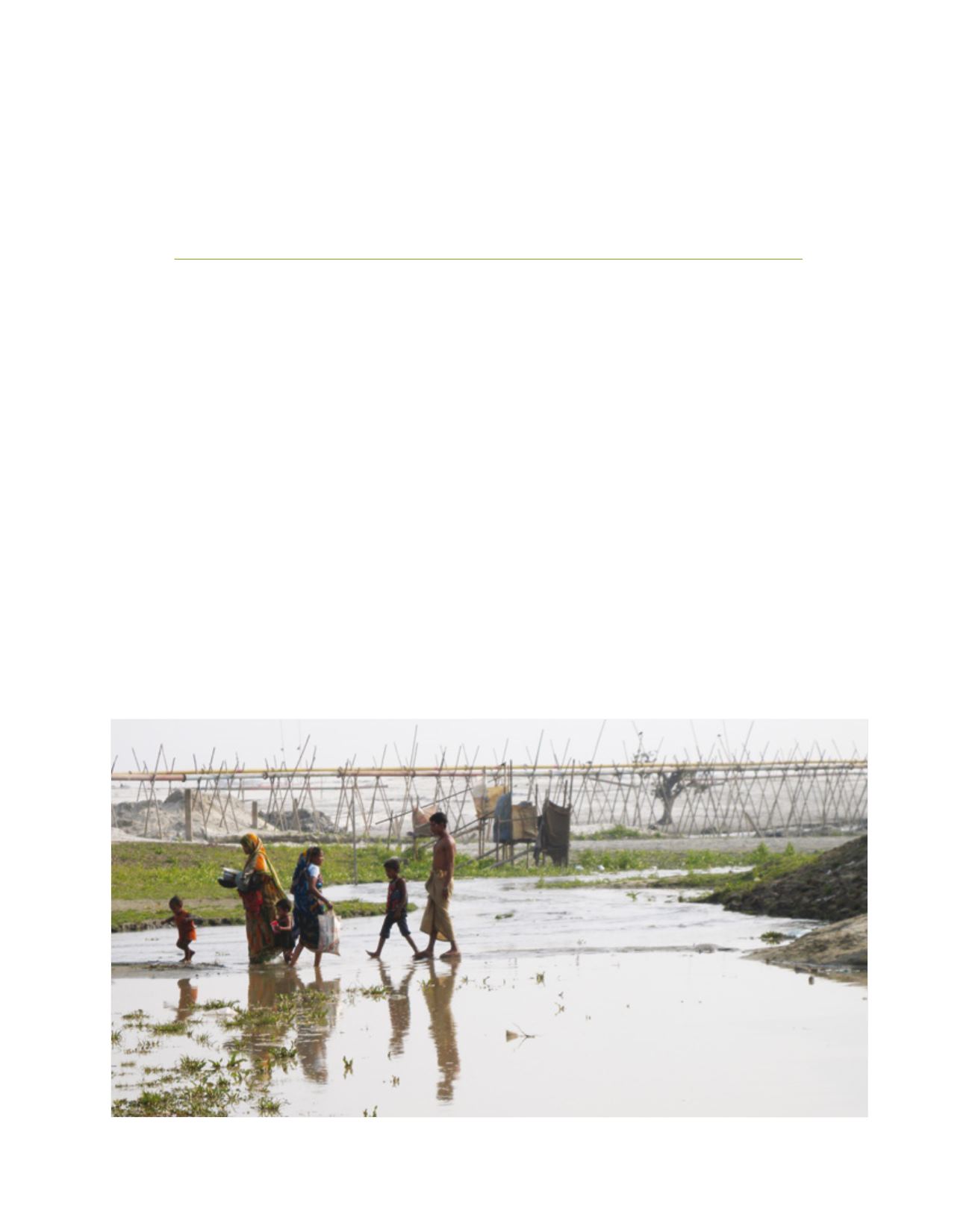
Unsanitary latrines hang over a flooded area in Dhaka
Image: Water.org