


 194 / 336

[
] 194
W
ater
C
ooperation
, S
ustainability
and
P
overty
E
radication
Shirakawa river and the Midorikawa river outside the city. Like
rice fields, the maintenance of watershed forests requires coopera-
tion among neighbouring municipalities. Having seen the serious
damage caused by the flood of the Shirakawa river in 1953, munici-
palities in the upper basin and those in the lower basin recognize
that maintaining forests is crucial for disaster and flood prevention,
and proactively work together for mutual benefit.
Groundwater conservation cannot be achieved only by increas-
ing recharge capacity. Kumamoto City is raising awareness among
its citizens to reduce water use in the city. With corporate efforts,
the groundwater pumping regulations imposed on major ground-
water users and the decline of agriculture, the overall groundwater
pumping has steadily decreased year by year since the 1980s.
Kumamoto City has carried out various initiatives to emphasize the
importance of saving water. At the beginning of 2008, the city designated
three months from July to September as the ‘Water Saving Months’,
disclosing the amount of daily water use per person and promoting the
use of water-saving devices. On 1 April 2012, local residents, the private
sector and the city government went above and beyond
their respective positions and came together to form a
new organization devoted to sustainable groundwater
management. With the Kumamoto Groundwater Council
as its parent organization, the Kumamoto Groundwater
Foundation was incorporated and established. The foun-
dation aims to harmonize the water usage practices of the
entire community by improving the maintenance, quality
and circulation of the local water supply.
The cost of dam construction and waterworks
(excluding maintenance) for 100,000 tons of river
water per day has been estimated at almost JPY65
billion (approximately US$7.7 billion). If Kumamoto
City had extracted water from rivers running through
the city, it would need to spend a considerable amount
more to remove sulphur from Mount Aso. The city is
taking advantage of the groundwater recharge system
to obtain good quality groundwater.
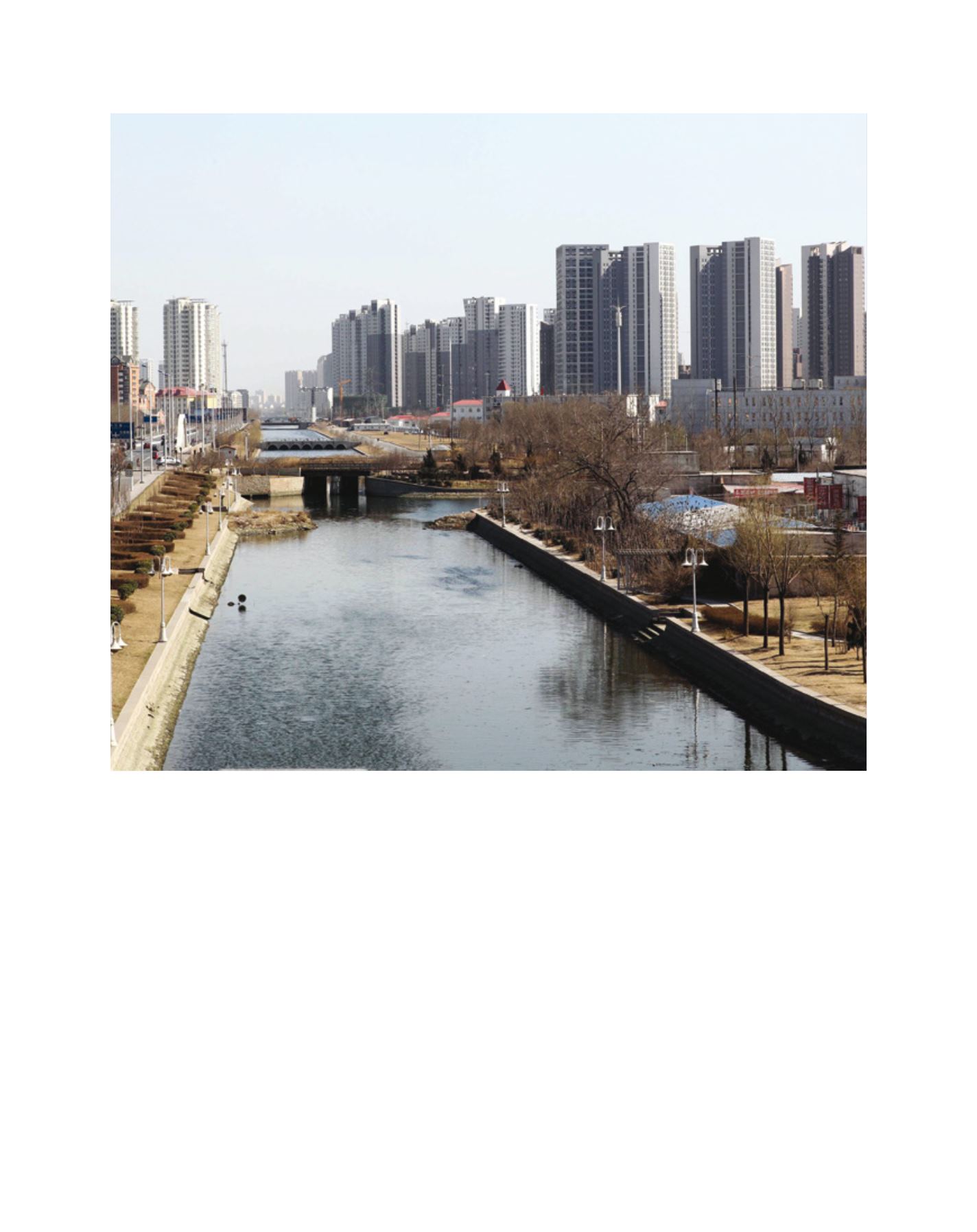
The relationship between water and cities is crucial, often leading to innovation in water management
Image: ©World Bank