


 78 / 336

[
] 78
T
ransboundary
W
ater
M
anagement
lower reaches of the system, many wetlands experi-
ence ‘man-made droughts’ in over 60 per cent of years
(compared to 5 per cent natural droughts pre-develop-
ment). Consequently, there is a reduced area of healthy
wetland, frequent algal blooms and (without flow trig-
gers for spawning) declining native fish numbers. The
removal of tree cover combined with irrigation led to
rising water tables, mobilizing yet more salt.
First steps towards wider cooperation
Developing environmental consciousness has been
spurred by periodic droughts. For example, in the 1980s
one such severe drought over the eastern half of the
continent (initiating dust storms, water restrictions and
horrific fires) resulted in economic loss of around $A3
billion. Accompanied by mounting evidence of decline,
this episode instigated many inquiries, reports and calls for
action. Essentially, a shared understanding developed that
consumption levels were more than the river system could
stand year-by-year; and there was a sufficiently compelling
case for wider cooperation for the greater good.
As a more holistic view developed of the intercon-
nectedness of all the water resources and the people
dependent upon them, the signatories to the then
Murray–Darling Basin Agreement began working
towards more effective, coordinated and equitable plan-
drought) can result in limited flow to the floodplains of the lower
reaches and out of the Murray mouth in South Australia.
Sufficient flow is vital as, in an average year, 2 million tonnes of
salt leaches out of old soils and rocks and flows down the Murray–
Darling. Without flushing flows salinity levels quickly build up,
causing ecosystem damage, threatening agricultural production and
reducing drinking water quality. Since the European development of
the basin, flow has reduced by 75 per cent on average. The Murray
mouth silts up and, during drought, remains open only by constant
dredging of a narrow channel.
In Australia’s federal system (whereby independent colonies
became states, which then joined to become the Commonwealth
in 1901), water management has until very recently remained a
power of the individual state/territory governments. While these
governments have cooperated to jointly manage the basin’s water
resource (through two key agreements: the River Murray Waters
Agreement of 1914 and the Murray–Darling Basin Agreement of
1987 and 1992), the primary focus has been on the fair distribu-
tion of water for consumption. States and the Commonwealth also
worked together to construct dams, locks and weirs to secure water
supplies, prevent undesirable flooding and improve navigability.
However, this river regulation and a quadrupling of surface
water consumption between the 1930s and 1990s unintentionally
resulted in escalating environmental problems. Water storage and
consumption has disrupted the pattern of flow and prevents most
naturally occurring small-to-medium-sized flood events. In the
Case study: environmental benefit from cooperative effort
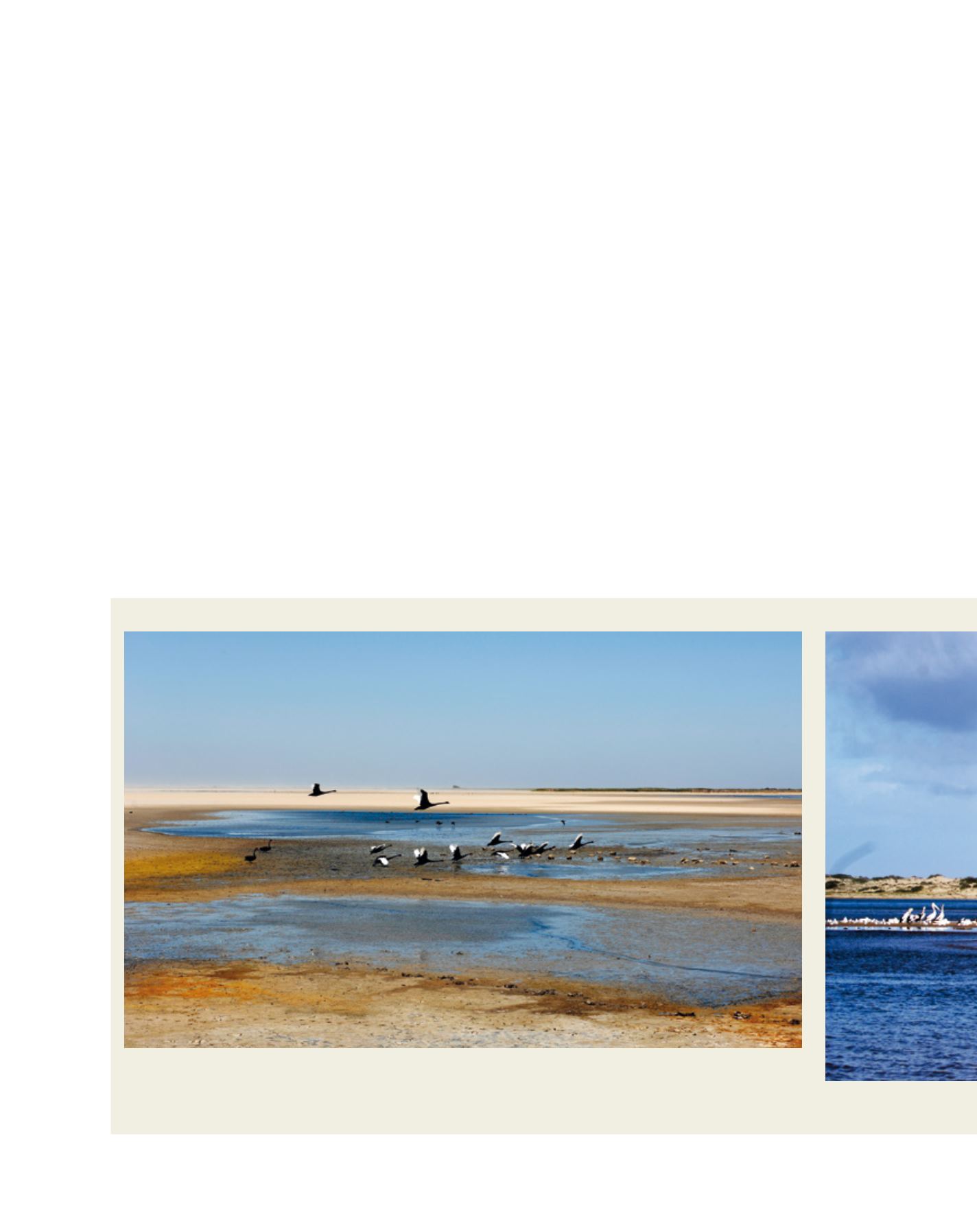
The above image shows the Coorong during the millennium drought. The bright orange patches indicate the presence of iron sulphide. If
left undisturbed and covered with water, sulphidic sediments pose little threat. However, when exposed to oxygen, such as under drought
conditions, chemical reactions may lead to the generation of sulphuric acid. When this is wet again and released back into the rivers, it
causes substantial environmental damage and serious impacts on water supplies and human health
Image: Arthur Mostead, 2008