


 38 / 210

[
] 36
The Arab family: increasing
vulnerability in times of transition
Raidan Al-Saqqaf, Social Affairs Officer, United Nations Economic and Social Commission for Western Asia, Beirut
A
dvancing
S
ocial
I
ntegration
and
I
ntergenerational
S
olidarity
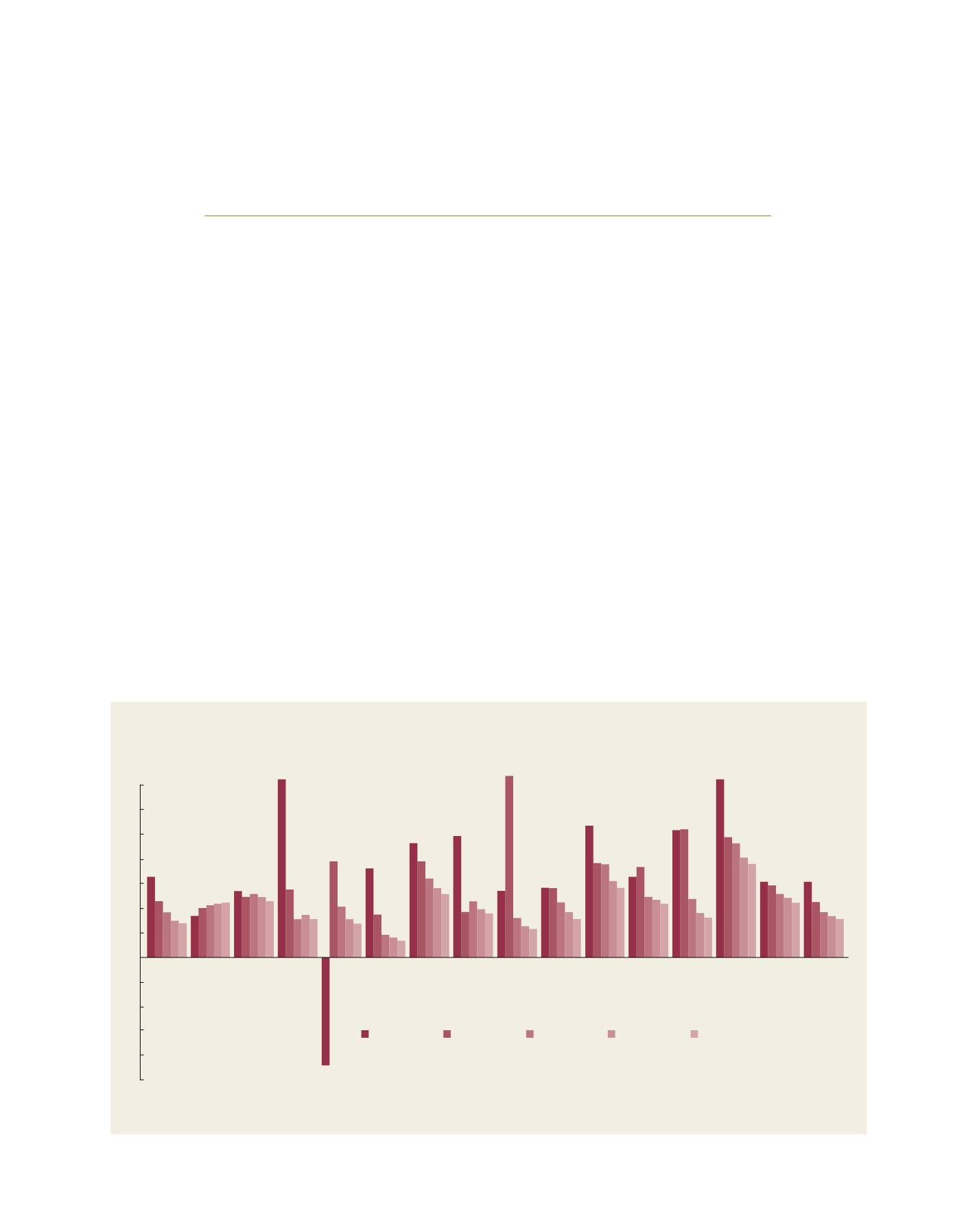
Annual urban population growth rates in the ESCWA region, 1990-2030
(total figure shows average of the 14 ESCWA countries contained in the graph)
Source: E/ESCWA/SDD/2011/Technical Paper 3
T
he patriarchal nature of the Arab family is changing
at a rapid pace, driven by a number of factors such
as economic pressures, access to education and
convergence in social relations. Today’s Arab family has
new roles for a more educated youth, more empowered
women and more opportunities for all family members
to achieve social development objectives. These changes
are correlated with the swift urbanization taking place
across the region.
The average annual urban growth rate in the United
Nations Economic and Social Commission for Western Asia
(UN-ESCWA) region was higher than the average world rate
during the 2000-2005 period, and is estimated to remain
higher during the next few decades. The share of the urban
population in the region as a whole will rise from 54 per cent
in 2010 to 72 per cent in 2050.
1
This urbanization partly
arises from rural-to-urban migration related to diminish-
ing economic opportunities and limited availability of social
services in rural areas. It is also the result of improved access
to education, basic social services, work prospects and greater
socioeconomic opportunities in urban areas.
However, this rapid urbanization has led to severe pressures
in urban areas, increasing demands for employment and social
services while stretching the infrastructure and housing facili-
ties. These pressures have created a new set of problems for
urbanized families, and established inequalities and social strata
based on the capacity of these families – and their members –
to take advantage of better urban socioeconomic opportunities
while minimizing the drawbacks. There is evidence
2
suggest-
ing that the cost of housing is the largest share of household
expenses for recently urbanized families in several parts of the
Arab world, an expense which could otherwise be directed to
productive social investments for the family.
As a coping mechanism, many families resort to living in
substandard urban housing or slums. For example, accord-
ing to UN-Habitat, in 2007 slums housed 17.1 per cent of
the urban population in Egypt and 15.8 per cent in Jordan.
3
Bahrain
Growth rate (%)
Egypt
Iraq Jordan Kuwait Lebanon Palestine Oman Qatar Saudi
Arabia
Sudan Syrian
Arab
Republic
United
Arab
Emirates
Yemen Total
ESCWA
Total
World
0
1
-1
-2
-3
-4
-5
2
3
4
6
7
5
2010-2015
2020-2025
2025-2030
2000-2005
1990-1995