


 57 / 210

[
] 55
A
dvancing
S
ocial
I
ntegration
and
I
ntergenerational
S
olidarity
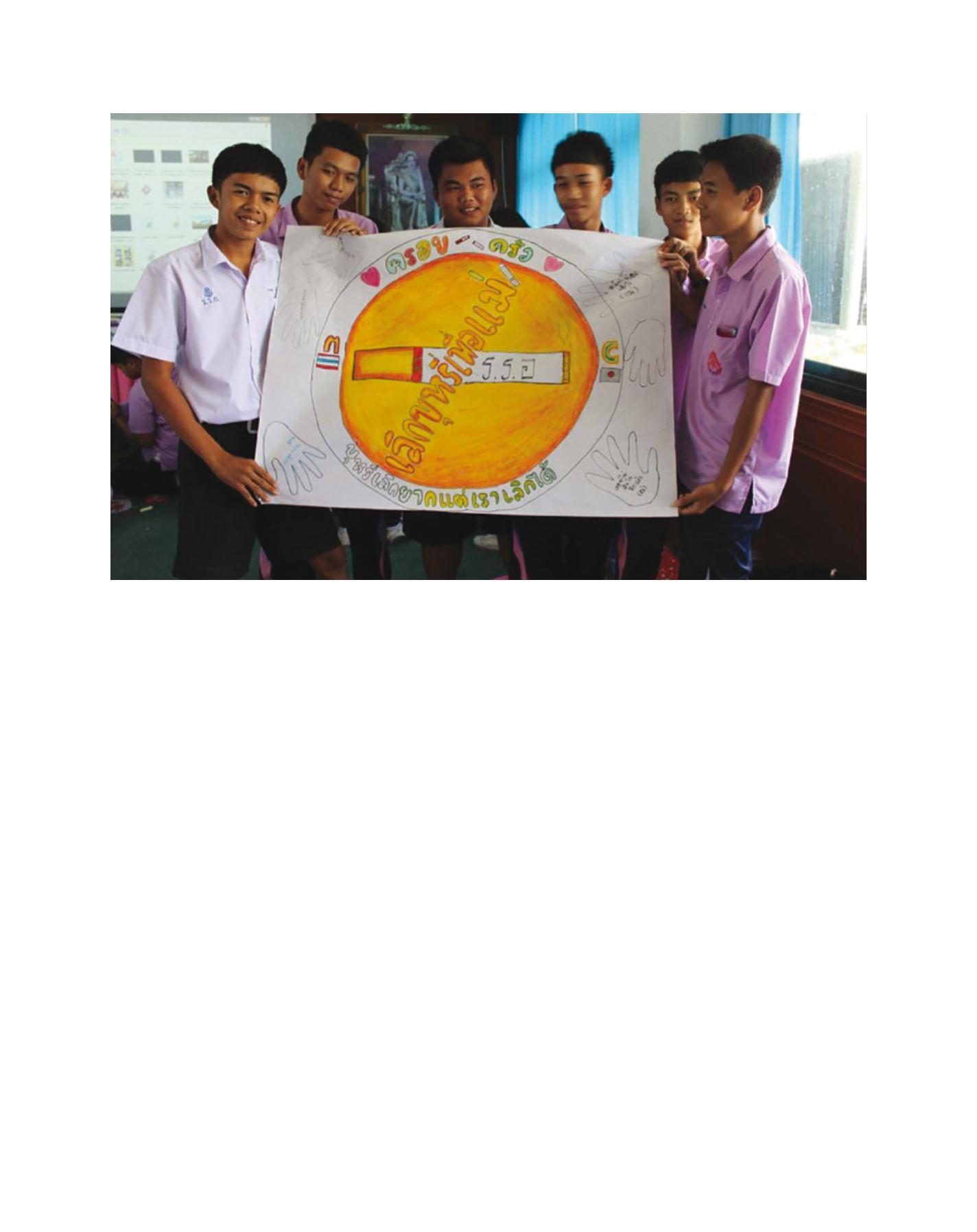
Image: CCFD
The CCFD’s objectives are to transform specific target groups, such as families with problems, children and youth at risk
Strategy and implementation process
Each CCFD has similar sets of strategies and implementa-
tion processes. However, in reality, the CCFD working group
of each centre will apply strategies and implementation
approaches in accordance with their capacities, experiences
and appropriateness of the local contexts and target groups.
One strategy is to provide support to families, with particu-
lar focus on the alleviation of problems so the family will
be able to live their normal and meaningful lives, such as
in Samutra Sakorn Province. The implementation approach
for this would entail the CCFD working group conduct-
ing meetings and consultations to discuss problems in the
communities. Once the families requiring assistance have
been identified, the CCFD working group analyses the causes
of the problems, the solutions, the kinds of support/rescue
needed and the contributing approaches of such assistance.
Another goal is to use sociocultural capital and community
networks to provide assistance to families, with particular
focus on mutual assistance among the networks (volunteers
in related fields such as social development and medical care).
Here, the implementation approach would see CCFD working
in partnership with local networks based on mutual care for
the individual/family, with difficulties as well as exchanges of
information among them. These local networks might include
volunteers in related fields, the Children and Youth Council,
village committees, and those working for surveillances/
watchdogs. The tasks focus on survey and family data collec-
tion as well as home visits for the assessment of the target
groups and proper response to the family in need of help or
rescue. The implementation approach will be in parallel with
cultural activities of the community.
CCFD also works as a co-partner of local government admin-
istrative organizations in coordinating the with relevant agencies
to develop projects and activities for family development in
communities. To implement this, the CCFD working group
works in partnership with the local government administrative
organization, as an integral part. Assigned by the organization,
the CCFD undertakes projects or activities on its behalf.
Another example is the CCFD serving as the key unit in
the development and implementation of projects and activi-
ties that are designed especially to strengthen families and
to prevent and respond to family problems. The aim is also
to transform the behaviour of the target groups through a
family participation-based learning approach. This is achieved
through the coordination of relevant agencies, institutions and
organizations, both internal and external (besides the local
government administrative organizations), such as schools,
temples, police stations, correction facilities, the Office of
Prevention and Suppression of Drugs, the National Office of
Health Insurance and so on. In implementing this approach,
the CCFD working group is the focal point of community
mobilization through its initiative projects/activities in family
development and in the prevention of and response to family
problems. Its objectives are to transform specific target groups,
such as families with problems, children and youth at risk.
Finally, the CCFD serves as a co-partner of local government
administrative organizations to rescue victims in social problems
according to the Government initiative policy, One Stop Crisis