


 54 / 210


[
] 52
A
dvancing
S
ocial
I
ntegration
and
I
ntergenerational
S
olidarity
to provide care. As a result, through white paper on families,
the Government has promoted family strengthening strategies
to support these families.
Government also facilitated the balance of work and
family responsibilities and promotes equal parenting care
and responsibilities between fathers and mothers. The South
African Government has made progressive policies such as
maternity leave and family responsibility leave. The intention
of these policies is to encourage family balancing between
work and family responsibilities.
In terms of family support programmes, the Government
has intensified the Early Childhood Development (ECD)
programme to support mothers. ECD is a vital link in the
continuum of services aimed at achieving positive social
and educational outcomes. The growing number of children
accessing ECD services demonstrates our determination to
build human capital by providing opportunities for their
cognitive development and early learning stimulation. ECD,
together with investments in education and health, will
contribute positively towards stemming the tide of the inter-
generational transmission of poverty and increasing demand
for the expansion of the social safety net.
Intergenerational solidarity
Programmes promote interaction, sharing and transfer of
knowledge between youth and the older generations are needed
to contribute towards the regaining of the lost morals, human-
ity and ‘Ubuntu’ which are necessary ingredients for sustainable
and cohesive families and communities. The indigenous socio-
cultural knowledge and practice systems which had promoted,
and continue to promote functionality and the strong sense of
societal values of families are being eroded by these challenges.
Programmes bringing children, youth and older persons together
have proliferated in communities around the country over the past
three decades. These intergenerational programmes are the ‘crea-
tions’ of communitymembers, often human service and education
professionals, who attempt to meet community needs and make
good use of existing community resources for a stronger, more
caring society. Improving school attendance, self-esteem, attitudes
towards ageing and older persons, and reducing substance abuse,
social isolation and troubled behaviour are suggested goals to be
reached through intergenerational programmes.
Intergenerational programmes play an increasingly prominent
role in communities as a strategy to bring people of different
age groups to work together in meeting community needs. Such
strategy is important because of the growth in the proportion of
healthy, knowledgeable and experienced older persons in our
population who can contribute immensely towards the decline
of many social challenges that continue to plague young people,
such as crime, drug abuse or academic difficulties.
Intergenerational programmes in South Africa are mainly
clustered around the following areas:
• senior citizens
• extended families and communal living
• schools
• lifelong learning
• multipurpose centres
• edu-care
• moral regeneration.
Outcomes-based education is the official policy and focus on
the educational process at school level in South Africa. This
system has a strong focus on life skills, which requires that
community members share their experience and skills with
youth in the classroom. In many instances these commu-
nity members include the older people in a community.
Grandparents are encouraged to actively participate in the
classroom to share their history and listen to children reading.
Also playing a role in drawing older people into classrooms is
the fact that class sizes are very big and teachers need assis-
tance in order to function.
Another trend is that of the Government moving increas-
ingly towards providing multipurpose centres, where old
people can receive health care, pension pay-outs, entertain-
ment and so on, but also where they in turn can provide a
service to children and youth.
There is also evidence that young people have been and
are being encouraged to serve the needs of older people on a
voluntary basis. Some of this work happens through schools
and colleges, where activities such as visitation, garden upkeep
or doing errands are arranged, while in other instances they
are community or church-based initiatives. South Africa has
proven an important step to strengthen intergenerational
dialogue through the youth and older persons dialogue that
laid the foundation.
In conclusion, South Africa has laid a solid foundation by
developing the White Paper on Families. This family policy
has created an enabling environment that strengthens families
and promotes family preservation.
Finally, South Africa will be celebrating the twentieth anniver-
sary of the International Year for the Family by hosting a national
family summit. The summit will be anchored by the sub-themes
of confronting family poverty, ensuring work-family balance and
advancing social integration and intergenerational solidarity.
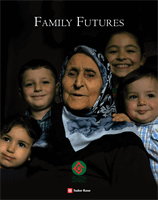
Image: Department of Social Development, South Africa
Intergenerational programmes play an increasingly prominent role in
communities, bringing people of different age groups together to meet
community needs