


 49 / 210

[
] 47
A
dvancing
S
ocial
I
ntegration
and
I
ntergenerational
S
olidarity
Master’s degree in M
ā
ori Development, business administration
and management. These are M
ā
ori or community organizations
rather than government services. The urban wh
ā
nau also drew
on the support available through urban marae, such as the marae
associated with the Manukau Urban M
ā
ori Authority.
Economic resources to these wh
ā
nau included koha, fund-
raising, budgeting services and the Aotearoa Credit Union.
Environmental resources in the urban setting were very
scarce. At best, a few of the wh
ā
nau had access to a garden.
When one wh
ā
nau tried to practise customary food gathering,
its choices were restricted to the waterways around industrial
Auckland city, some of which are polluted.
In both the rural and urban studies, factors and practices
supporting wh
ā
nau resilience include: the transmission of tribal
cultural knowledge; access to resources; education, skills and
capability; wh
ā
nau development and high-trust relationships;
mana and self-esteem; advocacy and brokering; kanohi kitea
(face-to-face, community knowledge); presence of skilled wh
ā
nau
workers; kaum
ā
tua and wh
ā
nau support; ability to identify and
refer wh
ā
nau members with problems; sports club and church
membership; and wh
ā
nau access to computers and the Internet.
Urban M
ā
ori and community organizations play critical
roles in supporting families and wh
ā
nau in their communities,
in the same way hap
ū
and iwi act to create enabling environ-
ments that provide a range of social, cultural, economic and
environmental opportunities for the future development of
those involved. These organizations need not be formal ‘social
services’, but a mix of formal and informal organizations such
as a tribal authority, a sports club or a church.
Such organizations are often the first port of call for wh
ā
nau
because of the relationship of trust that has been built between
the two. Therefore they have a critical role to play in connecting
wh
ā
nau with other support networks. Services working to make a
positive difference with M
ā
ori are likely to have more success by
working within and through wh
ā
nau, hap
ū
, iwi and communi-
ties that are known, trusted and respected by wh
ā
nau and work
within appropriate cultural frameworks. For example, the concept
of ‘kanohi kitea’ is one that supports face-to-face interaction,
rather than remote engagement by phone or e-mail. Seeing people
working within the community, actively engaged in relationship-
building, and attending events and occasions of importance to
wh
ā
nau, reinforces the value that is placed on the relationship.
In a world where many are pressing for an approach to policy
and practice that is ‘evidence-informed’ and based on ‘what works’,
the wh
ā
nau in these studies demonstrate the need to think care-
fully not only about what works, but also about what relationships
are working, and who determines what counts as success. This is
a significant challenge for everyone working in the development,
implementation and evaluation of social services in Aotearoa and
it is a challenge these wh
ā
nau encourage us all to accept.
Understanding how best to work with and engage M
ā
ori,
especially wh
ā
nau, is important since critical support func-
tions exist within the wh
ā
nau as well as between wh
ā
nau
and the hap
ū
(sub-tribe) and iwi. These functions cannot
be replaced or replicated by government agencies and
programmes, but the study shows that they can be supported
to enhance the resilience of wh
ā
nau.
The following passage from Sir Apirana Ngata (one of
M
ā
oridom’s foremost leaders and scholars in the last century)
speaks of partnership and the resilience that M
ā
ori people
can draw from their own cultural traditions and values. It
reinforces the importance of wh
ā
nau taking the lead in deci-
sions that affect their lives and in delivering services with the
support of their community.
E tipu, e rea
M
ō
ng
ā
r
ā
o tou ao
Ko t
ō
ringa ki ng
ā
r
ā
kau a to P
ā
keh
ā
Hei ora m
ō
t
ō
tinana
Ko t
ō
ng
ā
kau ki ng
ā
taonga a
ō
tipuna
Hei tikitiki m
ō
t
ō
m
ā
hunga
A,koo t
ō
wairua ke te Atua
N
ā
na nei ng
ā
mea katoa.
Grow tender shoot for the days of your world
Your hand to the tools of the P
ā
keh
ā
(non-M
ā
ori people)
For the welfare of your body
Your heart to the treasures of your ancestors
As a crown for your head
Your spirit unto God the author of all things.
Tangaroa and Rongomatane, Ng
ā
Whare Waatea
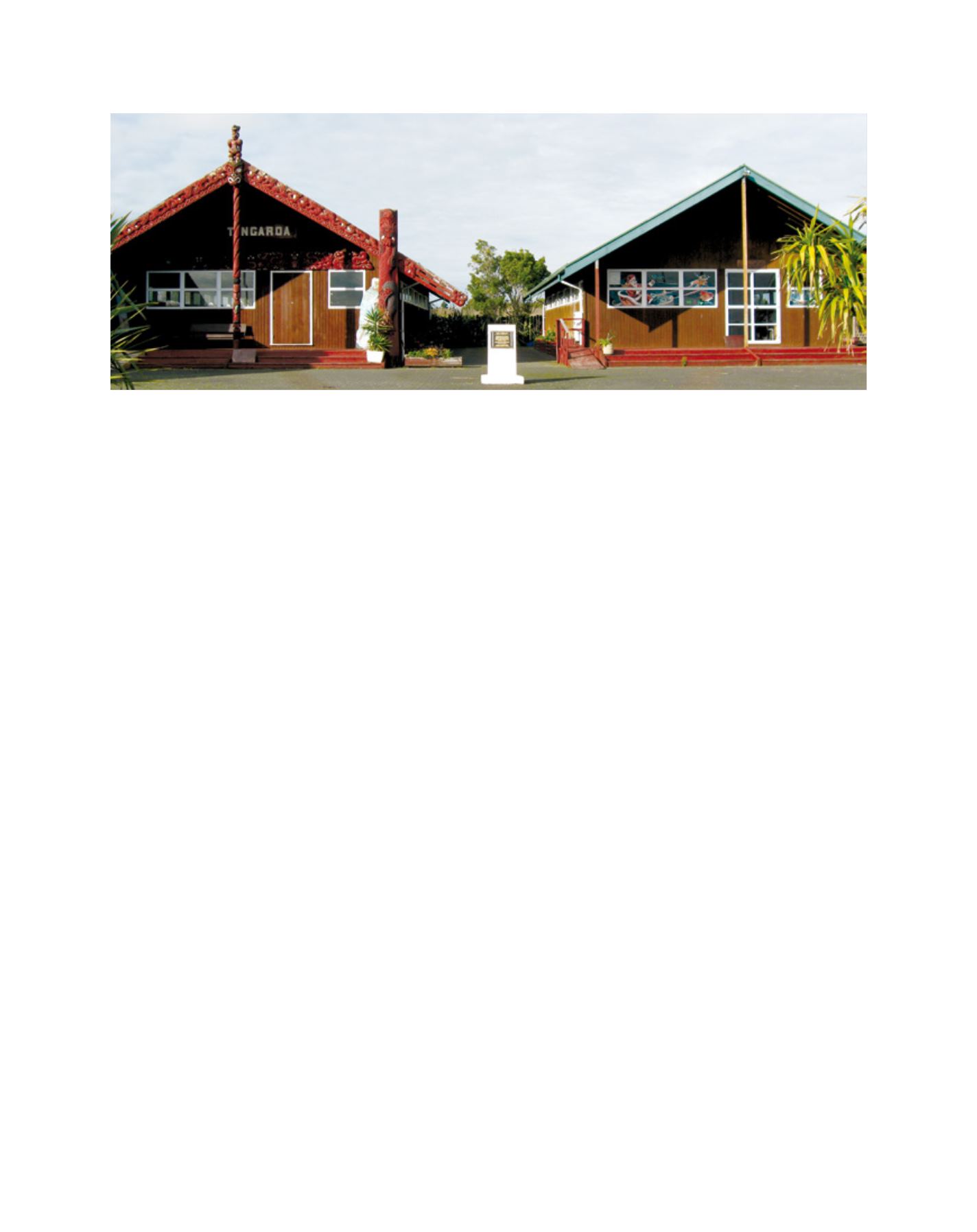
Image: Manukau Urban Mäori Authority