


 51 / 210

[
] 49
A
dvancing
S
ocial
I
ntegration
and
I
ntergenerational
S
olidarity
interventions with family circumstances, combine crisis
management with capability building, measure results as
well as volumes, balance NGO autonomy with community-
wide cooperation, and match sector-led initiatives with
cross-sector collaboration.
In 2009, concerned that current policies and prac-
tices were not reducing disparities, the Hon. Tariana
Turia, Associate Minister for Social Development and
Employment and co-leader of the M
ā
ori (political) Party
of the New Zealand Government, established the Taskforce
on Wh
ā
nau-centred Initiatives. Its main objective was to
construct an evidence-based framework that would lead to
strengthened wh
ā
nau (family) capabilities, an integrated
approach to wh
ā
nau well-being, collaborative relationships
between state agencies in relation to wh
ā
nau services, and
relationships between government and community agencies
that were broader than contractual. Improved cost-effec-
tiveness and value for money were also to be important.
After receiving written submissions and undertaking
an extensive consultation process with M
ā
ori commu-
nities, health and social service providers, tribal leaders
and state agencies, a detailed report was presented to the
Government outlining the rationale for adopting a new
approach to M
ā
ori families – Wh
ā
nau Ora (Well Families).
‘Wh
ā
nau Ora: Report of the Taskforce on Wh
ā
nau-Centred
Initiatives’ recommended an independent trust reporting
to a dedicated Minister of Wh
ā
nau Ora, charged with the
governance, coordination and implementation of Wh
ā
nau
Ora. A specific Wh
ā
nau Ora appropriation derived from
relevant government departments was also recommended
in order to deliver wh
ā
nau services that linked social,
cultural and economic development and built wh
ā
nau
capability. The taskforce’s third recommendation was that
Wh
ā
nau Ora services should be integrated and compre-
hensive, and focused on measurable outcomes that would
contribute to wh
ā
nau empowerment.
The report stressed the importance of a cultural dimen-
sion to Wh
ā
nau Ora and the incorporation of a M
ā
ori
cultural paradigm that endorsed wh
ā
nau heritage and
facilitated full participation in M
ā
ori networks. Further,
all government agencies with responsibilities for any aspect
of wh
ā
nau well-being should commit to the Wh
ā
nau Ora
principles and support the Wh
ā
nau Ora approach. Finally
the taskforce recommended that regional panels be estab-
lished to ensure Wh
ā
nau Ora could contribute in positive
and realistic ways in local communities.
Government did not immediately accept Wh
ā
nau Ora.
There were concerns that a policy geared mainly towards
M
ā
ori could inadvertently marginalize M
ā
ori families; and
social policy sector leaders pointed to existing programmes
that contained elements of Wh
ā
nau Ora. The relevant state
departments also had to consider the impacts on their own
budgetary appropriations of a new programme outside
their immediate responsibilities. But by mid-2010 the New
Zealand Government had approved the Wh
ā
nau Ora policy
and had taken steps towards implementation. A responsi-
ble minister was appointed and instead of an independent
trust, as recommended, a governance group was estab-
lished comprising the chief executives of three government
departments (Health, Social Development and M
ā
ori
Affairs) together with three M
ā
ori community representa-
tives, one of whom chaired the group. The implementation
of Wh
ā
nau Ora hinged on commitment to:
• a wh
ā
nau-centred philosophy
• an integrated approach to service delivery
• building wh
ā
nau capability as well as dealing with
urgent problems
• utilizing outcome indicators to gauge effectiveness.
A wh
ā
nau-centred philosophy required a shift in two direc-
tions. First, providers had to be mindful that people who
needed assistance were members of wh
ā
nau rather than ‘self-
actualizing’ individual clients. Second, the goals of provider
organizations were to be a lesser priority than the aspira-
tions of wh
ā
nau. The aim would be to work with wh
ā
nau to
establish their priorities and then to help them achieve their
goals. Many M
ā
ori providers had already adopted a wh
ā
nau-
centred philosophy, but were often constrained by narrowly
framed contracts that did not allow for the broader view.
For many other providers the attitudinal shift represented a
substantial departure from established practices; addressing
problems within the wh
ā
nau context was a new experience
that required additional training.
Consistent with the wh
ā
nau-centred philosophy, a dedi-
cated fund was established to help wh
ā
nau develop and
then implement their own plans for improving the condi-
tions of their people.
Even greater challenges arose in fostering an integrated
approach to service delivery. For the most part government
All wh
ā
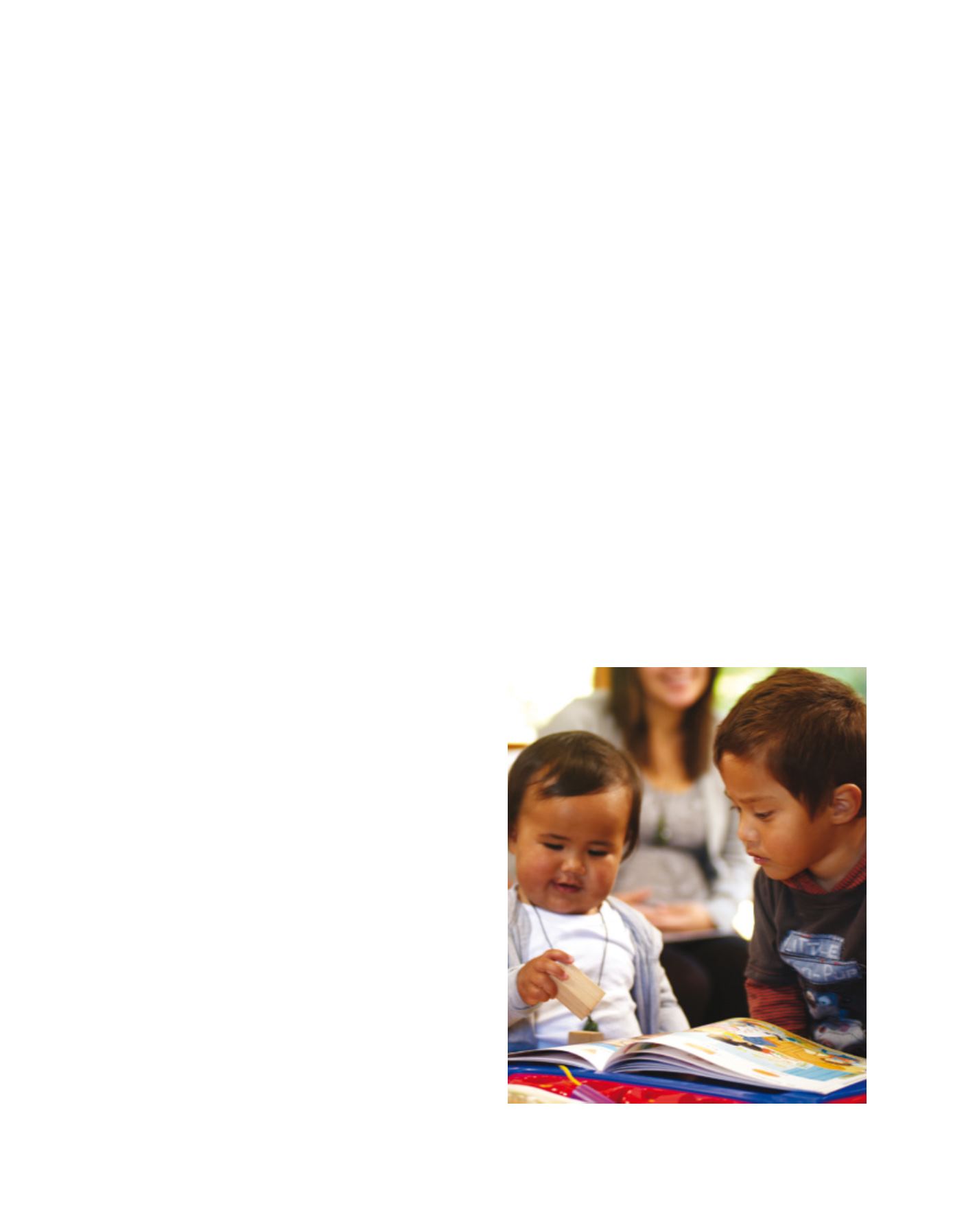
nau have the potential to flourish. A young M
ā
ori family enjoy playtime
together at their home in Aotearoa, New Zealand
Image: Ng
ā
Pae o te M
ā
ramatanga