


 48 / 210

[
] 46
A
dvancing
S
ocial
I
ntegration
and
I
ntergenerational
S
olidarity
ity and housing costs; medical costs; cost of household items;
changes to benefit levels (government income support) owing to
changing wh
ā
nau circumstances; stress and the affordability of
school sports trips. Nevertheless, the protective factors of T
ū
hoe
traditions provided buffers against adversity for these wh
ā
nau
– for example, a hap
ū
raising money for a wh
ā
nau to bring the
deceased back home from another country for burial.
The cultural resources the T
ū
hoe wh
ā
nau identified as factors
that strengthen resilience included the transmission of
T
ū
hoetanga
– the world view or essence of being T
ū
hoe;
Whakapapa
–gene-
alogical connections to each other and the land through the past,
present and into the future;
Whanaungatanga
–kinship relation-
ships;
Kanohi kitea
– the ‘seen face’, or being physically present
with one another; and
Marae
–a central, ancestral meeting place
governed by tribal protocol and one of the few places where
M
ā
ori can be essentially M
ā
ori; and
Ahurei
– coming together
for the biennial T
ū
hoe Festival where up to 25,000 descend on
their tribal homelands to celebrate their T
ū
hoetanga.
Social resources included wh
ā
nau hap
ū
, iwi, M
ā
ori and
non-M
ā
ori organizations and committees. Access to education
that provides immersion in T
ū
hoetanga and M
ā
ori language
along with information technology and online learning are
significant educational resources. T
ū
hoe have their own tertiary
institution and the local schools support T
ū
hoetanga. Between
2008 and 2010 there were increases in tertiary enrolments
among T
ū
hoe living in the Whakatane Territorial Authority.
Enrolments here increased by 51 per cent compared with an
increase of 7 per cent among T
ū
hoe nationally.
The wh
ā
nau stressed the leadership of kaum
ā
tua (elders) as
essential to their well-being. In the T
ū
hoe case study, the pref-
erence is for T
ū
hoe to work with their own wh
ā
nau directly,
as they are trusted to do so. Advocacy from within the wh
ā
nau
is the first step, then the wider wh
ā
nau, followed by the hap
ū
and/or iwi. This means the focus is on the entire wh
ā
nau, not
isolated individual members.
Economic resources included
Koha,
a reciprocal giving of
time, food, and other resources. M
ā
ori communities are adept
at fundraising and quickly come together to fundraise regu-
larly for wh
ā
nau in need. There is also income derived from
wh
ā
nau and land trusts, housing on tribal land, and signifi-
cant farming and forestry trusts.
Environmental resources included access to resources from the
land, lakes and rivers which provide
rongoa
(traditional medicines)
as well as a food supply. As the
Kaitiaki
(guardians), wh
ā
nauwork
with the resources to ensure sustainability. There is also the oppor-
tunity for communities to develop their own natural resources. For
example, the community of Ruat
ā
huna put in its ownwater supply
and is exploring the use of its own energy sources. These resources
strengthen wh
ā
nau resilience and create choices for wh
ā
nau.
Consequently, the T
ū
hoe wh
ā
nau have many protective factors to
support them in times of economic hardship and adversity.
In this study, wh
ā
nau wanted the wh
ā
nau service provid-
ers trusted by the community to be better resourced to work
with them. This is an ‘inside-out’ approach, recognizing key
roles in the community that are known and respected by
local people. The approach is preferred to formal ‘outside-in’
interventions that are implemented in isolation of kaumatua,
marae and the hap
ū
, and which tend not to engage wh
ā
nau
because trust is not easily developed.
The study found that the South Auckland wh
ā
nau experienced
financial pressures around job loss, food insecurity and having
to use food banks, costs of tangi (funerals), the clothing and
food trucks that operate on credit arrangements leading to debt
and loan repayments, changing benefit levels, power costs, rent,
adult health issues, children’s health issues, medication costs, the
expense of wh
ā
nau members coming to stay, and school fees.
In the face of such pressures, many of these wh
ā
nau have
shown significant resilience on a daily basis. They do this
with the support of effective organizations that are trusted by
wh
ā
nau and are supported and resourced to work with and
walk alongside wh
ā
nau. Like Ng
ā
i T
ū
hoe, these urban-based
wh
ā
nau also drew upon their cultural resources. However,
this was largely in isolation from the traditional support
structures of hap
ū
and iwi. Consequently, they built strong
networks with friends and neighbours. Furthermore, M
ā
ori
organizations and churches were also called upon to fill this
significant gap in traditional support structures.
The cultural resources these wh
ā
nau drew on included Tikanga
M
ā
ori (M
ā
ori values and customary practices). Although isolated
fromhap
ū
and iwi networks, their lives are framed by these values
and practices. They drew heavily on Whanaungatanga (the prac-
tices that strengthen kinship relationships). One mother said: “I
refer to my neighbours as wh
ā
nau even though we have no blood
ties.”Wh
ā
nau also provide aroha (love), andmanaakitanga which
includes providing food, money, fundraising, clothes, furniture,
transport, and sharing of household appliances and lawnmowers.
Wh
ā
nau seek out activities and organizations that support
their Mana (self-esteem and personal dignity). In times of stress,
wh
ā
nau used karakia (prayer) to support and sustain them. Their
social resources also included Kaum
ā
tua who build and maintain
networks along with churches, sports clubs and urban marae. As
with the T
ū
hoe wh
ā
nau, people also sought out opportunities
for further education. The study found that four out of eight
mothers were engaged in tertiary education such as nursing, a
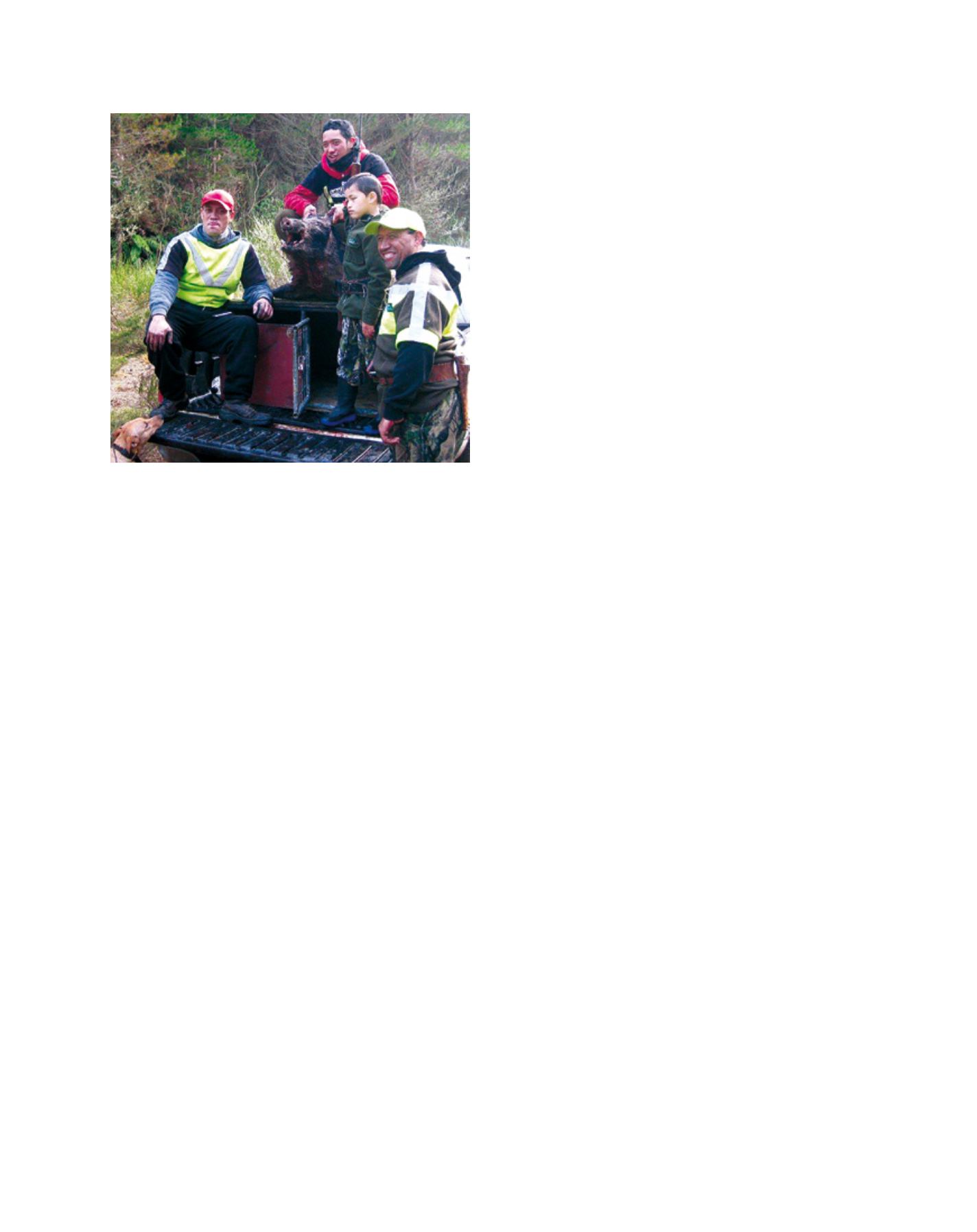
Feeding the wh
ā
nau: from left, Ponti Te Moana, Boz Te Moana
and Charlie Wiremu
Image: MRangiaho Te Moana