


 64 / 210

[
] 62
A
dvancing
S
ocial
I
ntegration
and
I
ntergenerational
S
olidarity
lies support their older members and lessen the conflict
between the rich and the poor.”
1
Family policies and measures in Singapore, aimed at
promoting intergenerational support within the family, focus
on encouraging adult children and their elderly parents to live
together or close by. The aged dependent income tax relief for
taxpayers who support their (or their spouses’) elders/handi-
capped elders – including parents, grandparents and great
grandparents (and in-laws) – grants up to 55 per cent higher
relief if the elder dependent members are living together in
the same household with the taxpayer. The Central Provident
Fund Housing Grant for family offers higher government
grants for applicants living with or near their parents or
married children. The housing-related priority schemes,
too, provide priority allocations in public housing under the
Married Child Priority Scheme to married applicants staying
near or with their parents or married children. For extended-
family applicants, the Multi-Generation Priority Scheme offers
further priority allocation when married children and their
parents purchase a pair of public apartments close to one
another. These measures to encourage co-residence or living
in close proximity seem effective: surveys from the Housing
and Development Board (HDB), the statutory body in charge
of providing public housing for over 80 per cent of Singapore’s
population, show an increase of 5 per cent among residents
aged 55 and above who were living with their married chil-
dren between 2003 and 2008. In 2013, HDB further piloted a
new type of three-generation housing unit with four bedrooms
and three bathrooms, in line with the objective of promoting
family bonding under one roof.
What, then, is the value underlying intergenerational
support? In most so-called Confucian societies, the basis of
intergenerational support and family bonding is best captured
by the concept of filial piety, which prescribes that adult chil-
dren have an obligation to support their parents if they are
in need. Widely regarded as a normative factor regulating
intergenerational solidarity, this practice also corresponds
to a rather parent-centric institution in which children are
produced and raised as part of one’s retirement planning.
Filial piety is actively promoted in Singapore. For example,
information on the Inland Revenue Authority website on
Parent/Handicapped Parent Relief overtly states that the
relief is given to promote filial piety. But practising filial
piety does have its challenges. During a 2010 campaign on
filial piety launched by the then Ministry of Community,
Youth and Sports, a short film accompanying the campaign
with the tagline ‘How one generation loves, the next genera-
tion learns’ attracted many passionate comments. These
included lamentations of the difficulties faced in practising
filial piety, given competing work and family demands in a
highly competitive society.
Most Singaporeans have, however, internalized filial piety
as a value through the process of socialization. It is therefore
a much taken for granted, incontestable value. Should they
fail to inculcate this value, there is the force of moral sanc-
tion – and legal sanction through the Maintenance of Parents
Act (passed in 1995) – to enforce compliance. This is not to
suggest that filial piety is necessarily experienced as a diffi-
cult obligation. Indeed, where parents are wealthy, being filial
may actually be beneficial to their children. Where parents
are financially independent or when their adult children have
sufficient capacity to support their dependent parents, it is
likely that compliance with the value of filial piety would be
largely unproblematic. However, where adult children lack
the capacity to support their dependent parents there is a
strong likelihood of non-compliance, notwithstanding the
force of moral or legal sanction. This questions filial piety as
a reliable basis for ensuring that adult children will take care
of their dependent parents.
What, then, is a more reliable basis for the support of
parents? We would argue that love is a more reliable basis
than filial piety. Love is relationship-centric, as opposed
Bonding the generations
There are numerous efforts by the state, schools
and communities to bond the generations –
generally initiatives to promote intergenerational
interaction between seniors and children/youth.
Such intergenerational initiatives might
focus on strengthening grandparent-grandchild
bonding, including one-off events such as
an intergenerational cooking competition or
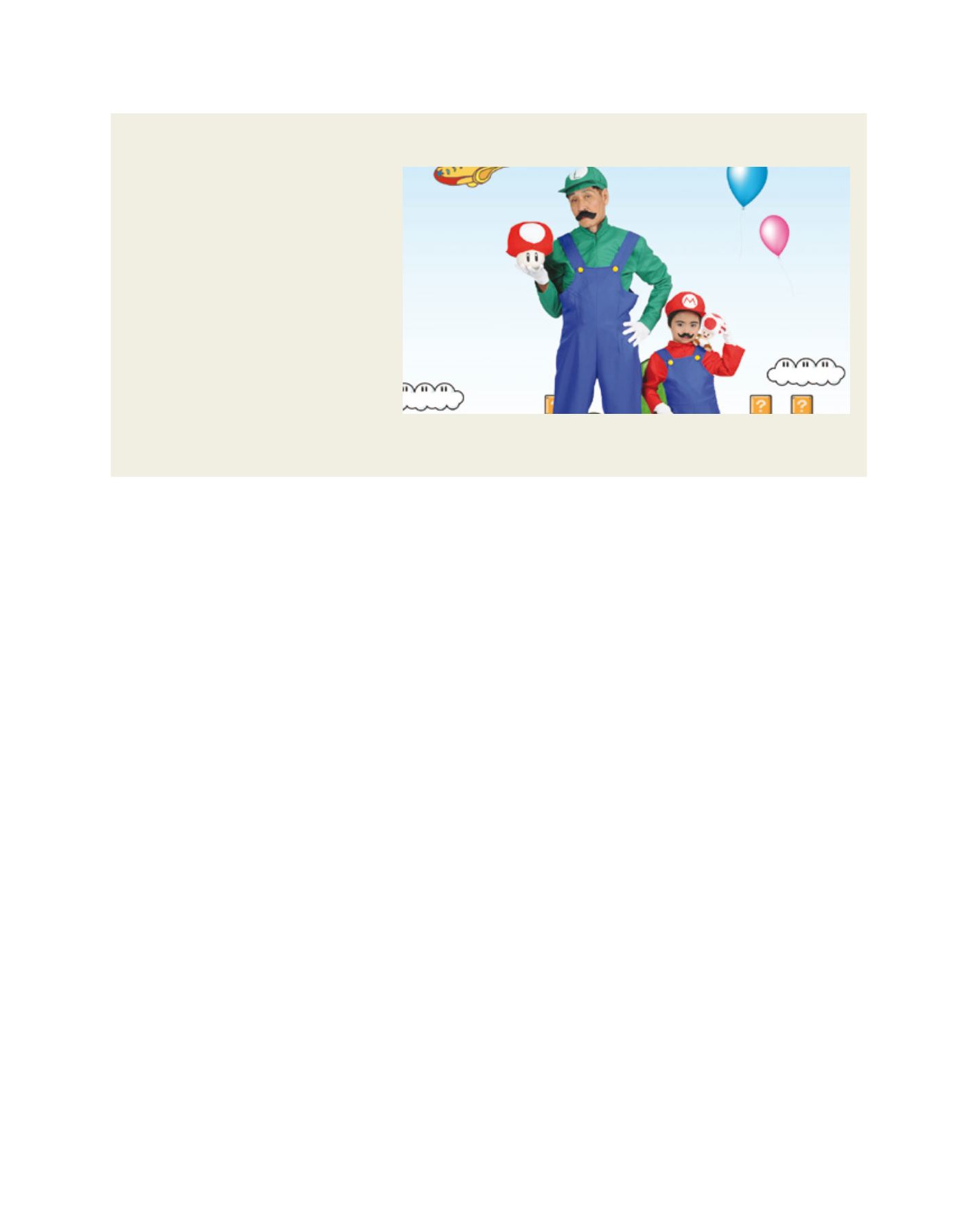
Cosplay competition; or regular events such as
intergenerational yoga interest groups in the
community clubs, as well as the array of events
organized around the annual Grandparent’s
Day. They could be learning projects and
intergenerational learning programmes for the old
and young, organized in schools and communities.
As a result of such extra-familial intergenerational
initiatives, some students have become more
interested in interacting with their own grandparents.
Both intrafamilial and extrafamilial intergenerational
initiatives thus play a role in promoting
intergenerational closeness and understanding
within the family.
Robert Wong (age 70) and his five-year-old grandson Immanuel as Nintendo’s Super Mario
Brothers: winners of the Intergenerational section of the Cosplay competition held for
Grandparent’s Day in 2011
Image: Sammy How