


 68 / 210

[
] 66
A
dvancing
S
ocial
I
ntegration
and
I
ntergenerational
S
olidarity
5 per cent in 2012. Currently, the economic growth rate stands
at about 4.2 per cent. Twenty-six countries are currently clas-
sified as lower-middle and upper-middle income.
1
By 2040
most of the countries in Africa will be in these two categories,
while some will definitely graduate to high income level.
With this impressive development, the African economies
are likely to be highly competitive, more industrialized and
urbanized. The scale of the economies will expand, and the
continent will experience significant progress in infrastruc-
ture, energy, food production, peace and security, all of which
will impact on the structure and composition of the family.
This will provide financial space for governments to set their
national development priorities and strategies for the future,
and to decide more freely on how to partner with the private
sector, non-governmental organizations, agencies and donors.
Rapid urbanization is another important megatrend that
will undoubtedly impact on the structure and composition
of the family in Africa, and on social and intergenerational
relationships. Though Africa is the least urbanized conti-
nent, its rate of urbanization is the fastest in the world. The
urban population grew from 33 million people in 1950 to 414
million in 2011. They will reach 471 million in 2015 and 744
million in 2030. The share of urban inhabitants in the total
population increased from 14.4 per cent in 1950 to 39.6 per
cent in 2011, and will reach 47.7 per cent by 2030. These
increasing numbers show high urban growth rates of above
3 per cent per year, which produces a doubling of the urban
population in only 24 years, through 2025.
These megatrends and their accompanying social changes
make it necessary for development planning in Africa to give
priority to the family and its changing and evolving struc-
tures. In particular, the family should be prioritized when
establishing policies and priorities for economic and social
development, and when planning programmatic interventions
aimed at social groups such as women, children, orphans and
the elderly. The family must be pivotal for social and economic
policies which directly and indirectly affect the welfare of its
members and its integrity and structure as a unit of society.
Therefore development policies should integrate and stream-
line the family and its changing structure and roles in the
design and implementation of economic and social activities.
Moreover, the impacts of development activities on the family
should be part and parcel of the monitoring and evaluation
of socioeconomic and development impacts. Family-sensitive
development policies and activities are important for develop-
ment transformation and for the social integration of societies
and communities in Africa.
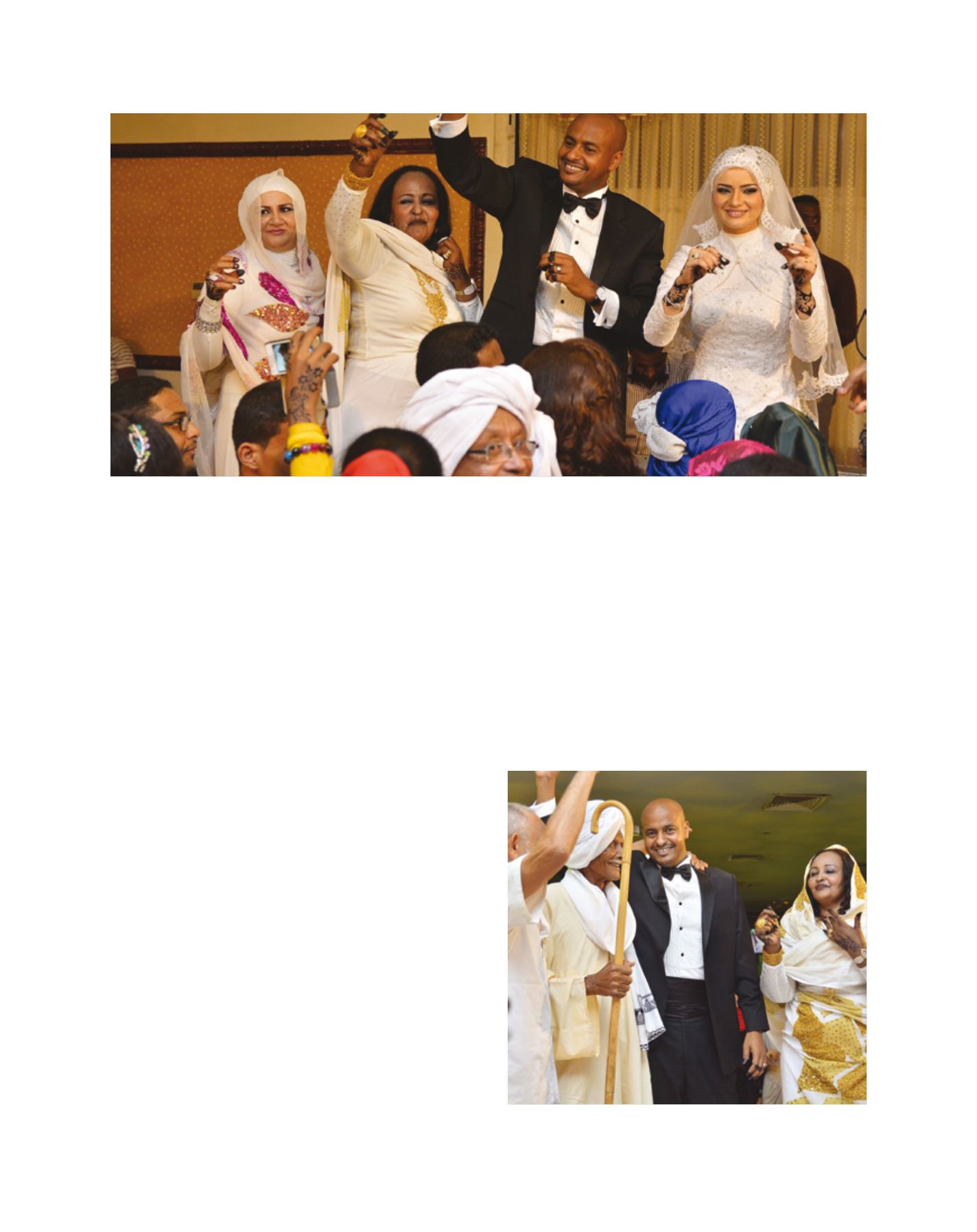
Today’s urban communities celebrate marriage with lavish and expensive ceremonies such as this one in the Sudan
Image: Hassan M. Yousif
Intergenerational linkages are clear as young and old meet at a wedding to
provide support and blessings
Image: Hassan M. Yousif