


 69 / 210

[
] 67
Lessons from the community level in Ghana
Charles Abbey, Executive Director, African Development Programme
A
dvancing
S
ocial
I
ntegration
and
I
ntergenerational
S
olidarity
I
n a typical Ghanaian community, almost every family is
both nuclear and extended. Families are associated with
each other through intermarriage, religious, traditional
and cultural practices. Almost everyone knows everyone.
The Ghanaian family is key and instrumental for social
and economic development, local governance and author-
ity, confidence building and conflict resolution. It is now
common knowledge that since the not too distant past, the
average Ghanaian family at the community level has been
under severe threat from challenges that confront its health
and survival. These continue to increase with such subtlety,
and sometimes aggression, in each passing year that worthy
initiatives such as the United Nations International Year of
the Family must not only be sustained, but must also be well
resourced and expanded.
Over the past several decades, the family at the commu-
nity level was held together by valued traditional and
cultural practices, strong commitment and dedication to
religious beliefs and practices. After supper, the evenings
were generally devoted to sharing the day’s school and
farm experiences, and story-telling by the fireside. In urban
and peri-urban communities, the evenings were generally
spent discussing performance in school and some political
developments. Parents loved to tell life enrichment stories
and children were eager to listen and ask questions. A well-
ordered family was recognized for its sanctity and properly
accorded its place in society.
On Fridays, several families would be seen on their way
to the mosque, and on Saturdays and Sundays most fami-
lies would make their way to church. Those who practice
traditional worship were seldom left out. These weekly, and
mid-week, religious activities provided much-needed oppor-
tunities for family spiritual reflections. Many hundreds of
stressed and distressed souls, parents and children and in-laws,
were refreshed and strengthened. Many a soul contemplating
suicide was saved. The importance of unadulterated religion
and its spiritual benefits was not lost on the family.
Parents spent quality time with their children and among
themselves, and it was a joy and a blessing to see parents
asking their children about how they fared in school each
evening. Parents were eager to pay visits to their children
in boarding schools and were proud to provide them with
their provisions, school fees and extra educational materi-
als. Children always looked forward to such parental visits as
evidence of love and social cohesion. On any given holiday,
it was common to see families travelling to the big cities and
other places of interest for vacations or sightseeing. These,
and many more positives, have paid lasting dividends.
But in recent years, the family unit has come under
increased pressure to the point of near disintegration. The
global economic downturn and economic policies that are
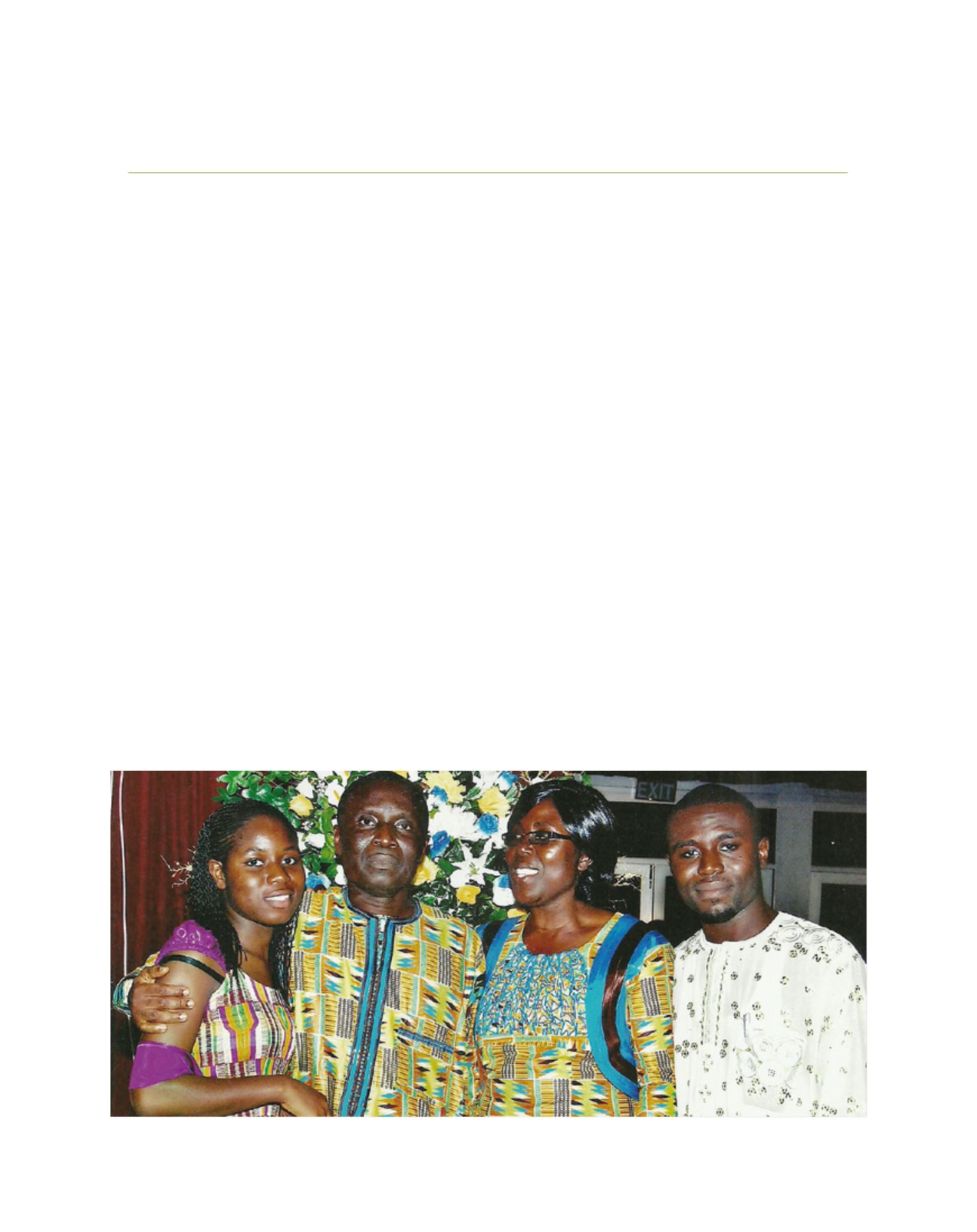
The traditional and cultural practices, strong commitment and religious beliefs that have held Ghanaian families together are now under threat
Image: ADP