


 71 / 210

[
] 69
A
dvancing
S
ocial
I
ntegration
and
I
ntergenerational
S
olidarity
aspiring to marriage, married couples and children under the
church’s Family Life Enrichment Programme, and promote
families’ access to quality education and health services. The
multi-complex facility will include a women’s centre for
vocational and entrepreneurial skills development. In this
direction, the church has acquired a 16-acre plot of land at
Apra in the Central Region of Ghana. Conscious efforts are
being made to secure external partnerships and support to
bring this laudable project to reality and reach a catchment
area population of over 10,000. This social and economic
empowerment of the people, with a special focus on family
and marriage, has gained the interest and support of the local
chiefs and traditional authorities as well as decentralized
government authorities. They all have pledged their commit-
ment to the successful implementation of this initiative.
ADP is also encouraging families in its operational areas
to share experiences and opportunities through network-
ing and collaborative efforts. These are being done through
joint family retreats, counselling, mentoring, community-
based activities and creating opportunities for regular church
worship and family devotions. It is gratifying to note that
these initiatives are yielding good dividends as these fami-
lies are now building the confidence of their children for the
responsibilities of adult life. Fathers and mothers are better
able to respond to their love for each other and work towards
the peaceful resolution of domestic conflicts.
In the midst of global and national economic challenges,
negative external cultural practices that destroy family values
and other unsupportive macroeconomic and social policies
and practices, there is hope for the future.
There is a need for families to form strategic friendships
and alliances with and among each other for intergenerational
solidarity. For the past 20 years one of the Abbey families in
Accra, also known as the Mount Pisgah family, has adopted
an intergenerational solidarity with eight other families in
parts of Ghana as a network for various forms of support,
growth and development. These eight other families are also
impacting on the family lives of several other families and
couples aspiring to marriage. It would take an eternity to fully
appreciate and evaluate the multiplier effect and impact of this
intergenerational solidarity. If only thousands more families
would engage in this worthy exercise.
It is time to adopt new strategies to meet the new challenges
threatening the existence of family structure and relations.
This is not just about policy reforms but, importantly, the
need to re-enforce existing good family values and virtues.
It is the candid opinion and belief of this writer that every
energy and resource available must be mobilized to promote
and enhance what true family stands for. Families with or
without children must be recognized and supported.
There is a need to look at laws that regulate marriage within
the traditional and cultural, religious and ordinance settings.
These should be made more proactive and supportive. Equally
important is the need to look at all the factors that militate
against the family structure and cohesion, and therefore provi-
sions must be made for both structured and unstructured
support for the family. Family centres should be considered and
established at local community level to provide professional
care for stressed families. Social work and social workers must
be backed up with adequate legislature and resources to offer
professional support. It is not just about new policies; it is also
about new implementing strategies.
The father, mother and any children need each other.
Therefore unfettered love and deep spiritual links must
continue to be the strong cords that bind the family. The family,
in its truest sense, will continue to be the key to social cohesion,
social development, social justice and economic growth.
Ghana and the global community cannot afford to destroy
the place, function, benefits and blessings of marriage and the
family. The International Year of the Family 2014 is another
welcome opportunity to support and strengthen the sanctity
of marriage and the family.
The traditional and cultural practices, strong commitment and religious beliefs that have held Ghanaian families together are now under threat
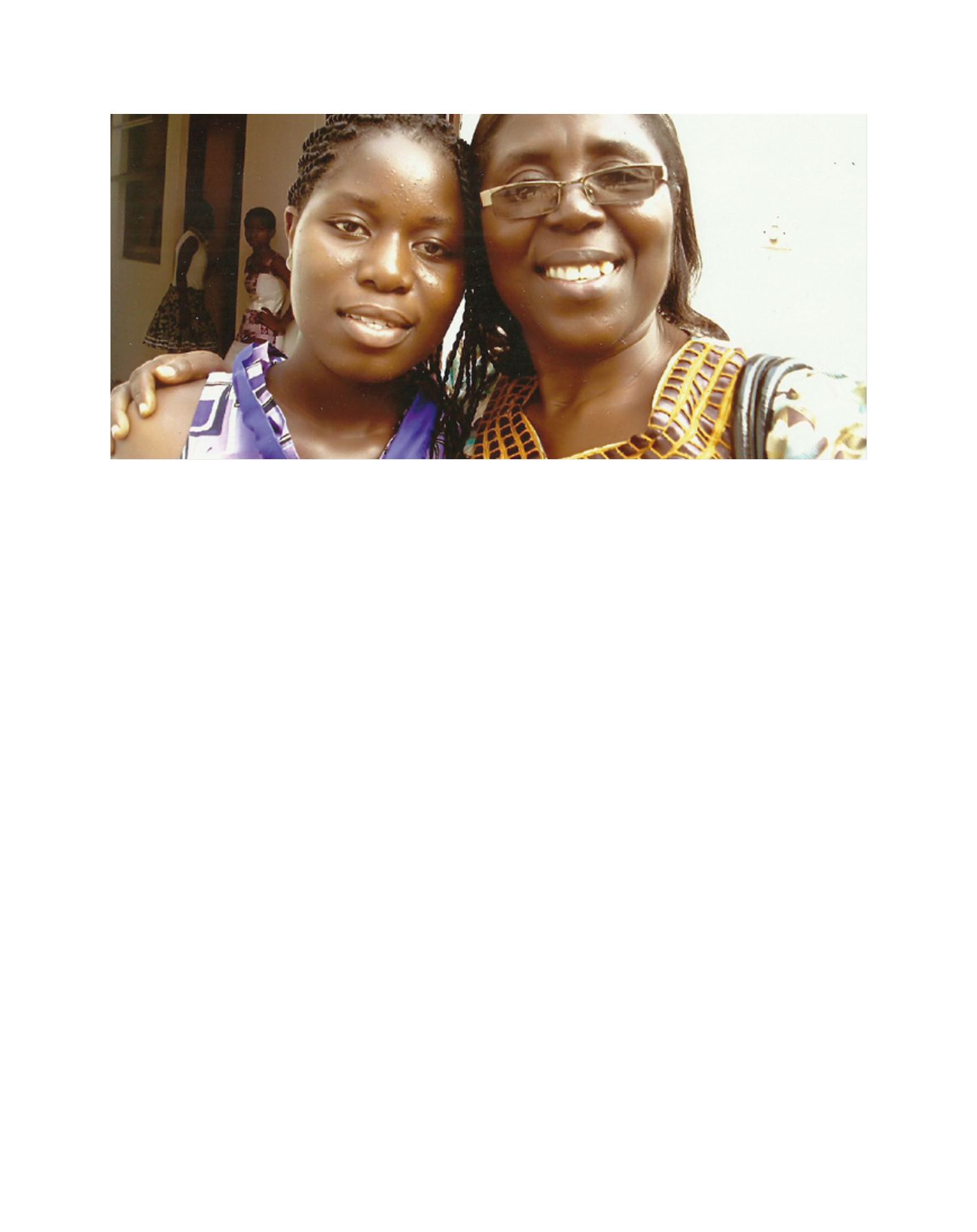
Image: ADP