


 150 / 156

[
] 150
dissolved gases and treatment chemicals (acids) on the alloys
utilized in the construction of desalination pipes and equipment.
The corrosion products may include harmful heavy metals such
as nickel (Ni), copper (Cu) and molybdenum (Mo) and less toxic
metals such as iron (Fe) and zinc (Zn).
As conservative pollutants, metals will last and accumulate in
different compartments of the marine environment perpetually.
However, their ultimate sink is the marine sediment. The level of
metals (primarily in sediments and to a much lesser extent in
seawater) reflects the general status of the environment, but it
does not necessarily reflect the biological availability of these
metals.
After nearly 30 years of practising large-scale seawater desali-
nation, studies conducted on the near-shores of Kuwait revealed
that local fish and shrimp species were not contaminated by heavy
metal. Fortunately, most of the reported data in the Gulf states
indicates that the levels of heavy metals associated with brine
water disposal are minimal and often below the detection limits
of standard analytical procedures. This has been particularly true
after blending brine water with large volumes of cooling water
used in power production. When comparing the mass and nature
of heavy metals released with brine water to the amount of heavy
metals being released from land-based industrial wastewater,
atmospheric fallout and crude oil spills, the risk is thought to be
negligible.
Environmental risks of anti-scalants in brine water
The chemical analysis of seawater in the Gulf region indicates
that scale, such as alkaline scale, can form in desalination plants.
This occurs when the bicarbonate ion breaks down by heating.
In order to control calcium carbonate scaling, concentrated
sulphuric acid is added to the feed water to remove bicarbonate
ions. The extremely large carbonate buffering capacity of the
Gulf’s water minimizes the impact of acids on the environment
and renders it negligible.
Furthermore, threshold scale inhibitors such as mixtures of
sodium hexametaphosphate and surface active agents like lignin
sulphonic acid derivatives and esters of polyalkyl glycols are added
in the Gulf region’s desalination plants to hamper the growth of
carbonate and sulphate crystals.
The greatest environmental risk of polyphosphate in reject
brine on the near-shore marine environment lies in its nutri-
tional value. When present with other nutrients, phosphate
causes an overabundant growth of plants that are unusual or
non-indigenous to the area. This excessive plant growth usually
means a reduction in diversity of species, and results in an
imbalance of food chain materials essential for intermediate
organisms. In turn, their demise means an increase in BOD and
turbidity of water.
Risk of volatile liquid hydrocarbons on the near-shore
marine environment
Volatile liquid hydrocarbons (VLHs) are defined empirically as
compounds with boiling points ranging between n-C6 and n-
C14. Hydrocarbons within this range include normal and
branched alkanes, monocycloalkanes, aromatics and alkyl-substi-
tuted analogues. Light aromatics such as benzene and toluene
are considered to be the most immediately toxic components of
petroleum other than the carcinogenic polycyclic aromatics.
Traces of oil and grease leaking from operating power-desalina-
tion plants were found to contribute to the detected part per
trillion (PPT) levels of VLHs in near shore marine environments.
Since Gulf seawater is used for drinking after desalination, the
produced distillate is free of all of the seawater’s contaminants
except for VLHs that can vaporize and, consequently, co-distil
during the desalination process.
Despite their documented hazard to the aquatic environment
and their ubiquity, very little information is available on VLHs in
the Gulf marine environment. The detected levels should not give
reasons for concern.
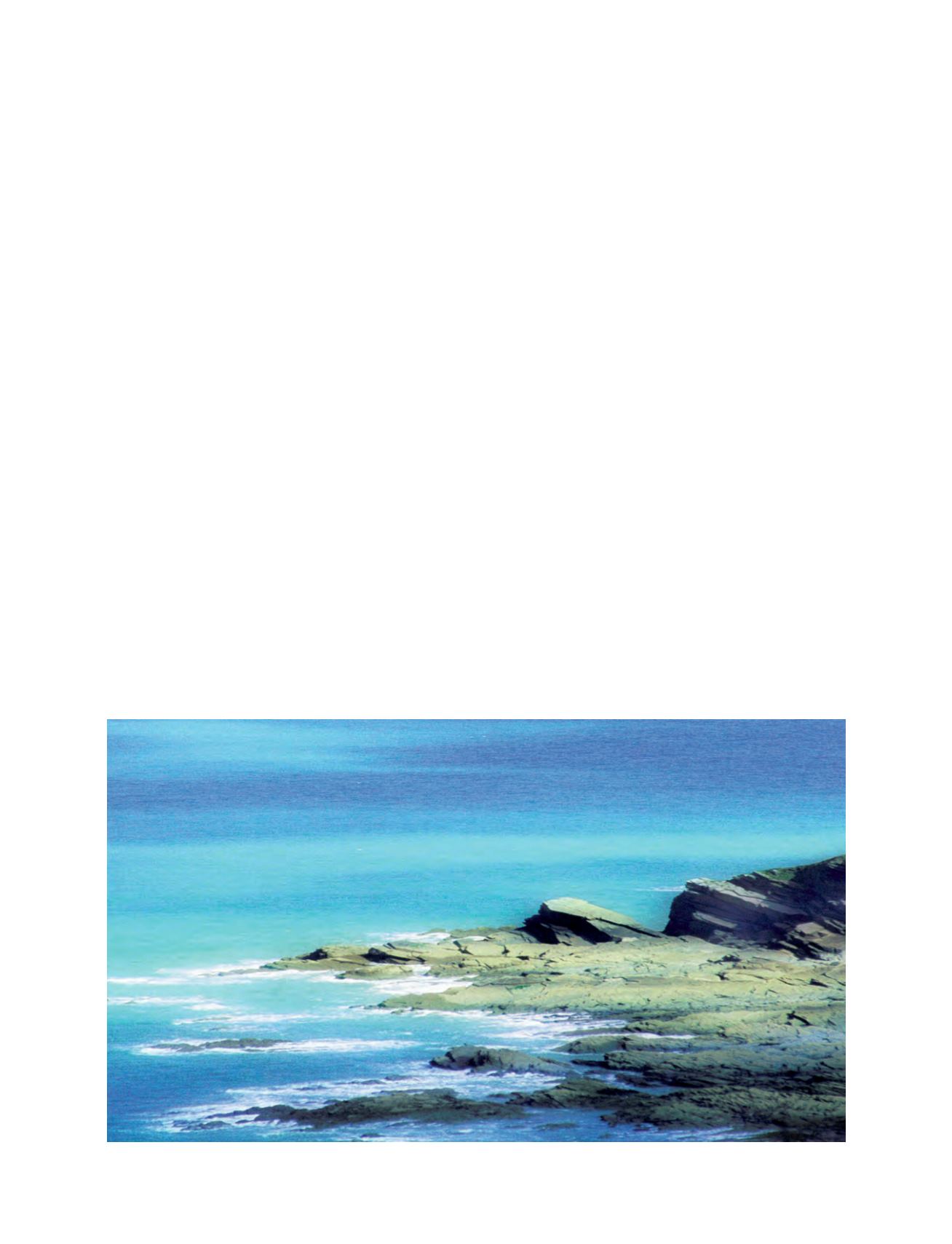
Desalination is a reliable alternative source of water, but environmental effects must be taken into account
Photo: Image 100