


 135 / 168

[
] 135
Assessing future risks: climate change
adaptation based on the
Hyogo Framework for Action
Dag Olav Høgvold, Senior Adviser at the Norwegian Climate Adaptation Programme and HFA Focal Point,
Directorate for Civil Protection and Emergency Planning, Norway
T
he Norwegian Climate Adaptation Programme, estab-
lished in 2007 and coordinated by an interministerial
group headed by the Ministry of the Environment,
recently launched an online guide for climate change adapta-
tion (2010), targeted towards municipal planners and decision
makers. The guide suggests that local strategies for climate
change adaptation should follow the five priorities set forth in
the Hyogo Framework for Action (HFA).
Adopting the Hyogo Framework for Action
An important goal for Norway’s climate adaptation strategy is the inte-
gration of adaptation into existing planning processes, adjusted to needs
at the local level. The principles of subsidiarity, similarity and respon-
sibility, cornerstones of Norway’s work on disaster risk reduction, also
apply to climate change adaptation: the impacts of climate
change should be handled as locally as possible, within
existing organizational structures, and should not lead to
any changes in responsibility.
Municipalities play a key role in the implementation
of disaster risk reduction policies, as they are responsible
for preparedness as well as prevention and have access to
the tools and mechanisms required to fulfil these duties.
The need for climate change adaptation to be integrated
into municipal plans and strategies is outlined in a green
paper on adaptation presented by the Norwegian govern-
ment in 2010.
The close links between disaster risk reduction and
climate change adaptation makes the HFA a very relevant
2032
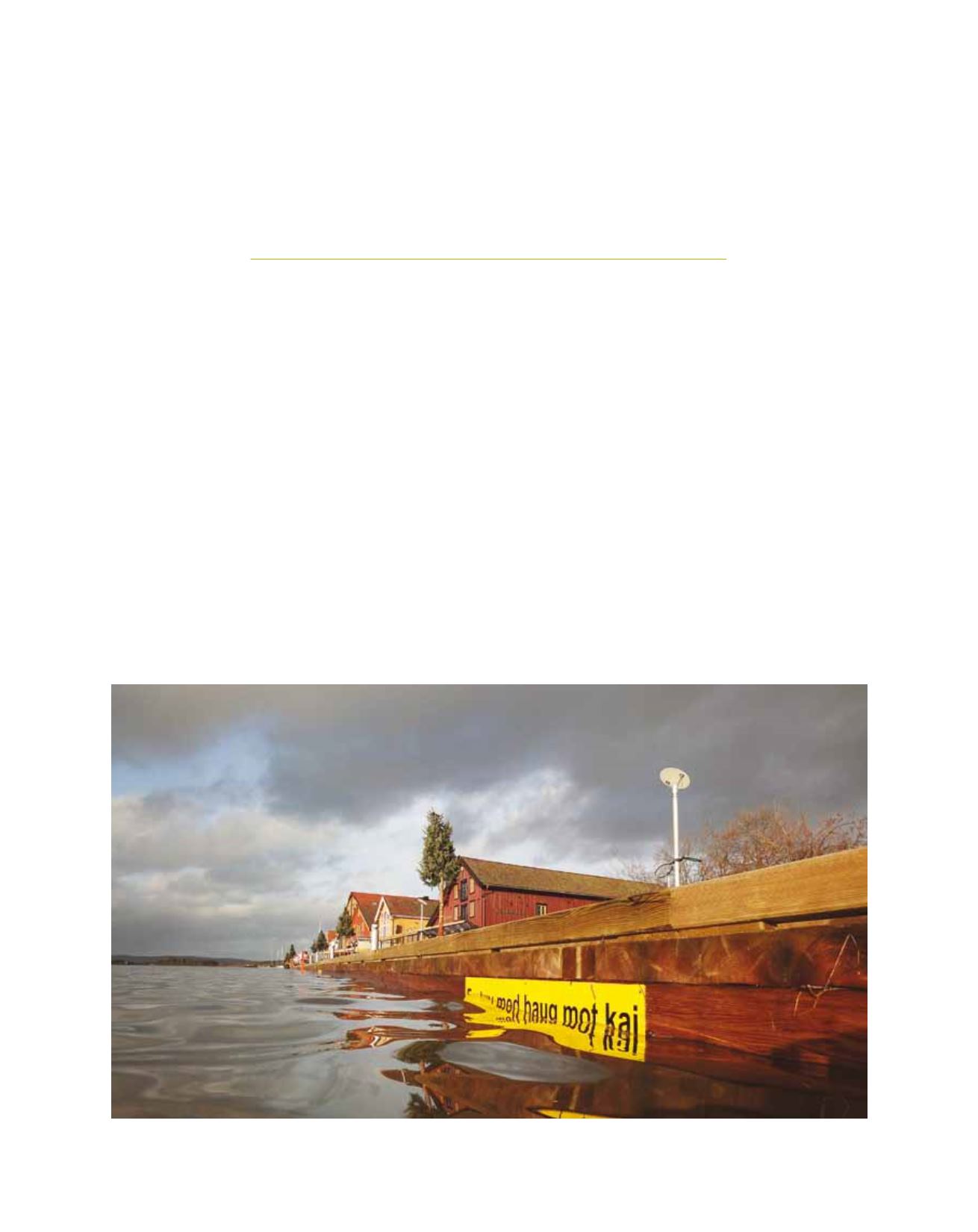
Spring tide in Tønsberg, Norway
Image: Dag Olav Høgvold