


 137 / 168

[
] 137
frequently flooded, and those that will be affected by storm surges.
The overall picture can be compared with maps showing existing
buildings, infrastructure and installations in the affected areas.
Definition of required measures –
Both existing buildings and infrastruc-
ture and potential new areas to be developed should be considered. For
existing structures, strategies might involve relocation, technical instal-
lations or retrofitting, warning systems and evacuation procedures. In
this phase, risk is assessed with reference to the types of buildings and
installations that will be affected. For example, a storage facility does
not require the same risk precautions as a school or a hospital.
Norway’s Planning and Building Act enables the definition of zones
that require special attention. Building restrictions can be applied to
such areas for which local authorities find it necessary to carry out
more thorough risk assessments, or where special building codes may
apply in order to maintain safety. Flood risk, landslide risk, threatened
biodiversity and cultural heritage can all be used to define these zones.
Priority 3: Using available knowledge
It is important to be aware that climate projections provide
knowledge
,
not
answers
. Projections must be combined with local knowledge
(for example, about the potential impact of heavy precipitation).
In a city, which areas will be flooded? Which areas can absorb the
water through vegetation and soil? Are there areas exposed to land-
slides? Will planned new areas affect the risk level? If research shows
that precipitation can be expected to increase dramatically over the
coming decades, planners must include what they already know about
such local impacts. Similarly, knowledge about expected sea level
rises must be combined with local data regarding sea currents, wave
heights and other factors.
Municipal planners must have detailed knowledge about their own
institutional and political frameworks if risk and vulnerability analyses
are to take into account which parts of the organization
are the most critical, and which ones are most exposed to
risk. Planning processes, legislation, institutional setup,
social structures and social demands affect the outcome
of adaptation strategies. When integrating the different
types of knowledge needed to develop and implement
adaptation strategies, climate projections are just one
piece of the puzzle.
The website
klimatilpasning.nohas been developed to
give municipal planners the background knowledge they
need to get started. The Norwegian Climate Adaptation
Programme uses the website as its main communication
channel for disseminating research results and sharing
experiences. It includes information about relevant
legislation and policies and guidance material, such as
the online guide on adaptation. Together with a general
course on adaptation, also provided by the programme,
the website is an important tool for local planners.
Priority 4: Reducing risk factors that lead to higher
climate vulnerability
Climate vulnerability is not only caused by climate
change but is in many cases a result of human activ-
ity, which itself increases risk. For example, waterfront
urban development can represent a larger risk than
the rising sea level, and development on hillsides can
trigger landslides, regardless of the amount of precipita-
tion or other types of extreme weather.
Policy instruments in existing plans and legisla-
tion must be used to reduce vulnerability, and thereby
prevent undesirable effects of climate change. There is
currently no overall legal framework on adaptation in
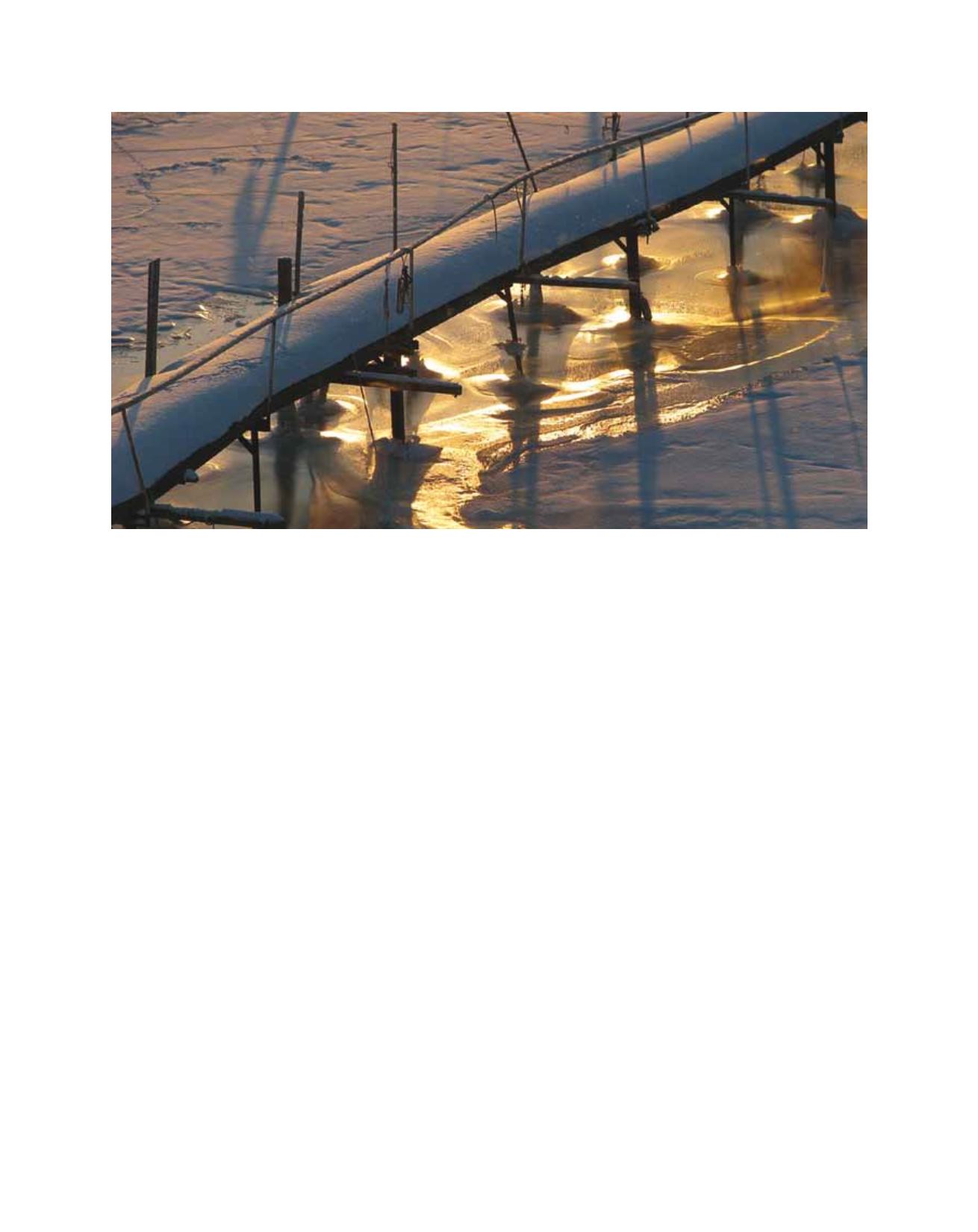
Winter, Oslo Fjord, Norway
Image: Erik Bleken