


 142 / 168

[
] 142
Karnali, Nepal: the hidden disasters
Christophe Belperron, Country Representative, Mission East, Nepal
N
epal is one of the 20 most disaster-prone countries
in the world. The country is exposed to multiple
hazards, most prominently earthquakes, floods, land-
slides, windstorms, hailstorm, fire, glacial lake outburst floods
(GLOFs) and avalanches.
Nepal is divided into three ecological belts. The Terai, a flat plain, 70
metres above sea level, where most of the population lives, is mainly
affected by large-scale flooding following the monsoon period. The
hills, ranging from 100-3,000 metres above sea level, suffer from
landsides, mudflows and sometimes epidemic outbreaks, though
usually of medium to small scale. Finally, the mountains, from
3,000-8,000 metres altitude, are scarcely populated, but affected
with frequent small-scale hazards such as landslide, avalanche, rock
fall, and potentially GLOF in certain districts.
The work of Mission East, a Danish NGO, in Nepal, is focused on
poverty alleviation in one of the most remote areas of the country,
the Karnali region. Karnali is highly affected by food
insecurity, water scarcity and the absence of public
services for its isolated communities, living away from
any transportation infrastructure and accessible only by
walking paths that demand many days of hiking before
reaching the communities.
Mission East has instigated disaster risk reduction
(DRR) work to complement its poverty alleviation activi-
ties after we realized that, in some districts of the region,
two-thirds of disaster events are not reported. The diffi-
culty of accessing the region is one cause, but also, the
frontier between a disaster and a ‘usual’ accident of life
is unclear in the context of extreme poverty and vulner-
ability. In its strict definition, a ‘disaster’ is a serious
disruption of the functioning of the society exceeding
the ability of the affected people to cope with their own
resources. In Humla, one of the five districts of Karnali,
2047
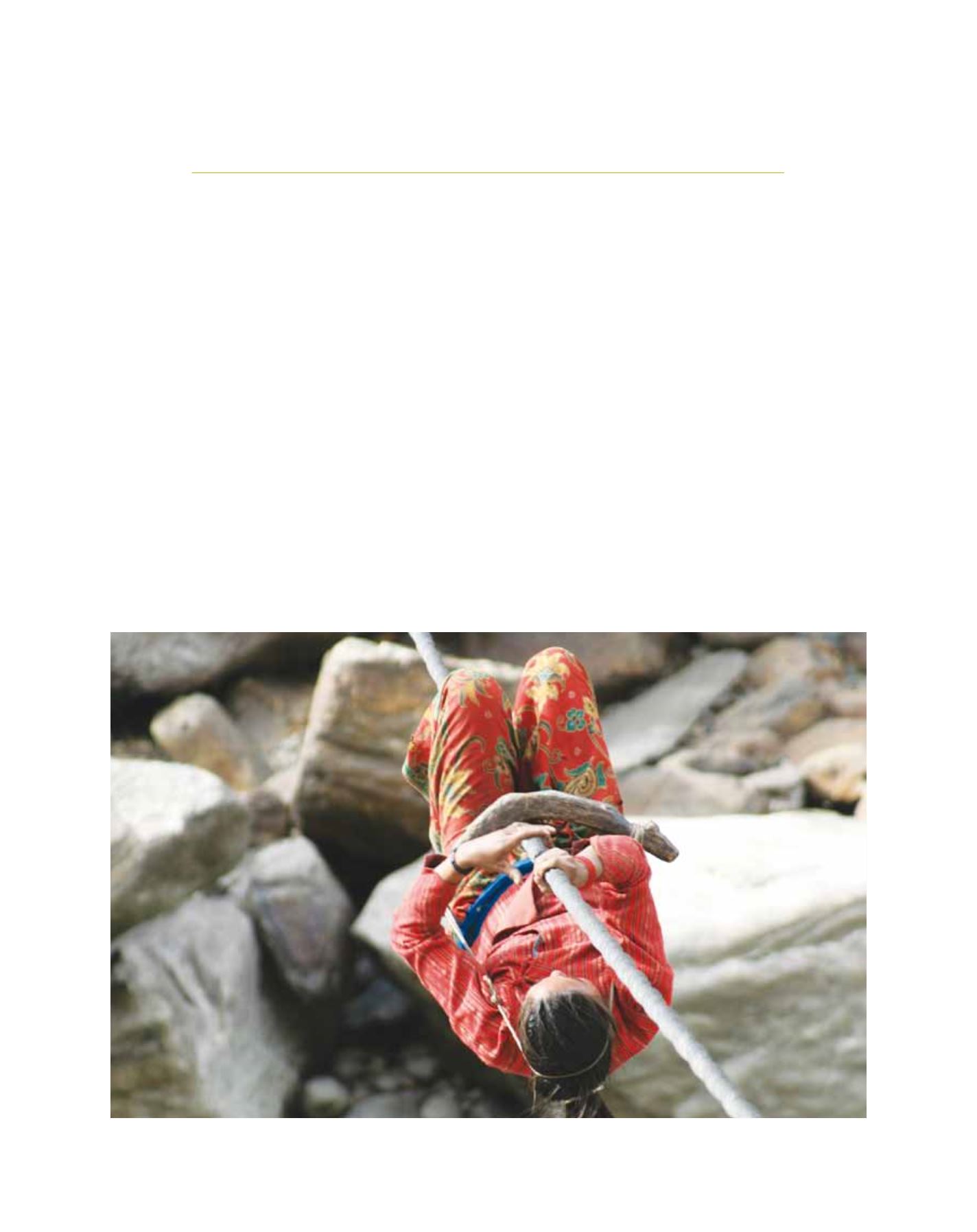
Fatalistic attitudes in the face of natural hazards has decreased
Image: Christophe Belperron