



 145 / 168

[
] 145
to the need to find adapted solutions to the problem of hidden disas-
ters in isolated areas of the Himalayas.
This text is adapted from a report published by Mission East in 2010
on vulnerability, hazard and disaster in southern Humla
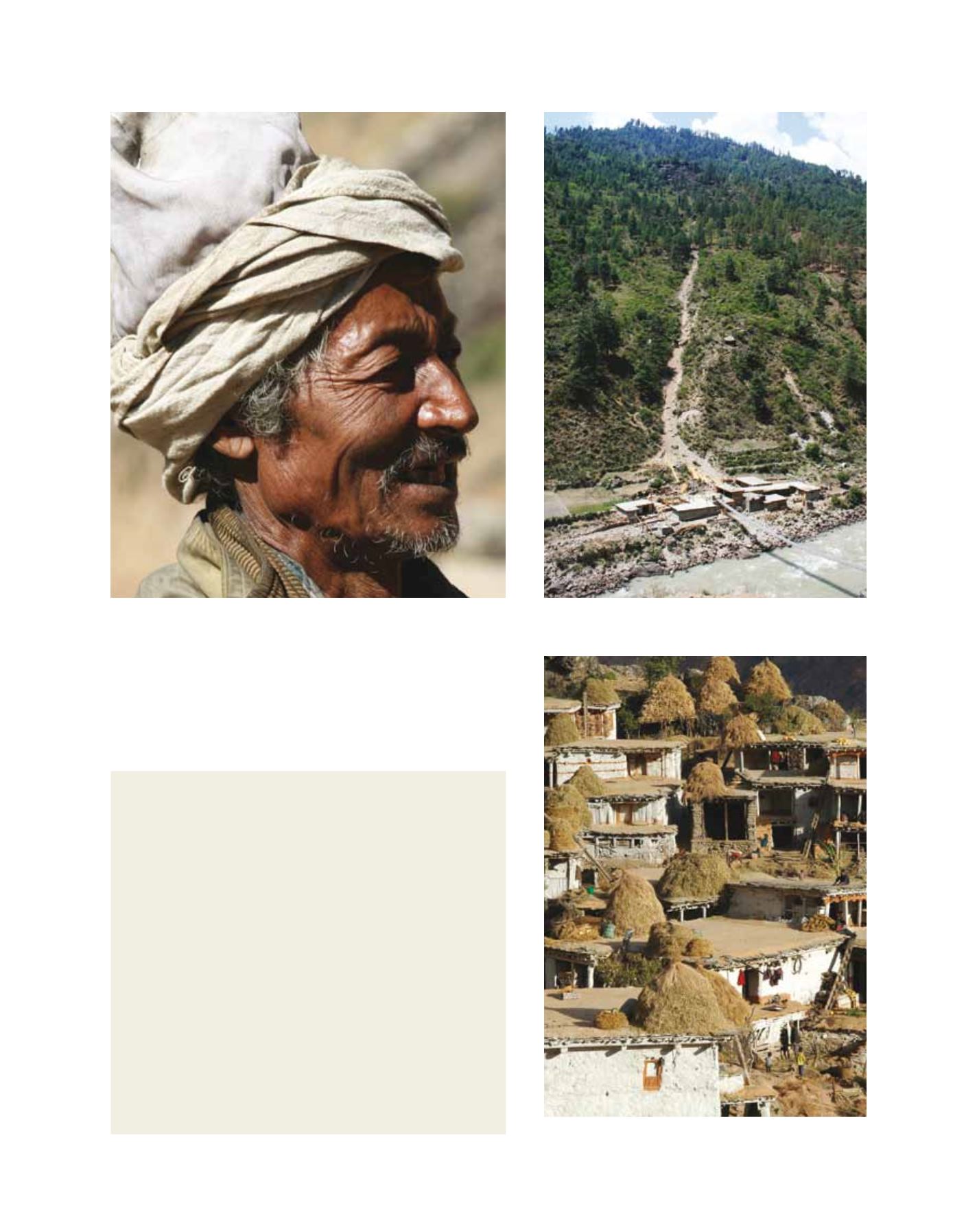
Traditional healer of Humla
New constructions at risk from natural disasters
Shreenagar village, traditional habitat
Image: Christophe Belperron
Image: Christophe Belperron
Image: Christophe Belperron
Mission East field report, October 2010
Sita Fadera is a 31 year old woman from the village of Fadera in Humla
district. Like many other women in remote rural communities in Nepal,
she does not participate in community decisions, as women’s voices are
rarely heard by male-dominated decision making structures.
Mission East’s social inclusion team involved Sita in the newly created
Disaster Management Committee (DMC), an institution responsible for
disaster preparedness, mitigation and response. At the time, almost all
local men discouraged Sita’s involvement, thinking that she did not have
enough capacity to contribute as a DMC member. But her willingness to
learn saw her easily grasp the concept of risk management and, thanks
to regular interaction with the project’s social inclusion team, she was
able to understand her potential, and later took on the role of member
secretary, a vital position for the DMC. She was finally elected for the
position. It was a real challenge for Sita to dedicate enough time to DMC,
given it was almost impossible to get support from her family members.
Sita managed to find the time required by working additional time at
home before dawn and after dusk.
Sita feels there should be more efforts to break social barriers to
enable women to participate in social activities and develop leadership.
She now has a firm commitment to contribute to help women create an
appropriate environment and enhance their participation. It is hoped
that women in southern Humla can learn from Sita’s struggle and
experiences, and benefit from it.