



 150 / 168

[
] 150
specific. It should also empower the local population to
enhance its value base and improve sustainability, both
of which need to be viewed as part of a long-term disaster
risk reduction strategy.
It is useful to study an example of how a sustainabil-
ity perspective was built and skills developed around
planning for restoration of livelihoods in the A and
NIs in the post-disaster context. This will help those
involved in disaster management to develop a response
strategy to rebuild lives and livelihoods in a manner
that paves the way for long-term sustainable develop-
ment and empowerment of marginalized peoples.
Meeting the needs of island communities
Prior to the tsunami, the Nicobarese lived along the
coast, subsisting on fishing, hunting and gathering
forest produce. They maintained plantations of bananas,
pandanus and coconut and engaged in some forms of
horticulture, growing fruits such as mango, pineapple
and jackfruit. They reared pigs and chicken and sold
copra (dried coconut kernel) as well as exchanging their
produce for commodities such as rice, sugar and cloth.
During the earthquake and tsunami, productive land
on several of the islands was submerged and planta-
tions destroyed, including roads and jetties which
played a significant role in the transportation of essen-
tial goods. Livelihoods were severely affected as the
Nicobarese grappled with the changes in their habi-
tats and livelihoods systems and the nature of relief
provided by the government.
layered, nuanced landscape of access and choices available to a person
or a community.
Changing institutional frameworks and macro-policies impact the
livelihoods of indigenous communities in many direct and indirect
ways. For example, the withdrawal of the state from the education,
health and public distribution system, or the emphasis on user
fees, demand generation, partnership and privatization, effectively
restricts access of the poor to these services. Similarly, the mechani-
zation of operations demands a new repertoire of negotiation skills
at community and state levels.
The idea of sustainable livelihoods was engendered in the A and
NIs during the post-tsunami intervention after a detailed study and
through intensive citizenship training of the Nicobari youth. In the
process, the communities learnt about democracy and began to
assert many of their concerns. The tribal communities also learnt
to value their own culture, as well as their livelihoods, which offer
rich models of sustainability.
Post-disaster situations often bring an enormous volume of
resources, offering the potential to transform a society in fundamental
ways. Formal approaches of governments often focus on the ‘replace-
ment of asset loss’ policy. However, livelihood recovery cannot be an
add-on or an issue to be looked in isolation. As many communities
living in disaster-prone areas already face significant development
challenges, strategies for livelihood restoration must be part of a more
comprehensive social and economic development approach. In other
words interventions should not only address the loss but also put
the affected community on a trajectory that secures livelihoods and
prepares them to face futures disasters with greater levels of prepar-
edness.Disaster impacts can be mitigated by appropriate planning and
adequate preparedness. The nature of planning should be context-
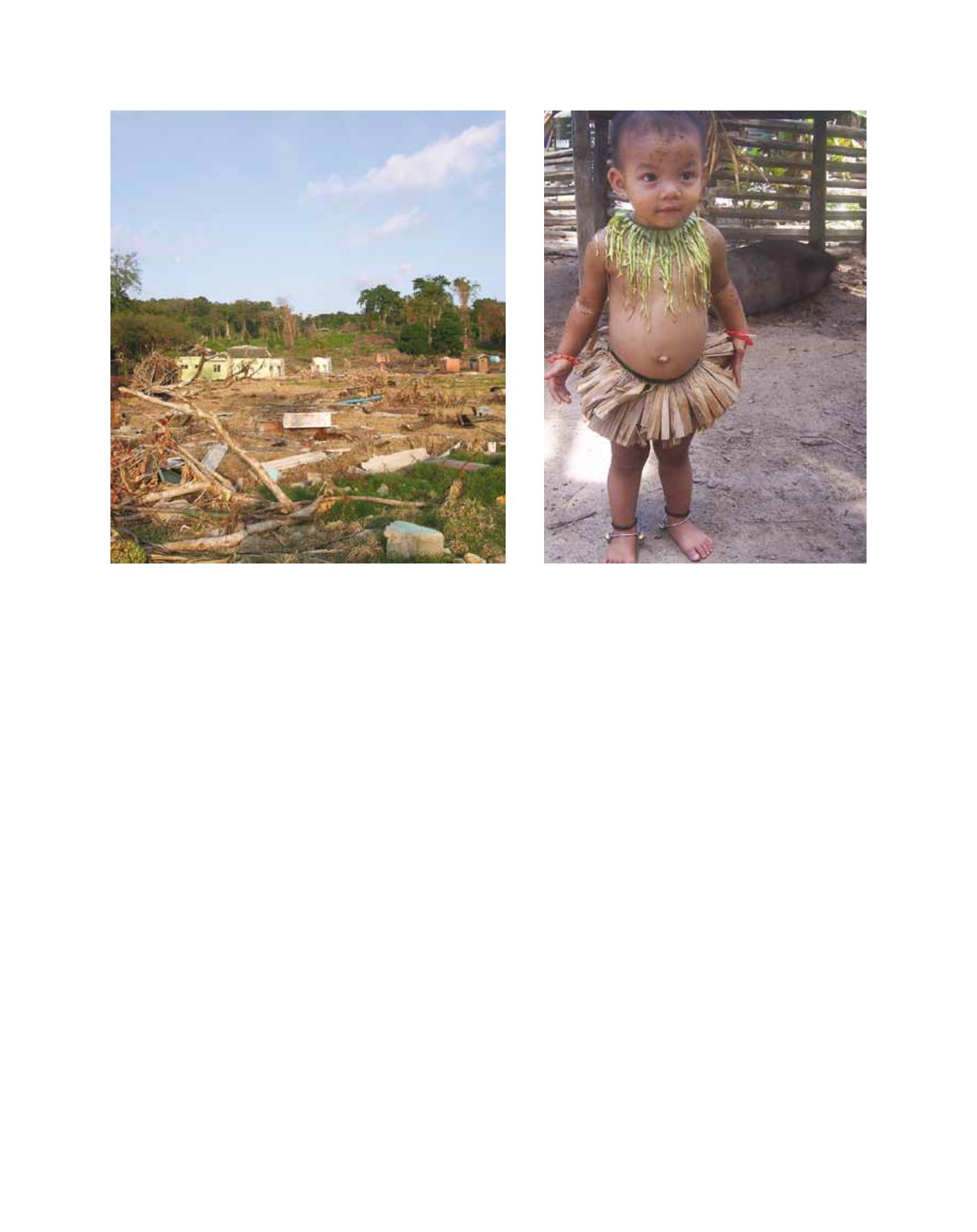
Reconstruction of livelihoods is a major challenge in isolated tribal communities such as those in the Nicobar Islands in the Bay of Bengal
Image: JTCDM, TISS
Image: JTCDM, TISS