


 154 / 168

[
] 154
ing geological issues such as new fractures and faults, geological
offsets, indications of liquefaction and accompanying subsurface
phenomena. This information is added to the database and the
Cat-Model.
In April and May 2010, Maipark’s research and development
team made the astonishing discovery of a huge seismic gap in the
Indian Ocean, south of Java, with important implications for the
Indonesian mitigation programme (including insurance). This
discovery has allowed the organization to provide the BNPB with
information about impending dangers to the inhabitants of the
southern part of Java. A set of simulations enabled the forecast of
economic as well as insured losses.
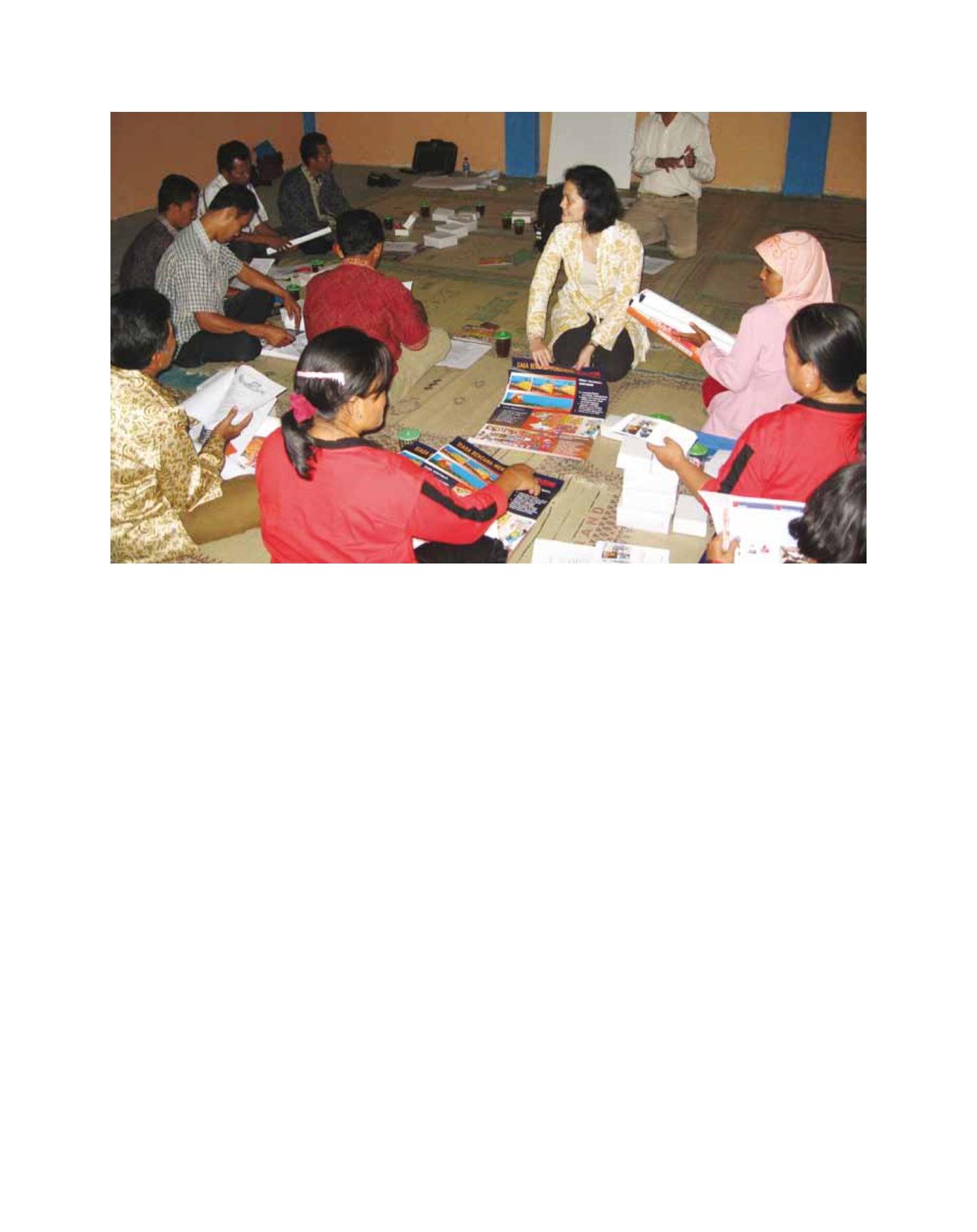
Maipark shares knowledge and research findings through semi-
nars, workshops, field excursions, websites and its three-monthly
Waspada Bulletin, first published in 2007 to increase public aware-
ness concerning natural disasters and mitigation strategies. Widely
acknowledged as essential reading on geology, geophysics and
natural disasters, Waspada is quoted by the Indonesian Institute of
Sciences on its website.
Preparation of the National Disaster Insurance Scheme
The increasing frequency and severity of natural disasters during
the last decade has had a significant impact on the national budget.
In both 2006 and 2007, the Indonesian government’s post-disaster
spending exceeded $1 billion. Similar spending occurred between
2009 and 2011 due to the West Java and West Sumatra earthquakes
of 2009 and the Merapi volcanic eruption of 2010.
Such high levels of unplanned risk financing can clearly have a
significant impact on the state budget of a small national economy.
Leveraging its expertise and international network, Maipark has
prepared a national catastrophe insurance scheme in
close cooperation with the leading international rein-
surance companies and brokers, offering an economic
solution for the fiscal risk to the state budget.
While special catastrophe risk insurance or reinsur-
ance companies in other countries are usually formed
in response to a calamity, the Indonesian insurance
industry has demonstrated its proactive capabilities
with the establishment of IERP and its transformation
to Maipark.
During less than ten years of operation, Maipark
has been able to make significant changes to the way
in which the Indonesian insurance industry deals with
earthquake risk. It has spearheaded the development
of a knowledge-based industry in earthquake risk
management, and has shown the ability of the industry
to participate in public-private-partnership (PPPs) to
manage natural disaster risks.
Priorities for the future
In view of its location in an earthquake-prone area and
the Ring of Fire, Indonesia should consider moving
from unplanned risk financing to a planned regime by
making use of the various risk financing techniques
available. Public-private insurance partnerships are a
particularly useful way of managing natural disaster
risk effectively and efficiently. With the coordination
provided by Maipark, the Indonesian insurance
industry is able to provide the government with the best
insurance solutions available worldwide.
Documentation of Disaster Awareness Training conducted by MAIPARK in the rural area in Bantul District, Yogyakarta Province, mid 2008
Image: MAIPARK