



 160 / 168

[
] 160
disaster preparedness. As a whole, the villagers learned to
work together. Families showed interest in storing suffi-
cient food and fuel and vegetables were dried and kept
in packets for the disaster season as a common practice.
Communities also took charge of boat repairing in their
areas through their own funds.
Most of the houses in the project area are made of
mud and are thus especially vulnerable to disaster.
Measures like raising plinths, installing protection walls
and covering roofs with low cost local materials have
been initiated. Many of the latrines are now installed
at a higher level than floodwaters and people are also
storing their firewood and family assets in higher places,
identified through vulnerability and risk assessments.
The communities have taken remarkable initiatives in
disaster preparedness activities leading to development
plans. The measures identified in the plans have been
implemented by the stakeholders and progress is moni-
tored regularly.
Measures such as installing raised hand pumps and
other proper sanitation facilities have led to improved
quality of life in the area. People are now more aware
of safe drinking water, hygienic practices and sanitation
during floods. They also know how to prepare oral rehy-
dration therapy (ORS) for diarrhea.
The role played by task force members during
cyclone Nisha
Cyclone Nisha affected the coastal and inland villages
in the state of Tamil Nadu to a significant extent. Most
of the villages were cut off and access to some places
was very difficult. People were stranded and left without
access to basic amenities.
2006. The main goal of this DRR programme was to help villagers
reduce the negative impacts of disaster.
Outcomes of the DRR programmes
The target communities internalized the DRR concept and gained a
clear understanding of the importance of the process. Community-
owned contingency plans have been developed in all the target villages
and people are following them during disasters. Human and cattle
losses have been reduced due to community preparedness and people
are better able to survive during disasters like floods and cyclones.
Good linkages have been established with Government functionaries,
who interact regularly with the community. Government assistance
now reaches communities without any delay, as the Task Force
Committees are helping the Government conduct damage assistance.
Women’s self-help groups have played an important role in saving
money and food, and all vulnerable villages have now developed this
kind of mechanism. Communities in the target areas are capable of
critically assessing their situations and making decisions on their
priorities. Specific local sustainable measures have been developed
to address water and sanitation issues through creating a replicable
model in each village.
A revolving fund has helped families raise their income levels through
activities like dairy farming, small business, sheep and goat rearing, and
selling of fish and coconuts. In all the villages, basic task forces were
formed in the programme areas. In addition, a list of vulnerable persons
was made by each community and shared with the coordination group
members in eachward for reference during a flood, allowing the commu-
nity to think about their actions during a disaster in an organizedmanner.
People also now feel that their responsibility is not only to their family
but also towards the community.
Participation of both men and women was very high during
Participatory Learning Action (PLA) activities. Through the PLA,
people learned about their own areas and made action plans for
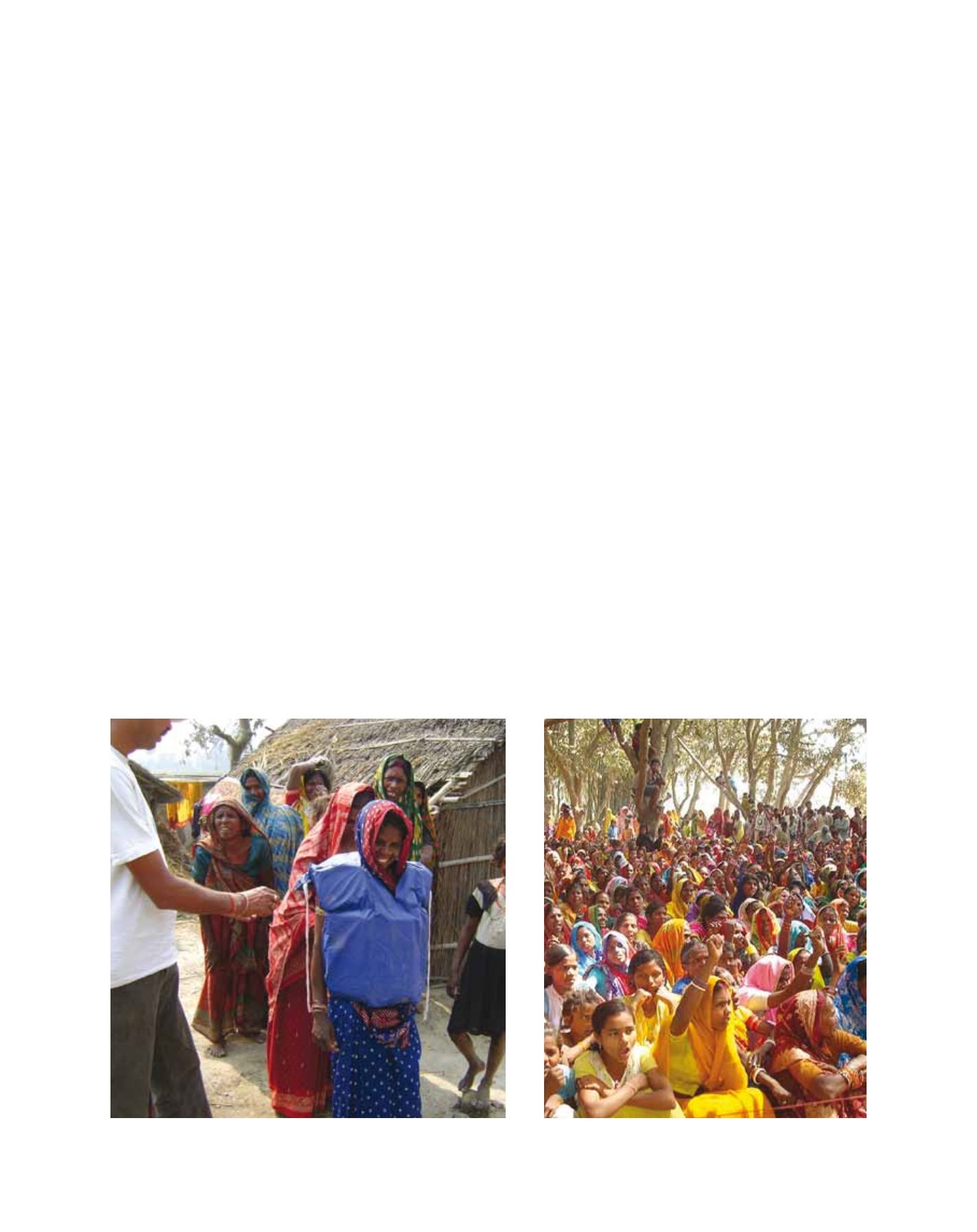
Learning to save yourself
Celebration of International Women’s Day
Image: Caritas India
Image: Caritas India