



 157 / 168

[
] 157
and diversifying delivery models are some of the important areas
outlined in academic literature and in policy arenas. Organization
of the poor is becoming more important in this regard.
However, the aim of this study was to provide specific recommen-
dations based on evidence. Therefore, the recommendations that
follow are based solely on the findings of data analysed through
this empirical review. While they are limited to the thematic areas
covered by the study, they are extremely pertinent to the successful
servicing of disaster microinsurance for the poor.
The following six priority activities and interventions are recom-
mended based on the findings of this study.
Utilize the client community to increase awareness and grow
–
microinsurance organizations should work to create innovative
ways to involve the community in outreach and create awareness
about disaster microinsurance. Client satisfaction is high and an
overwhelming majority is ready to refer friends to the programme.
Client-to-client and non-client-to-client information links and
communications are important. For this donors and national
governments must invest more resources at community level.
Use disaster microinsurance as an entry point for further risk reduction
– microinsurance is not a panacea for DRR. There is a need to promote
long-term DRR in conjunction with microinsurance and use strong
outreach and community links to support existingmicroinsurance organ-
izations. This will help to develop programmes focused on risk education,
structural mitigation (i.e. retrofitting), preparedness, and enhanced
coping mechanisms. There is a need for investment in both microin-
surance and microinsurance organizations. Private sector and national
governments must jointly initiate risk transfer and mitigation, both
projects to pilot in South Asia. The World Bank and Asian Development
Bank can provide initial technical assistance and seed money.
Regularly review the different organizations’ claims processes to
ensure that money is getting to clients in the most effective and effi-
cient way possible
– this includes examining services to help with
claims, pre-positioning claim kits, support for the timely review
of claims, and information management of decisions. Faster
processing should be incentivized. The private sector, authorities,
and CSOs need to pilot tripartite mechanisms for performance
improvement.
Promote increased participation by women in disaster
microinsurance programmes
– this includes a review
of products, services and modifications based on the
specific needs of women – as victims of disasters or as
vulnerable to disasters – in the region. Women’s organi-
zations and national authorities must find ways to better
cover women before, after, and between disasters.
Look for the biggest critic
– the impact of disaster
microinsurance cannot be determined solely through
client surveys, but must be also gauged through
a survey of people who have dropped out of the
programme, had claims rejected, and who will not
renew membership in the future. With programmes
in their infancy in the region, a critical component for
growth is being opened to hear what has worked and
what hasn’t, in an effort to fix problems. Investments
in national and regional fora will be timely in South
Asia. Independent, client-focused studies such as these
should be initiated regularly and long-term, to turn
criticism into design input.
Use impact assessments for future product develop-
ment
– impact measurement is a critical component
of microinsurance research and development in
South Asia and other regions. There is a need to
develop future product offerings based on the rigor-
ous empirical findings from a wider range of and
longer trend of impact assessments in South Asia.
Investments must be made by donors and the United
Nations in such regional, long-term, and focused
impact studies.
Investment in evidence-based policy-making delivers
results for better and more effective DRR. Though such
investments need dedicated teams and a committed insti-
tutional base to collect evidence, it is not so difficult to find
such conditions in South Asia. The results are of imme-
diate and long-term use to everyone working on DRR.
AIDMI is developing a regional series of such and follow
up studies from the frontline.
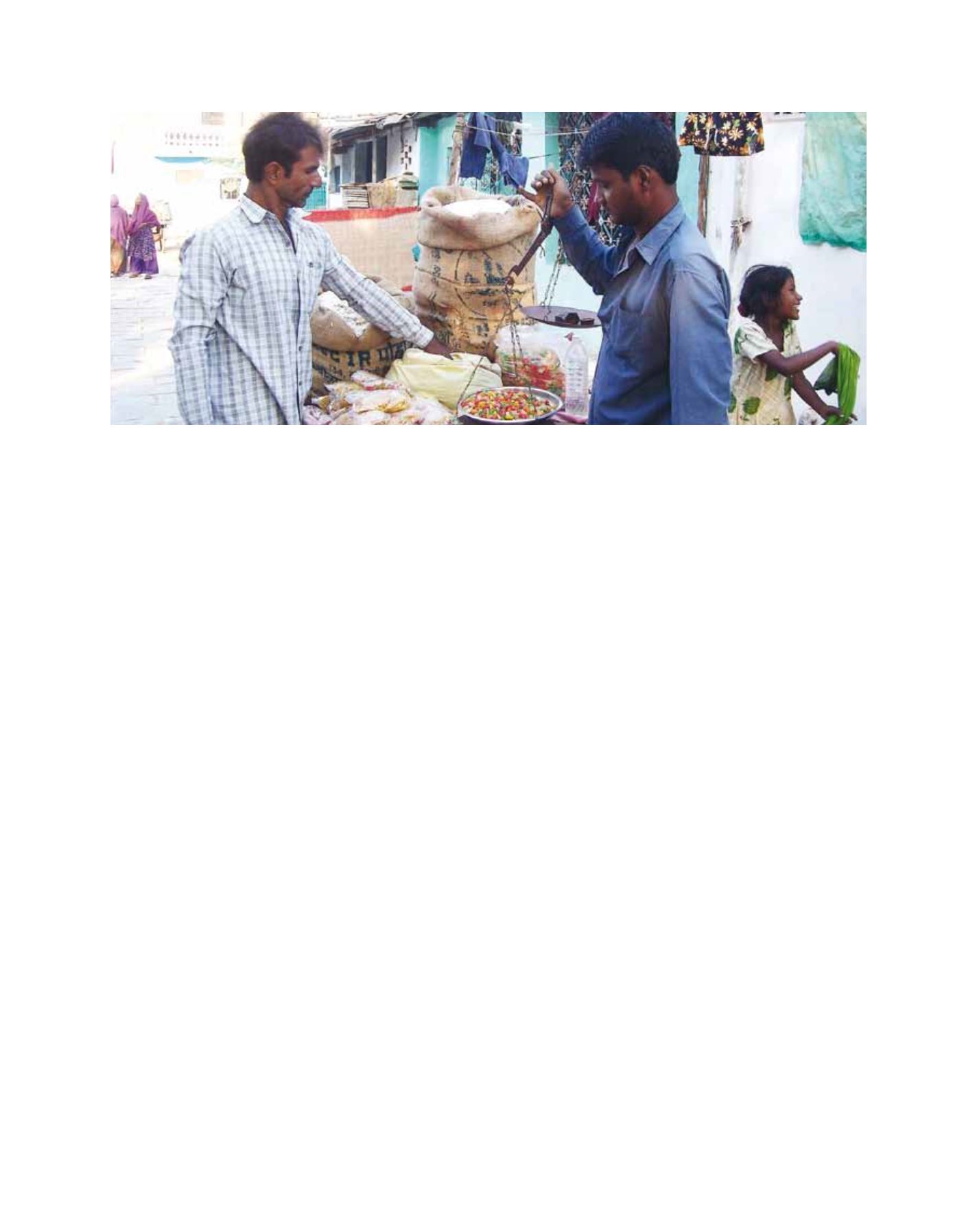
Small businesses were among the first users of microinsurance coverage against natural disaster in South Asia
Image: source