



 159 / 168

[
] 159
withGovernment and local institutions enabled behavioural
change in the community and revived traditional prepared-
ness mechanisms that sustain the process of DRR. Village
groups developed nurseries of suitable plant species in
many places and saplings were planted on riverbanks, with
the promotion of traditional creeper plants like Kalamilata.
North Zone
Uttar Pradesh:
Because of the vulnerability of Gorakhpur
to flooding, Caritas India and PGSS took up a joint
DRR venture in 10 villages of the Brahmapur block of
the district in 2005. The programme took the step of
including man-made disasters, arguing for the inclu-
sion of encephalitis (a brain fever causing hundreds of
deaths every year in the region) in this category.
Bihar:
The implementation of this programme started
in April 2008 in 185 villages in eight districts of Bihar.
The community has internalized the true spirit of the
programme, in the sense of increased capacity and
reduced dependency on external support in the context
of natural disasters.
West Zone
Maharashtra:
A preparedness programme was initiated
following torrential rains on 26 July 2005 in which many
people lost their lives or livelihoods. The DRR project in
Kalyan, aimed at developing mechanisms to mitigate the
loss of lives and assets, was implemented in the flood-
prone areas of 21 villages of Kalyan and Ambernath Blocks.
Gujarat:
This project was implemented by seven centres
in 21 villages of Surendranagar and Rajkot districts in
2000, which had shaken the rural economy of the state and destroyed
many lives and properties. In 2002, Caritas India initiated a small
pilot project in four districts of the state for a community-based
disaster preparedness programme, which paved the way for a larger
programme in 2004 involving 825 electoral wards in eight districts
of West Bengal, implemented by nine partners. This was scaled up
between 2007 and 2010 as a CBDP programme with responsibility
for 1,500 wards.
South Zone
Andhra Pradesh:
After the 1996 cyclone that affected East Godavari
District, Caritas Germany helped Eluru Social Service Centre to set
up a community-based disaster preparedness and health programme.
This project to assist people in the cyclone-affected villages of the
Konaseema area was implemented from August 2004 onwards in
90 villages, covering 13,867 families in the coastal belt of Andhra
Pradesh. In 2006, the programme was extended to 12 districts in the
region with 16 partners in 420 villages.
Kerala:
A relief and rehabilitation programme was initiated in ten
districts of Kerala state in 2006 following a tsunami which affected the
coastal villages.
Tamil Nadu:
In 2006, Caritas India introduced a community-based
disaster preparedness programme with eight partners in 452 villages
of Tamil Nadu, focused on building self-determining, independent,
self-reliant and resilient communities.
North East Zone
Caritas India introduced a CBDP programme in April 2004 with four
partners from Assam. This effort was aimed at influencing people at
community and family level and sensitizing local institutions, groups and
Government departments to the realities on the ground. The linkages
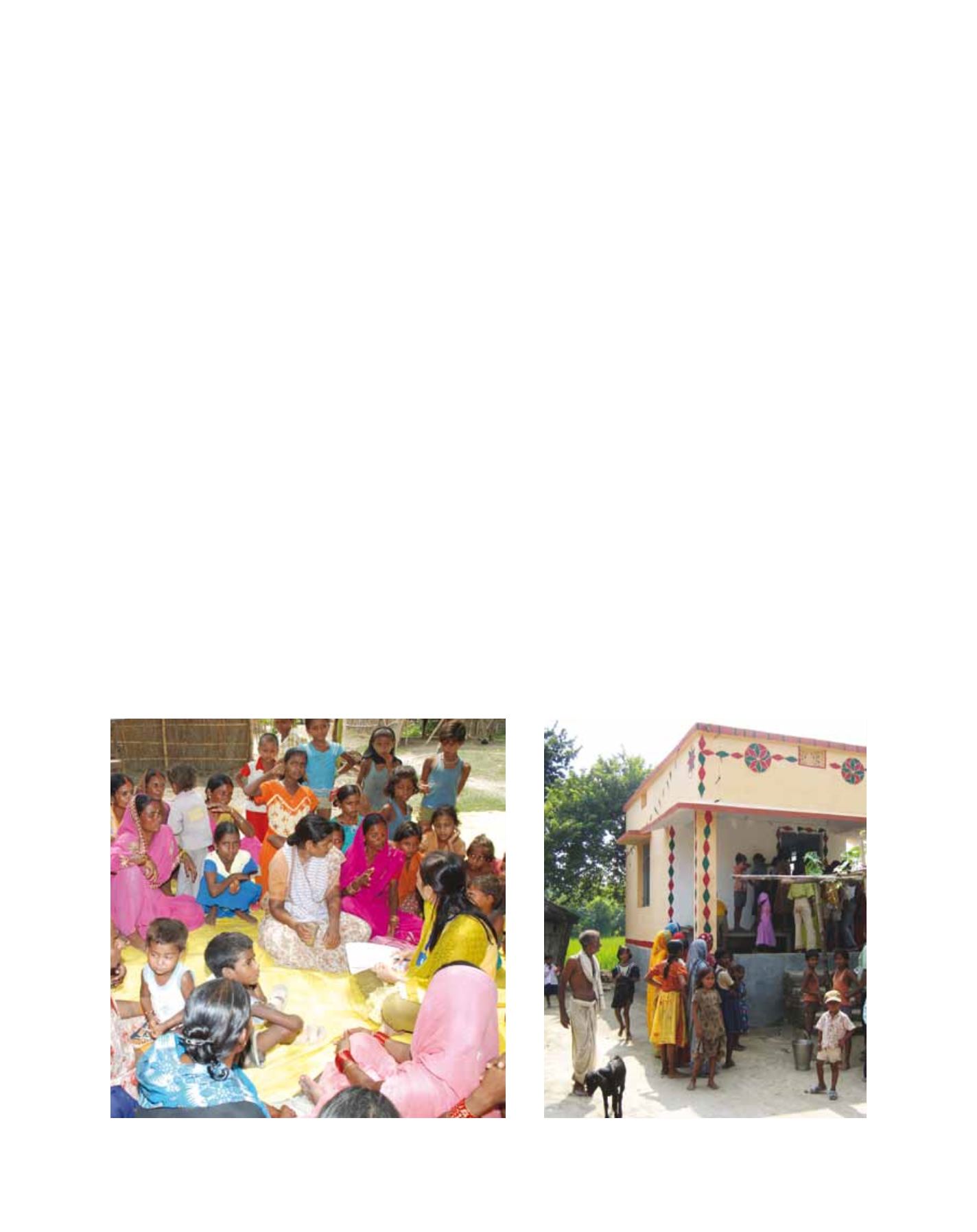
Community-based disaster prepardness
Flood resistant house, Bettiah
Image: Caritas India
Image: Caritas India