


 164 / 168

[
] 164
Effective risk governance at local level
People’s livelihoods play a major role in deciding their vulnerability
or resilience to disasters and challenges posed by the environment.
Similar hazard exposure will have very different effects on the live-
lihoods of residents in an area, depending on the
nature of local governance and institutional capacity.
The Views from the Frontline Survey 2009
11
and
GAR
12
state that inadequate involvement at the meso
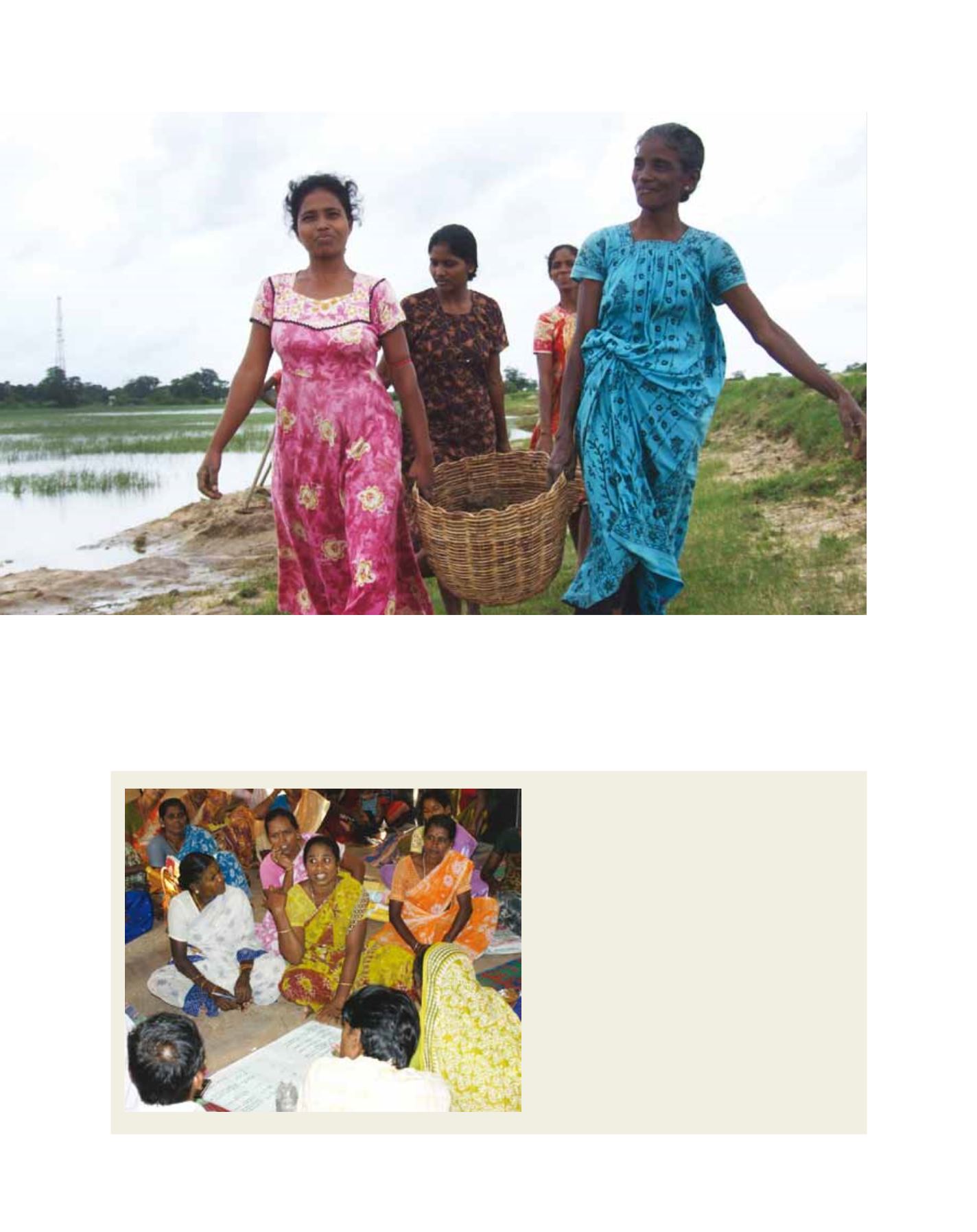
Villagers renovating a traditional irrigation and flood protection system in Kathiraweli, Sri Lanka
Image: Practical Action
Co-governance with community institutions
to reduce vulnerability and conflicts
Pollution in Panama, a lagoon in Ampara, Eastern Province Sri Lanka
which supports about 150 socially marginalized fisher families,
caused a drop in productivity that led to harmful fishing patterns
and conflicts. In 2006 a project
13
mobilized lagoon fishers and other
stakeholders to form a community-based fisheries management
system. The lagoon management committee (LMC) implemented
plans prepared through a process of consensus. A self-regulatory
system was introduced to improve regular fishing practice. Actions
of the LMC were monitored through the government district
development forums. Legislation was enacted, giving the fisher
community the right to co-govern with government authorities. The
empowered lagoon fishers now effectively participate in decision
making at operational, policy and judicial levels.
14
In India, community responsibility for the natural resource
base is also legally recognized and supported in watershed
management.
15
Local level DRR was launched by Kalvi
Kendra in the coastal Villupuram District, Tamil Nadu, to
facilitate tsunami recovery. The villages formed a committee to
coordinate response and improve long-term local risk pooling
and insurance. In the 2010 floods, local committees like these
were able to respond and protect communities.
16
Image: AIDMI