


 41 / 85

[
] 41
areas of pandemic preparedness addressed during
country visits were planning and coordination; commu-
nication; situation monitoring and assessment; health
system preparedness; pharmaceutical and non-pharma-
ceutical interventions; general society preparedness;
local level preparedness planning; interoperability; and
pandemic exercises.
Current status of pandemic preparedness in SEE
The current status of preparedness in pandemic plan-
ning in the SEE region has been identified as far as a
week’s worth of assessment in each country visited can
achieve this. The following status of pandemic prepared-
ness is presented as a general description of main
observations made during the country assessment visits.
Seasonal influenza
– in general, the seasonal influenza
vaccination coverage is low in SEE countries, some of
the reasons being the apparent lack of technical and
financial support for national vaccination programmes
and insufficient campaigning. Seasonal influenza surveil-
lance takes place in all countries, although in some
clinical data reporting is not supported by laboratory
testing. Five out of nine countries have WHO-recog-
nized national influenza centres (NIC) and report to the
European influenza surveillance platform (EISS) as well
as to the WHO Global Influenza Surveillance Network
(GISN). The remaining four countries are in the process
of establishing laboratory capacity as well as weekly
reporting to the EISS platform. It has been agreed that
a regional centre for influenza surveillance will be estab-
lished in the NIC in Bucharest, Romania.
Pandemic planning and coordination
– all countries in
the SEE region have pandemic preparedness plans, most
Each country was visited by an international assessment team,
which also included an expert from a neighbouring SEE country to
enhance interoperability in the region. Assessment team members
were all experienced experts across the field of pandemic prepared-
ness. The assessment of pandemic preparedness was made in
association with a national focal point who was responsible for
developing the agenda of the visit in collaboration with the exter-
nal assessment team and who accompanied them during the
mission. Within a week, meetings were held with all relevant stake-
holders such as pandemic and general emergency planners at
ministerial level, national institutes of public health, laboratories
and hospitals. Also, planning at regional and local level was
addressed through meetings with local governments and regional
institutes of public health. Through these meetings, information
was obtained about the pandemic preparedness situation in each
country, and challenges and opportunities for further development
and implementation of pandemic preparedness were discussed.
An essential part of the visits was to gather all stakeholders on the
first day of the visit for a briefing about the assessment visit and the
expected outcome, as well as the relevance of each stakeholder’s
involvement. Similarly, stakeholders were convened on the last day
of the visit for a debriefing about the findings and recommendations
made by the assessment team. This gave them an overview of the
situation in other areas of pandemic preparedness, and provided an
opportunity to discuss future work across agencies and administra-
tive levels. After each visit, a report was prepared and submitted to
the ministry of health in the assessed country, which contained
recommendations about future work on pandemic preparedness. A
SEE status report will be published based on observations made
during the pandemic preparedness assessment visits to the countries
involved.
Pandemic preparedness was the main focus of the assessment
visits, but seasonal and avian influenza was also addressed. The main
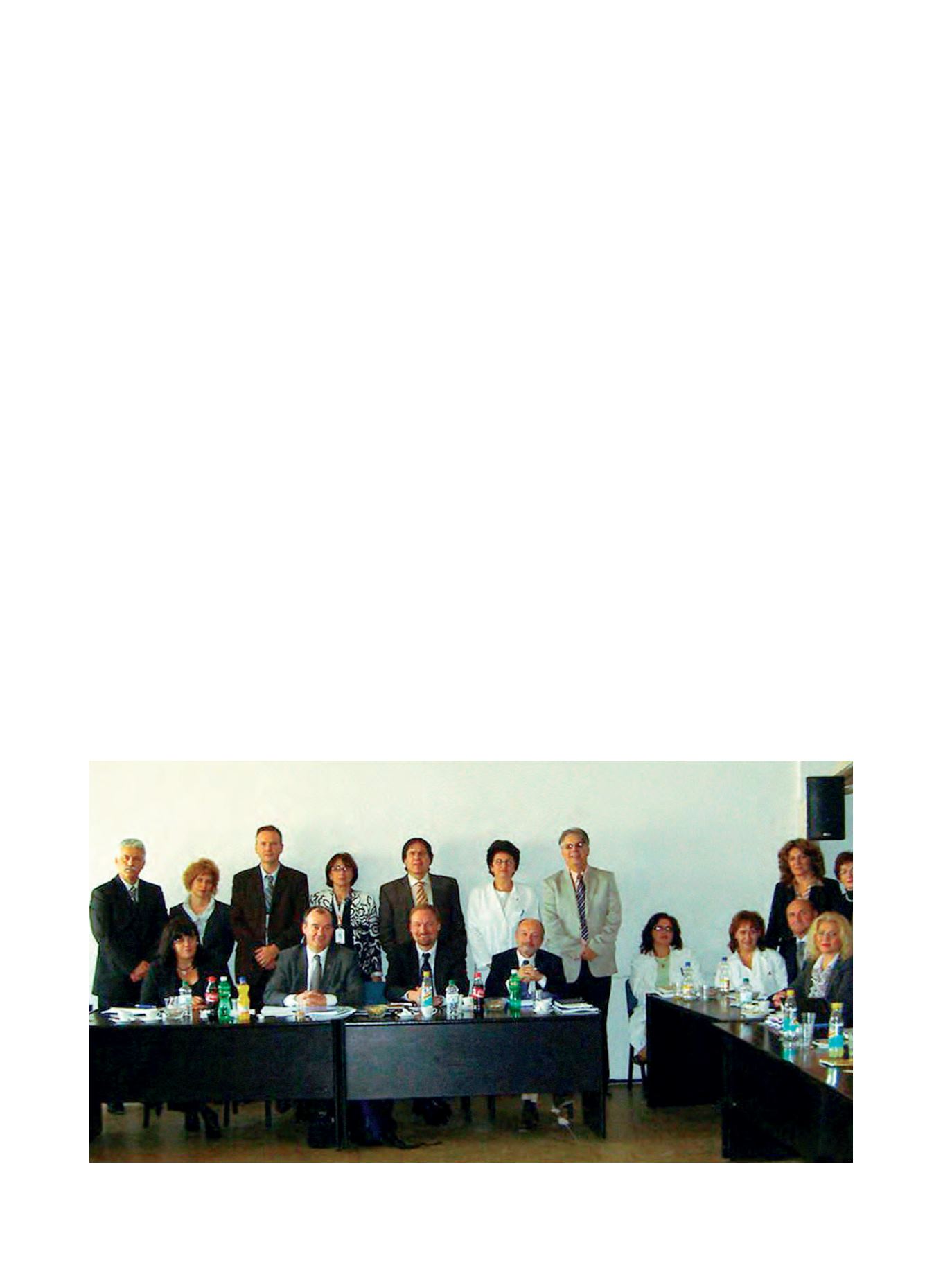
The pandemic preparedness team in the former Yugoslav Republic of Macedonia
Image: Nicholas Phin