


 43 / 85

[
] 43
countries have not stockpiled antivirals for use in a pandemic. The exist-
ing stockpiles are due to expire in the coming years and countries need
to decide whether to renew the stockpiles with the manufacturer.
Stockpiles of antibiotics for a fewmonths’ use exist in several SEE coun-
tries, which is considered an advantage for their pandemic preparedness.
Several SEE countries have previous experience with non-phar-
maceutical interventions like school closure and banning mass
gatherings during epidemics of seasonal influenza and have the legis-
lation to support these interventions. However, these issues are still
to be addressed in the context of a pandemic.
Pandemic preparedness outside the health sector is not yet appar-
ent in SEE. According to the observations made during the country
visits, initial thoughts have been made on this topic in a number of
countries but planning as such, and involvement of essential sectors
other than the health sector has not yet begun.
Pandemic planning at local and regional level
– planning at local
and regional level has predominantly concentrated on human cases
of avian influenza in most countries. For many of the visited coun-
tries it was observed that there has been no message from higher
administrative levels that pandemic planning should be initiated.
Lack of sufficient resources was also described as one of the main
reasons, but it was also observed that in many cases the regional or
local plan for outbreak of avian influenza was interpreted or misun-
derstood to be a pandemic preparedness plan for the region or
municipality. Nevertheless, the avian influenza contingency plans
that have been developed at local and regional levels will provide an
important basis for developing pandemic preparedness at sub-
national level due to the experience of going through a planning
process and the overlap in some of the technical issues.
Interoperability
– the network of strengthening surveillance and
control of communicable diseases in SEE HN, which has existed
since 2002 under the Stability Pact for South East Europe, has
shown to be a good framework for collaboration between countries
in the region. Until now, collaboration on pandemic preparedness
has been mainly through the workshops organized under the SEE
HN in collaboration with the WHO Regional Office for
Europe and sharing of information among their public
health institutes. Also, all countries agreed and signed
a declaration for regional collaboration on implemen-
tation of the revised International Health Regulations,
under which pandemic preparedness is an important
component. A few countries reported that they have
initiated some informal collaboration with a neigh-
bouring country on some aspects of pandemic
preparedness.
Pandemic preparedness exercises
– none of the coun-
tries reported that they had undertaken pandemic
preparedness simulation exercises. All countries had
carried out exercises on outbreaks of avian influenza
and have in this way strengthened their response to
outbreaks significantly. In particular, six SEE countries
were involved in an inter-country exercise in Albania
in 2008, which tested their avian influenza contingency
plans.
Main achievements since 2005
Observations from country assessment visits and the
recent workshop on pandemic preparedness have made
it clear that a great deal of work has been done and much
progress has been made. A number of achievements have
been realised including:
• Strategic national pandemic plans have been devel-
oped in all SEE countries
• There is better understanding and awareness of
pandemic influenza and the requirements for
preparedness
• Pandemic planning committees/working groups in
all SEE countries have been established
• There is good collaboration between countries
under the SEE HN framework
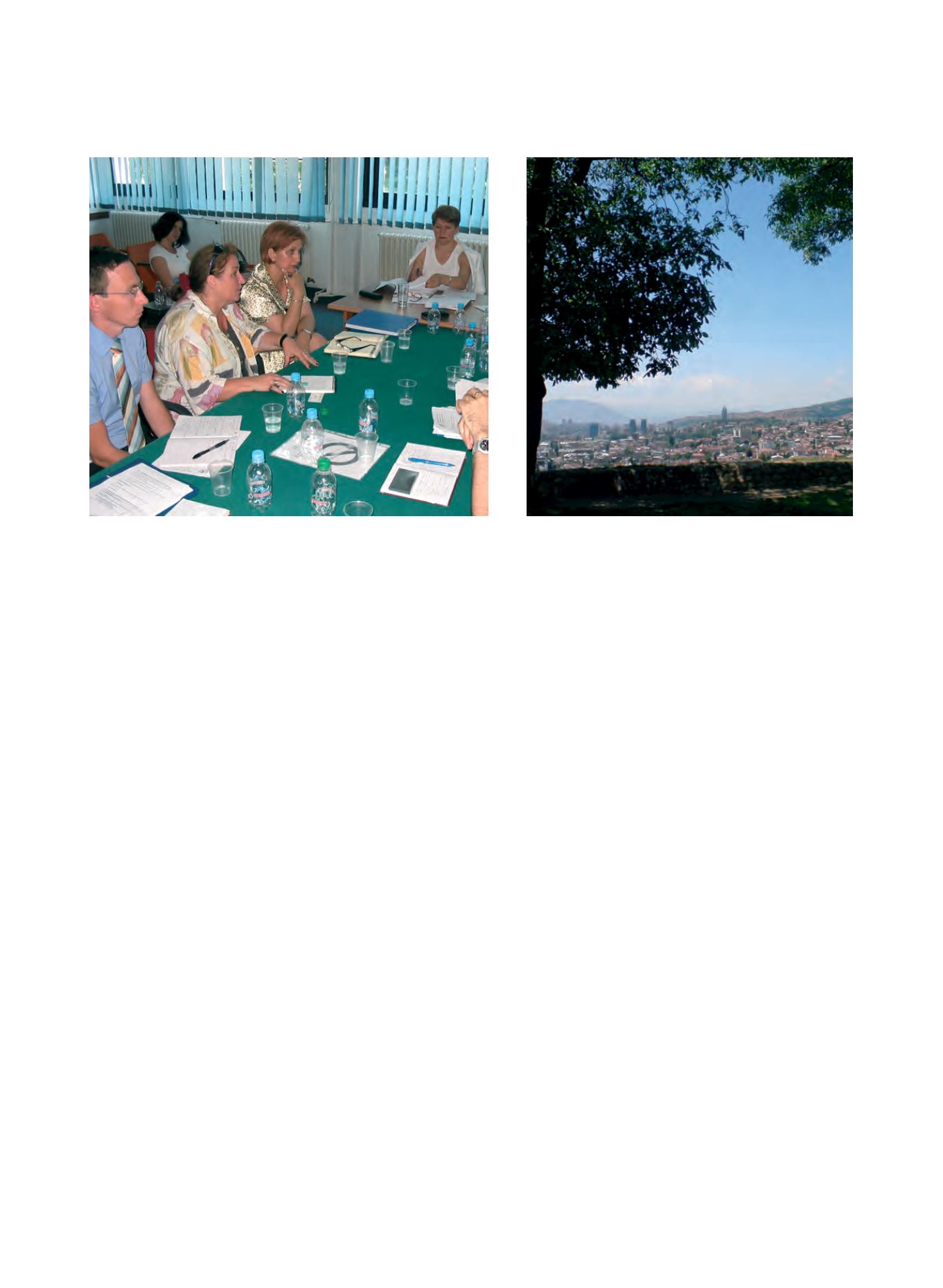
A preparedness discussion in Bosnia and Herzegovina
Image: André Jacobi
Bosnia and Herzegovina
Image: Andreas Gilsdorf