


 37 / 85

[
] 37
tial’ – that is, a strain that has never previously circu-
lated among humans, such as H5N1. Apart from the
specific pandemic virus strain, which can only be iden-
tified after the onset of the pandemic, most other
scientific and technical aspects of the vaccine dossier
may be evaluated in advance of the pandemic, and clin-
ical experience (immunogenicity and safety data from
vaccine use in healthy volunteers) can be gained with
such mock-up vaccines. In addition, the documentation
submitted in the application contains a ‘risk manage-
ment plan’ that describes how the safe use of the vaccine
would be monitored during a pandemic.
This approach reduces the resource and time require-
ments from both the manufacturer and regulatory
authorities during the emergency pandemic period,
which could impact on the provision of a safe and effi-
cacious vaccine of good quality, in advance of an
emergency situation. Following the onset of a pandemic
and identification of appropriate pandemic strains, the
mock-up vaccine dossier may be updated to include the
required influenza strain by means of a variation to
include this strain. The decision on who should receive
the vaccine, and when it should be given, will be made
by the governments in each EU member state.
unique nature of a pandemic meant that novel mechanisms would
need to be developed to deal with such a situation. One of the conclu-
sions was that in the event of a pandemic, new regulatory approaches
to facilitate the rapid manufacture, regulatory review, authorization
and supply of pandemic vaccines would be required while main-
taining high standards of quality, safety and efficacy.
For pandemic influenza vaccines, the vaccine strain can only be
identified – and therefore vaccine may only be produced – after the
onset of the pandemic. Vaccine development and authorization is a
process that ordinarily takes many years. It should be noted that in
the event of a pandemic, it is likely to be a minimum of three months
before any vaccine is available to be used for the prevention of
disease. Even when vaccine does become available, there will be
several months before sufficient doses are available to immunize all
citizens of the EU. During this period of time, it is likely that antivi-
rals would be used.
‘Mock-up’ pandemic vaccines
To speed up the review of applications for marketing authorizations,
EMEA developed the concept of a ‘mock-up’ pandemic influenza
vaccine that mimics a future pandemic influenza vaccine in terms
of its formulation, manufacturing and control methods. However,
because the virus strain which might cause a pandemic is not known,
the mock-up vaccine contains a novel strain with ‘pandemic poten-
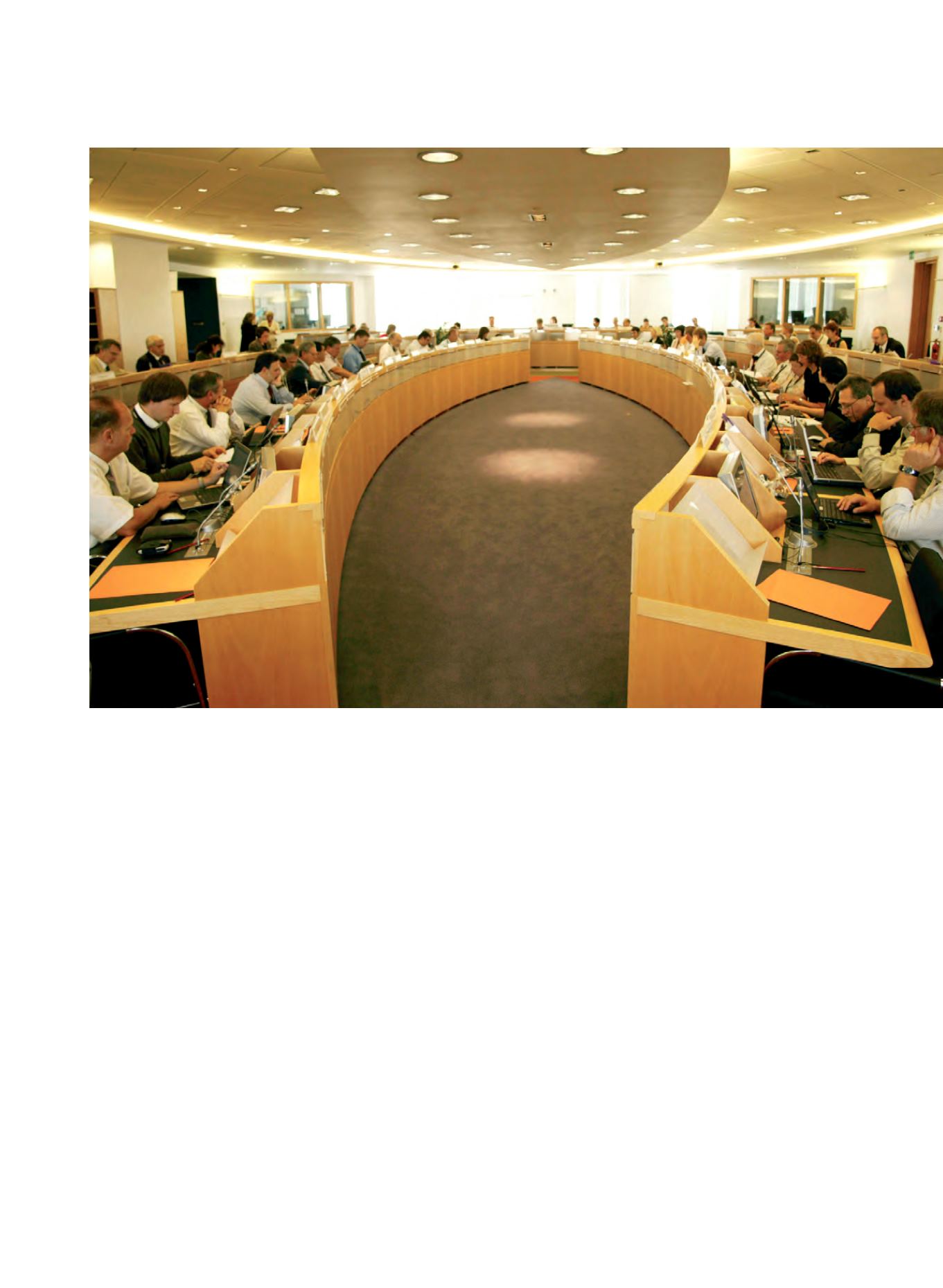
EMEA delivers guidance and stimulates debate with the vaccine industry
Image: EMEA