


 32 / 85

[
] 32
on fogging and spraying stagnant water to prevent mosquito breed-
ing.
Another major issue was the improper use of clean water. Despite
the availability of water purification units, the threat of water-borne
diseases remained real. Upstream contamination of interconnected
water sources was detected and the community in Secata continued
their daily routine of using the spring water for bathing, washing
and even consumption. Together with Oxfam, which was providing
adequate water containers designated for different household
purposes, MR conducted workshops to create awareness on proper
and hygienic water use. To control the looming sanitation problems
at the camps, Oxfam also set up cubicle toilets to prevent faecal cont-
amination from the overflow of latrines. In Calang, east of Mata-I, a
rapid health assessment conducted two weeks after the disaster found
that all survivors continued to drink from unprotected wells, and at
that time, 85 per cent reported having diarrhoea.
Given the crowded living conditions, there was also an apparent
need for measles vaccination. While a higher immunization cover-
age level was needed to prevent any outbreak, MR could only
effectively conduct opportunistic vaccination for children who came
voluntarily to the medical centre where the teams operated. Secata’s
remoteness posed logistical problems in maintaining the cold chain
to transport vaccines, creating further setbacks to the medical person-
nel whose mobility was already limited by the lack of transportation
that hindered them from reaching more victims and conducting a
mass-scale outreach programme. The World Health
Organization (WHO) reported that clusters and sporadic
cases of measles, including 35 reported cases in North
Aceh district, were common despite mass vaccination
campaigns conducted elsewhere by other agencies.
During MR’s two-month operation at Mata-I it was
also observed that many of the IDPs had low immunity
levels, as they were only eating plain rice. MR therefore
initiated a food distribution programme to boost their
nutrition intake.
Case Study II: South Asian Earthquake –
Muzaffarabad, Pakistan, 2005
Mountainous terrains, limited accessibility and severe
climate posed early challenges to MR’s initial team,
which went to Abbotabad and subsequently settled at
the UN base camp in Muzaffarabad. In an effort to
extend medical aid there, MR partnered with Pakistan’s
largest medical NGO, the Pakistan Islamic Medical
Association (PIMA). Complementing each other’s
strengths, the collaboration involved working together
in the organization and set-up of a field hospital at
Neelum Valley. Operations at the field hospital were
stretched to capacity as the medical personnel had to
attend to inpatients and outpatients, many of whom
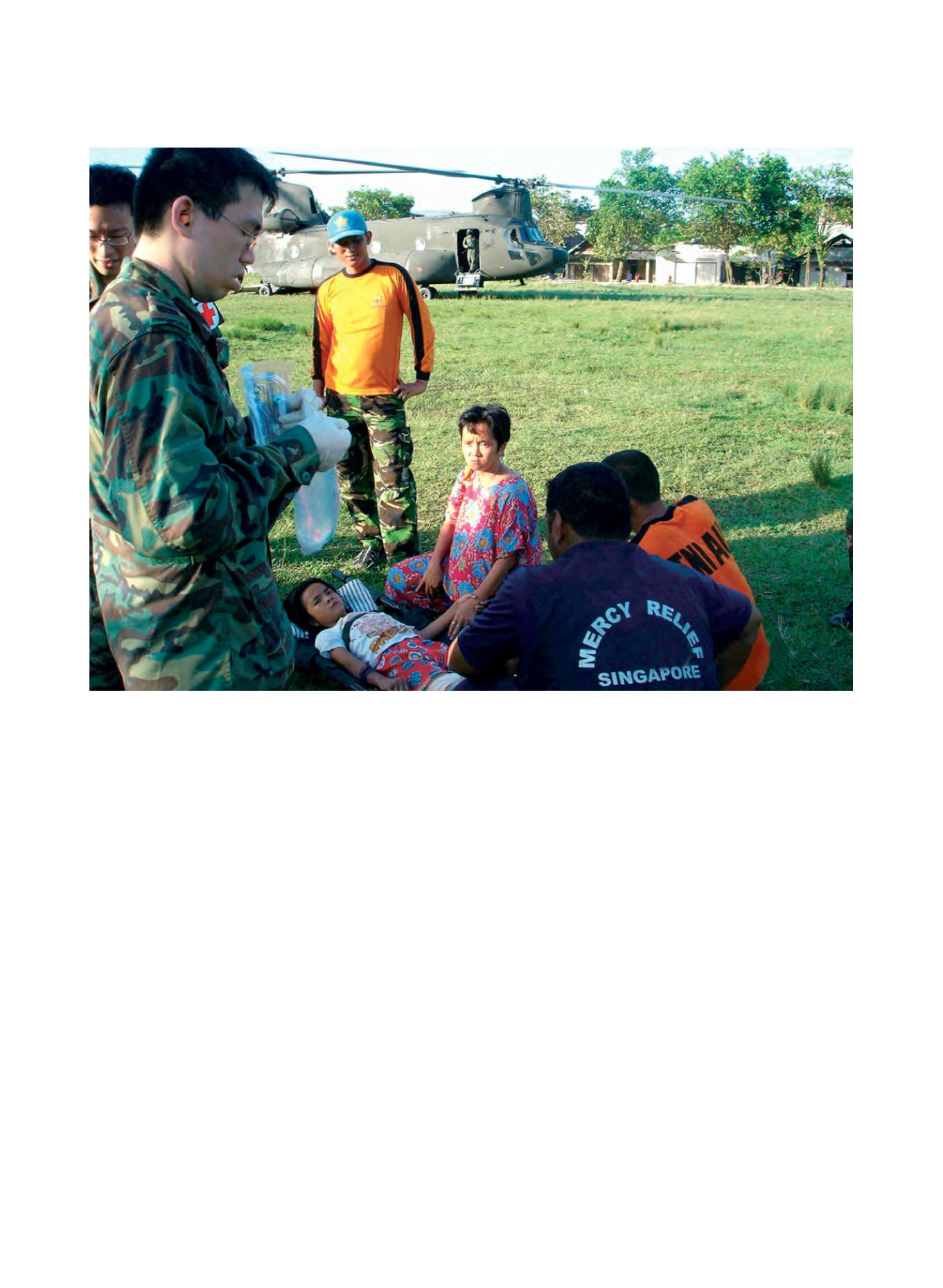
Aid agencies deploy liaison officers to allay anxieties by facilitating communications between evacuated patients and relatives on the ground
Image: Mercy Relief