


 29 / 85

[
] 29
In Cambodia, CARE organized Village Surveillance Teams (VST)
– composed of the village chief, village health worker and village
animal worker – to serve as the focal point for prevention, surveil-
lance, control and reporting of avian influenza at the village level.
The VST teaches local people how to identify and report avian
influenza and encourages preventative practices such as hand-
washing and proper food preparation.
Most households in the villages targeted by CARE have less than
ten head of poultry and these roam freely in their surroundings. The
VSTs have set up demonstration farms to promote bio-secure poultry
raising practices such as proper pen size and distance from a house,
segregation of new and sick poultry, vaccination, pen hygiene and
proper waste disposal. These demonstration farms encourage the use
of local materials such as bamboo and palm for pen construction,
and provide technology for growing alternative poultry feed such as
earthworms or water spinach. The demonstration farms show that
poultry raised under bio-security practices are less at risk of diseases
and have better weight upon maturity. If sold, these poultry
command a higher price, which means more income for a family.
Avian influenza coordinator Jacquelyn Pinat says the VSTs are key to
prevention of the disease at the community level as they not only
promote but also practice proper poultry-raising and personal
preventative habits.
In Vietnam, CARE complements the national Government’s
general awareness programmes on avian influenza by targeting key
behaviours and related messages to particular audiences to encour-
age behaviour change. CARE runs discussion groups with backyard
farmers, poultry sellers and restaurant staff on bio-security and bio-
safety practices. People are encouraged to use protec-
tive equipment such as gloves and masks when handling
poultry or disinfecting cages, to wash clothes and motor-
bikes after transporting chickens to markets, and to use
separate cutting boards for poultry in restaurants.
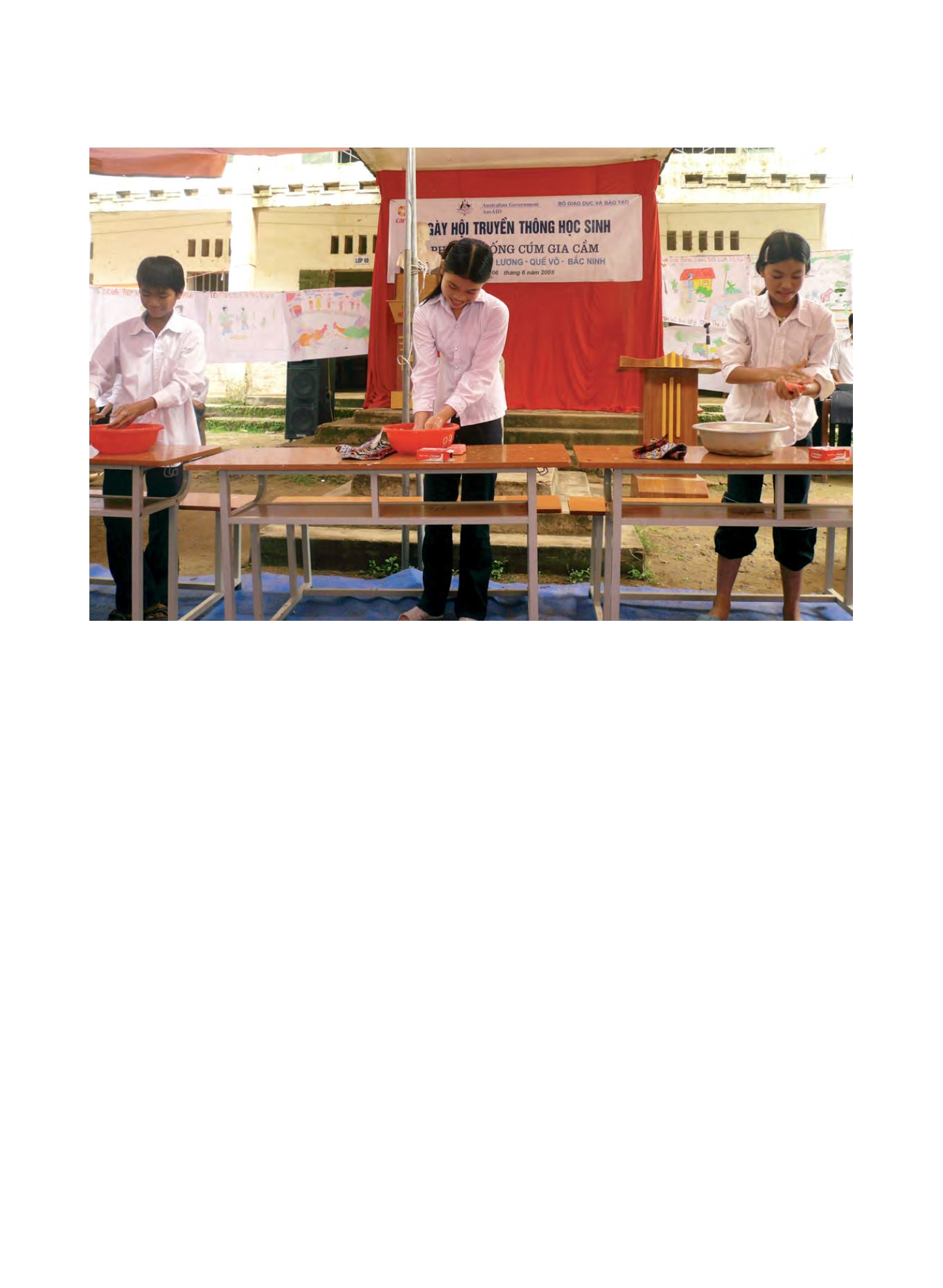
Theatre plays, games and poster competitions are used
to teach children the importance of hand-washing and
better hygiene practices. Avian influenza coordinator
Lieve Sabbe says every effort is made to reach people in
villages: “At the provincial level we work on a strategy,
selecting messages based on the habits and cultures of
a village. Then we move to the district level and identify
how we can best work with target groups to give people
information on avian influenza risks in poultry and
humans. A communication plan for a village is devel-
oped over six weeks. People are interested, but it’s hard
when they have strong cultural practices and it takes
time to change people’s behaviour with things like hand-
washing.”
Conclusion
Australia’s approach to emerging infectious diseases can
be summed up by the old adage, ‘better safe than sorry.’
We know that, once unleashed, avian influenza has the
potential to wreak havoc on the lives of individuals,
families, communities and economies. A strong and
determined emphasis on prevention and preparedness
will help avoid outbreaks.
Children in Phu Luong Secondary School in Bac Ninh Province, Vietnam take part in a hand-washing competition. The child that properly washes its hands to
effectively kill bird flu virus is the winner
Image: Pham Thi Bich Nga