


 31 / 85

[
] 31
grapple with unprecedented displacement issues and
burgeoning concern over the health conditions of the
affected population. With hospitals and health institu-
tions badly damaged or affected by the impact of the
waves, major aid agencies faced the uphill tasks of
obtaining relevant pre-disaster health data to determine
the immunization status of the affected population.
MR deployed 17 medical teams to Meulaboh and
Banda Aceh in the two months after the disaster. The
local authorities there requested that MR send its
medical teams to an isolated community of thousands of
internally displaced persons (IDPs) at Secata camp in
Mata-I, about 45 minutes away from the main town
Banda Aceh.
While treating trauma cases directly resulting from
the disaster, as well as diarrhoea due to contaminated
food sources, a multitude of alarming discoveries
surfaced in and around the overcrowded camps.
Numerous pools of stagnant water left by the waves,
coupled with the hot and dry weather, became conve-
nient breeding grounds for mosquitoes and rodents.
Mosquito nets distributed to the IDPs earlier were hardly
effective when it came to overcoming the risk of vector-
borne diseases. Fortunately, MR chanced upon a Korean
non-governmental organization (NGO), which focuses
the population displaced, specifically the proximity of safe water and
functioning latrines, the nutritional status of the displaced popula-
tion, the level of immunity to vaccine-preventable diseases such as
measles, and access to healthcare services.” Mercy Relief’s (MR) expe-
riences in the aftermath of recent major disasters such as the tsunami
in Aceh; the earthquake in Pakistan; and the war in Afghanistan
support their assertion.
MR’s modus operandi for acute emergency relief is to assess and
evaluate firsthand the situation and basic needs for survival of the
victims such as food, water and shelter in the affected areas. A team
of medical personnel is usually included in the reconnaissance party
to assess the medical and healthcare needs of the survivors, and at
the same time provide support to local healthcare units in managing
casualties. The objective of the subsequent medical relief missions is
to attend to trauma cases – directly treating the patients or referring
them to a more advanced institution.
Experiences and lessons drawn from various MR humanitarian
relief missions have repeatedly brought to attention the compounded
medical and social problems that could have been prevented if a
proactive approach had been implemented to address the issues, both
pre- and post-disaster.
Case Study I: Indian Ocean tsunami – Aceh, Indonesia, 2004
Tens of thousands of homes in Aceh were destroyed by the monstrous
waves of the tsunami. The heavily crippled local government had to
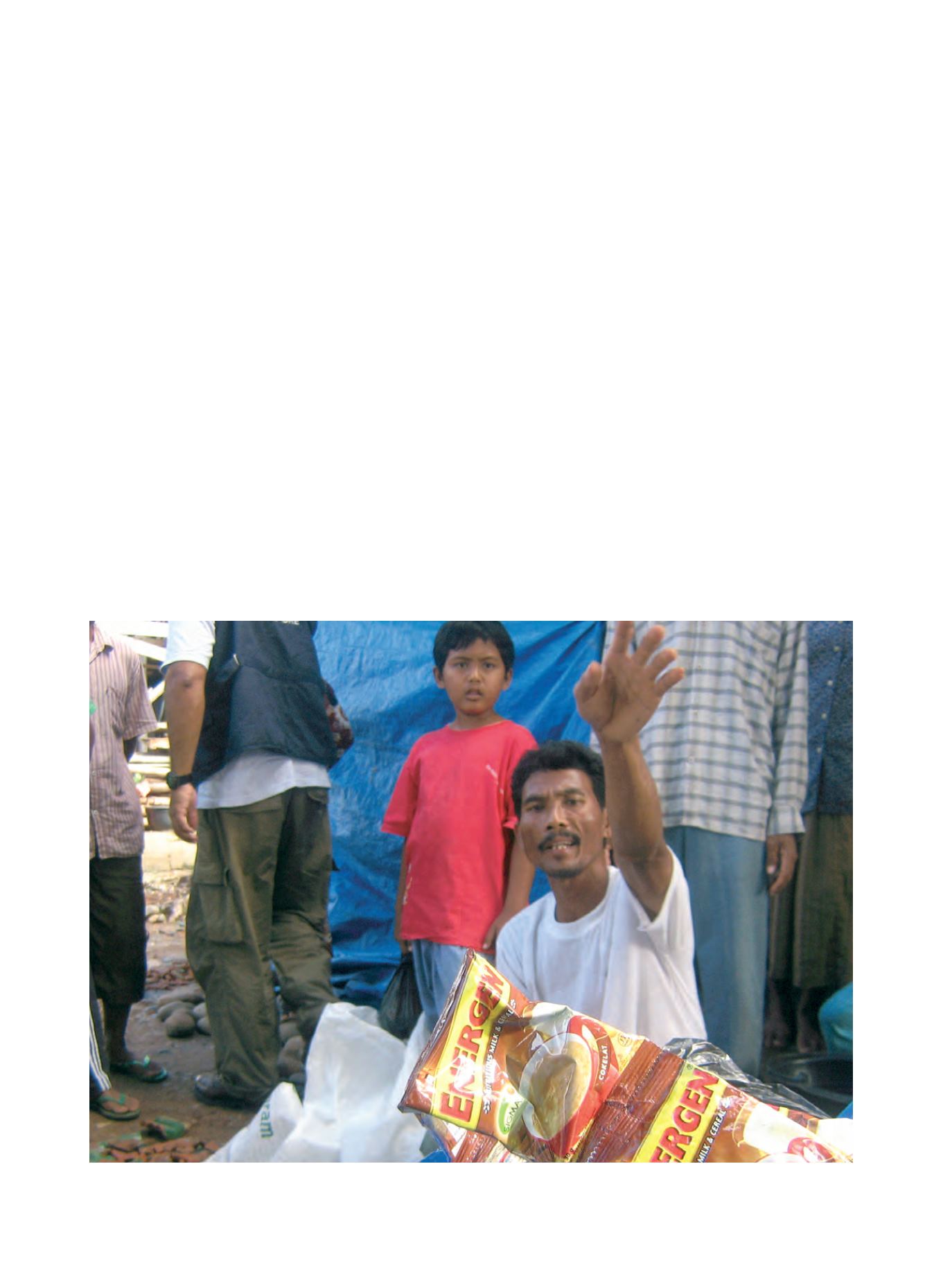
Survivors welcoming food packs distributed during the emergency phase to address their most basic survival needs
Image: Mercy Relief