


 30 / 85

[
] 30
Thwarting the secondary enemy
Hassan Ahmad and Siti Sayadi, Mercy Relief, Singapore
T
he occurrence of natural disasters has risen distinctly over
the last two decades. Hydrometeorological hazards such
as floods and windstorms have contributed largely to the
increase of rapid-onset natural hazards. The United Nations
(UN) Under-Secretary General for Humanitarian Affairs char-
acterized the high incidence of this type of disaster as a ‘mega
disaster’ linked to climatic change.
1
Less predictable geological
hazards such as earthquakes, volcanic eruptions and tsunamis
have also seen an increase due to rapid urbanization, environ-
mental degradation and weak governance. Such hazards are
likely to have an even greater human cost.
The under-management of social issues like improper water use and
sanitation, hygiene practices and limited healthcare awareness, mostly
due to lack of funds, has led to a lack of knowledge and
understanding of health issues such as diseases in both
disaster-stricken and poverty-stricken areas.
Measures towards the prevention, mitigation and erad-
ication of infectious diseases require a holistic approach
in the following areas.
Risk of epidemics in disaster areas
In their manuscript
Epidemics after Natural Disasters
,
Watson, Gayer and Connolly highlighted the issue of
displacement as a primary concern that would lead to
disease transmission.
2
They mentioned that “the risk for
communicable disease transmission after disasters is
associated primarily with the size and characteristics of
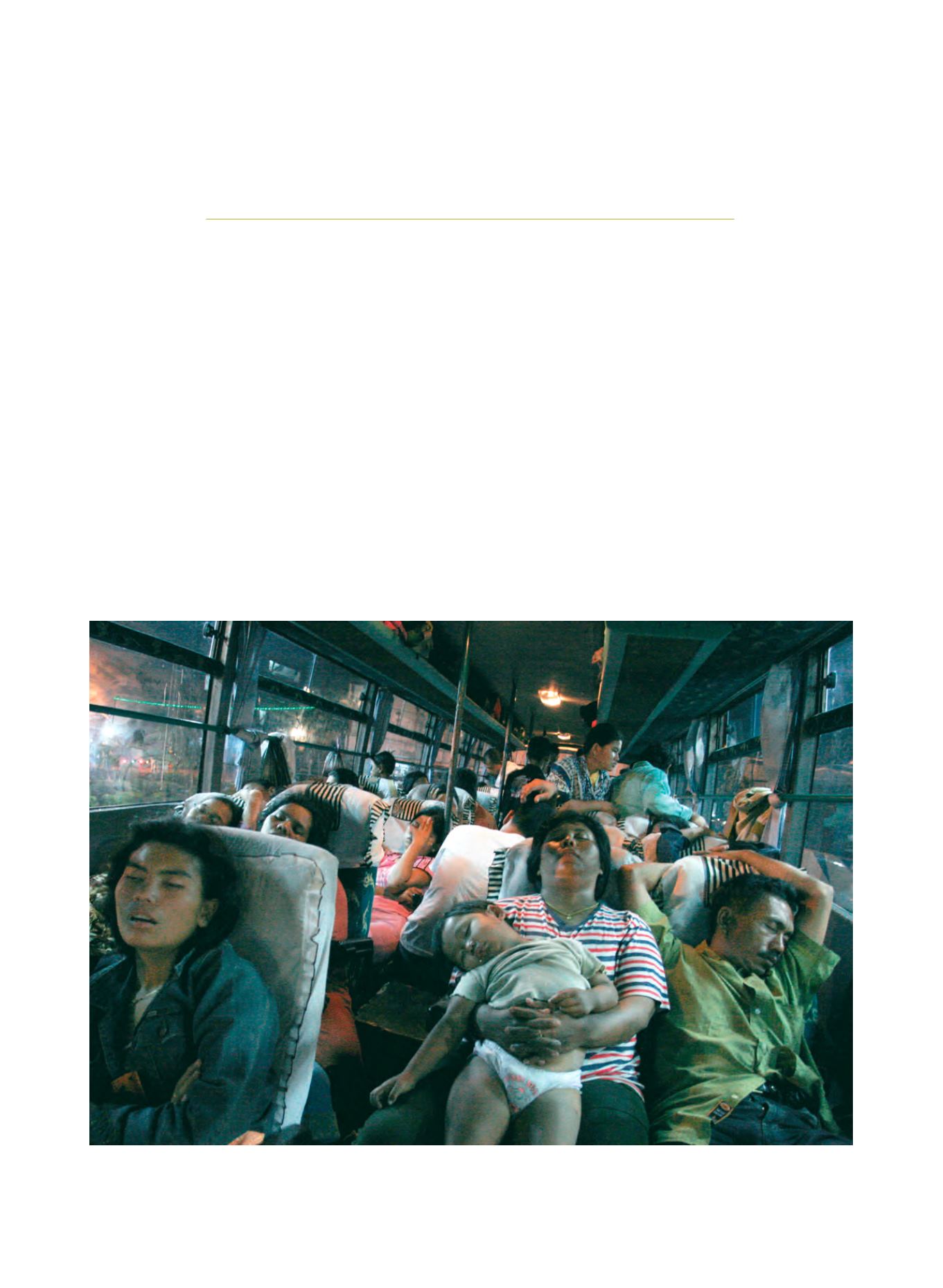
Evacuated survivors from Banda Aceh return home from non-affected towns like Medan because of unfamiliar conditions at the new locations. Such migration
activities posed high risks of transmission of diseases
Image: Ernest Goh/ Mercy Relief