


 174 / 210

[
] 172
E
nsuring
W
ork
-F
amily
B
alance
their opportunities to be included in professionally operated
early learning and in peer groups. This is important in envi-
ronments where there are relatively few children because
of generally small family sizes. Furthermore universal, low-
cost access to day care is a vitally important channel for the
increasing number of immigrant and refugee families and chil-
dren to be included in their new society.
Employed parents are entitled to work shorter hours until
the end of the child’s second year of school, with a small flat-
rate benefit that compensates partly for the loss of income. In
2014 a new ‘flexible care allowance’ will be introduced with
a higher benefit to encourage parents of children under the
age of three to combine part-time work with part-time care.
When a child under 10 falls ill, parents have a right to take
a temporary care leave for a maximum four days at the time.
This leave is unpaid, but many collective labour market agree-
ments provide full pay from the employer during leave.
In terms of leave policy, adoptive parents have nearly the
same rights as biological parents. An adoptive mother is not
entitled to the period of maternity leave that precedes child-
birth, and an adopted child must be below the age of seven for
the parents to be entitled to parental leave. Same-sex parents
have recently obtained the right to parental leave for both part-
ners, even if they are not a child’s biological or adoptive parents.
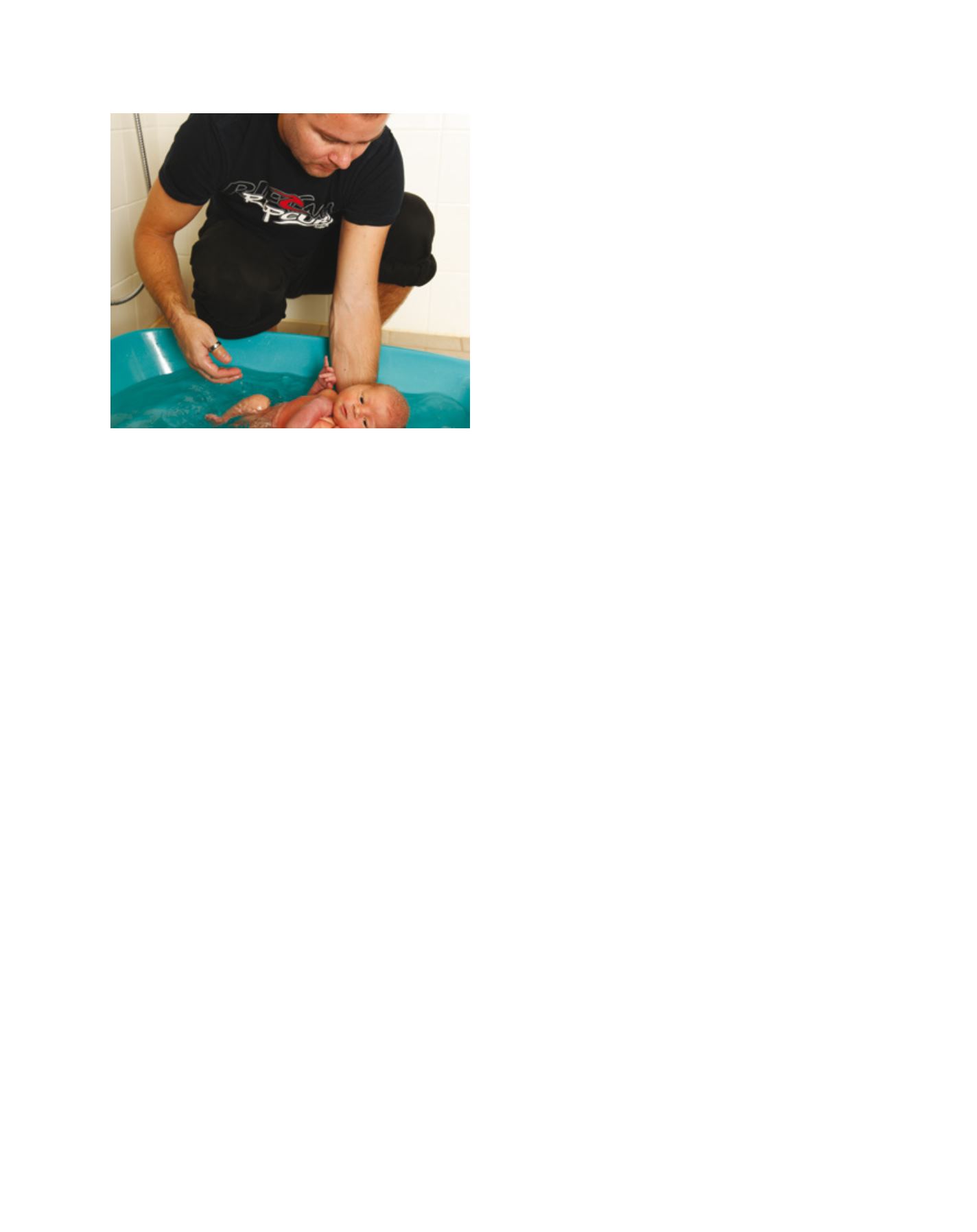
Practically all mothers take maternity leave and parental leave,
and a majority of fathers (four out of five) take the opportunity
of a couple of week’s paternity leave when their child is born.
About one in four fathers also take the additional paternity leave
later, when the mother returns to the labour market. On average,
children are cared for at home until they are about 1.5 years old.
Current challenges to parents’ ability to reconcile work and
family life include ensuring the continued development of family-
friendly practices such as flexible hours at the workplace, as
well as more effectively taking into account other family phases
besides the first three years of the child’s life. This is often very
important for single parents and for any employees who have
chosen to care for a relative at home who is ill or has a disability.
Studies have shown that many employed parents in Finland
often experience a lack of time with their family because of
working life duties. Mothers, and to some extent also fathers,
are worried about coping. In addition to statutory leave rights,
benefits and day-care services, it is clear that practices at the
workplace level are crucial in balancing paid work and family
needs in everyday life. Parents have a menu of realistic choices
but still, if one of the parents stays at home with children, it
is much more often the mother than the father.
Despite efforts to ensure gender equality, there are indica-
tions that Finnish women find it more difficult to combine
career and family than, for instance, women in Sweden. Many
municipalities provide additional home-care allowances to
enable mothers to care for their children at home instead of in
municipal day care. This is done in order to ease the pressure
on municipal budgets, as the allowance costs much less than
a place in the day-care centre. As a result, only 44 per cent of
two-year-olds are in formal day care, while the corresponding
figure in Sweden is 85 per cent. While supported home care
widens the menu of real choices for mothers, long absence
from the labour market is risky from a career perspective.
The social policy system promoting the balancing of work and
family life has been effective in many respects. The labour force
participation of mothers is high, and paternity benefits and paren-
tal leave have increased the participation of fathers in childcare.
The need to reconcile work and family responsibilities is,
however, not limited to families with childcare responsibilities.
The need for reconciling work and family responsibilities is,
however, not limited to families with child care responsibilities.
While Finnish legislation guarantees basic social security and
essential services for all throughout the life cycle, the mutual
customary responsibilities beyond the nuclear family as well as
intergenerational solidarity and mutual help still remain strong.
The development of a system of universal social security
combinedwith universal access to essential services in Finland did
not follow from the wealth of the nation. Instead, they were intro-
duced by a rather poor nation or at least during a time of relative
economic scarcity. These investments in people through a univer-
sal system of social policy had a high rate of return. In addition to
widening and deepening the human capital, they contributed to a
long period of rapid economic growth–with equity, as concluded
in the World Bank Development Report of 2006.
In the discussion on sustainable development, reference is
usually made to the rights of distant, hypothetical future genera-
tions. However, the concrete future generation is already here:
today’s children. They have the right to personal development.
They also have the right to socially, ecologically and economi-
cally sustainable development. For some 50 years or more, they
will shoulder the consequences of the choices made by today’s
decision makers. Social benefits and services to families that aim
at enabling mothers to participate in working life and at the same
time encourage fathers to participate in childcare are investments
in children, in gender equality and in the socially sustainable and
economically wise development of the nation.
The crucial question is not whether we can afford equality-
oriented social policy that supports the balancing of working
life and family responsibilities. The right question is why
governments would choose not to benefit from such an excep-
tionally profitable investment in social policy.
A father bathing his newborn: four out of five Finnish fathers take up the
right for paternity leave after the birth of the baby
Image: Antero Aaltonen