


 176 / 210

[
] 174
E
nsuring
W
ork
-F
amily
B
alance
policy, making it possible for both parents to find support for
their unique situations in life and strike a balance between a
satisfying career and their choices of how to bring up their
children. The importance of a child perspective when making
policy choices cannot be stressed strongly enough. Sweden’s
child rights policy aims to ensure that children and young
people are respected, that they are given the chance to develop
in a secure and nurturing environment, and that they can
express their views in matters affecting them.
The Swedish model is characterized as a dual earner-dual
carer model with a high level of support from the public sector
throughout the first years of childhood. Sweden has had an ambi-
tious and flexible family policy for many years, starting with the
introduction of child benefit in 1947, which was followed by
parental insurance and childcare initiatives in the 1970s. The
system has evolved considerably since then, but the basis has
remained the same which makes it predictable and secure. Men
and women can feel safe in the knowledge of what conditions
will apply if they become parents. Generous spending on family
benefits, flexible leave and working hours for parents with young
children, and affordable, high-quality childcare are the main
factors for success in Sweden. High female and maternal labour
force participation, high fertility rates and good living standards
for families are the results, indicating that balancing work and
family life generally works well. The freedom for both parents
to choose, not between work and having children but rather a
successful combination of the two, also results in high fertility
rates – 1.91 in 2012, which is high for a European country.
In 2012, the employment rate of mothers and fathers with
children aged 0-17 years was 82 per cent and 92 per cent
respectively. High proportions of women use flexible working
arrangements and/or work part-time. Between 2000 and
2012 the proportion of children whose mothers work full-
time increased by seven percentage points to 42 per cent. The
proportion of children whose fathers work full-time was about
74 per cent during the same period.
Sweden has a highly developed and flexible parental leave
system that encourages both parents to spend time with their
children. A parent is entitled to full leave for the care of a child
until it reaches 18 months, regardless of whether they receive
parental benefit. A parent can also reduce normal working hours
by up to one quarter when the child is younger than eight years.
Parental benefit is paid for a total of 480 days. Parents with joint
custody of a child are each entitled to half (240 days) of parental
benefit. Parental benefit days can be transferred between parents,
with the exception of 60 days that are reserved for each parent.
The benefit may be granted to the expectant mother up to 60
days before the expected birth, and to either parent until the
child is eight years old. The length of leave and flexibility in
choosing when to take it ensures the possibility of not only an
extended period of time off work with young children, but also of
greater work-family balance through working part-time, shorter
hours or taking time off work when caring for older children.
The compensation rate is equally important for the acces-
sibility and success of the parental benefit system. Parental
benefit consists of two different kinds of compensation: 390
days are compensated at a rate based on parental income up
to a maximum ceiling, and 90 days are compensated at a flat
rate of SKr180 (US$27) per day. The income-related days are
compensated at around 80 per cent of the parent’s previous
income. If a parent does not have a previous income, parental
benefit is SKr225 (US$34) per day. For people whose income
is higher than the ceiling, collectively agreed supplementary
insurance schemes (agreed upon by the social partners) play
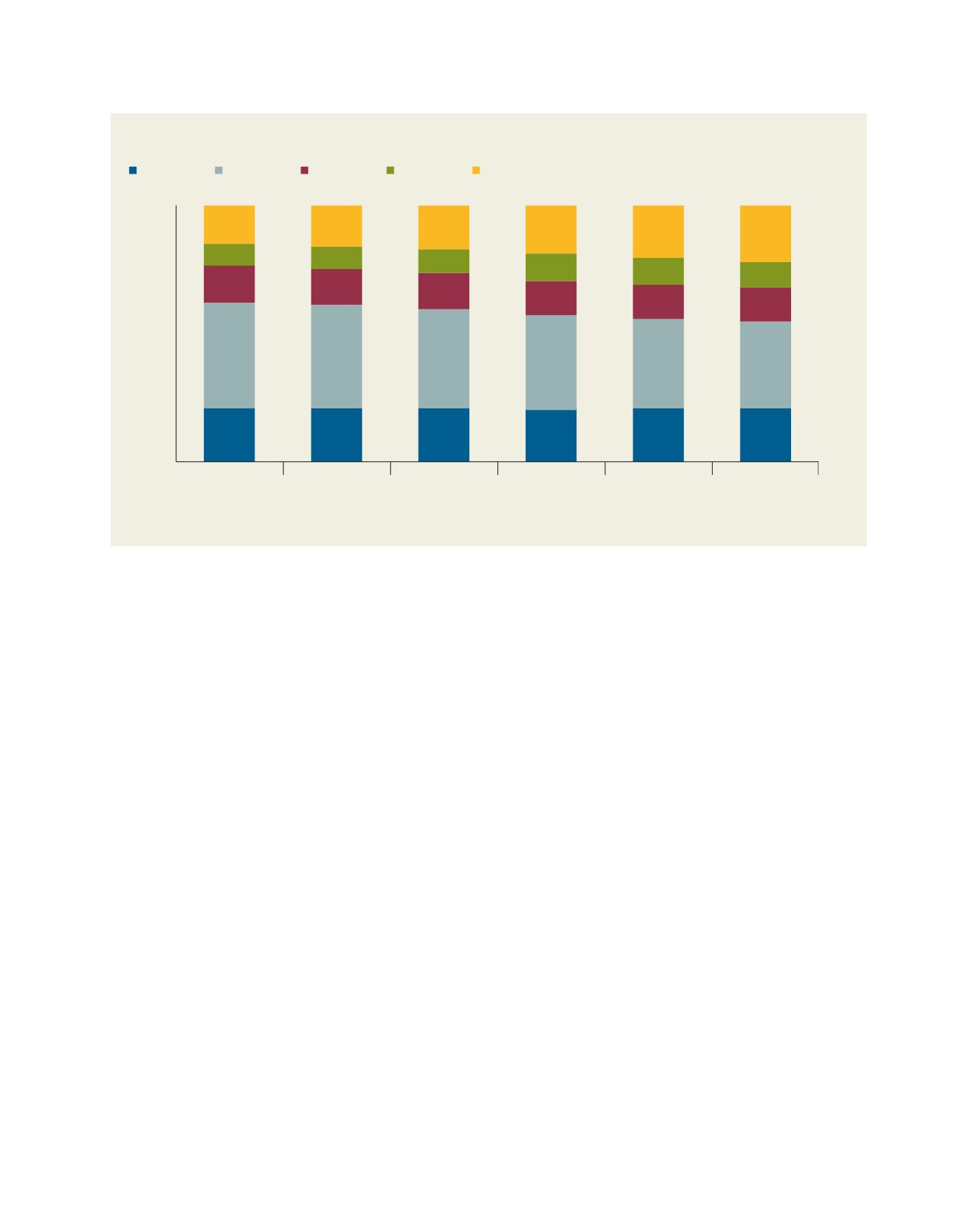
0 days
1-60 days
61-90 days
91-120 days
121+ days
2003
2004
2005
Year of birth
Per cent
2006
2007
2008
0
20
40
60
80
100
The percentage of four-year-old children born in 2003-2008 whose fathers have taken parental leave
Source: The National Social Insurance Agency, 2013