


 179 / 210

[
] 177
Family policy in the Republic of Slovenia
Tamara Narat, Social Protection Institute of the Republic of Slovenia; Lea Javornik Novak and Ružica Boški
ć
,
Ministry of Labour, Family, Social Affairs and Equal Opportunities, Slovenia
E
nsuring
W
ork
-F
amily
B
alance
0
5,000
10,000
15,000
20,000
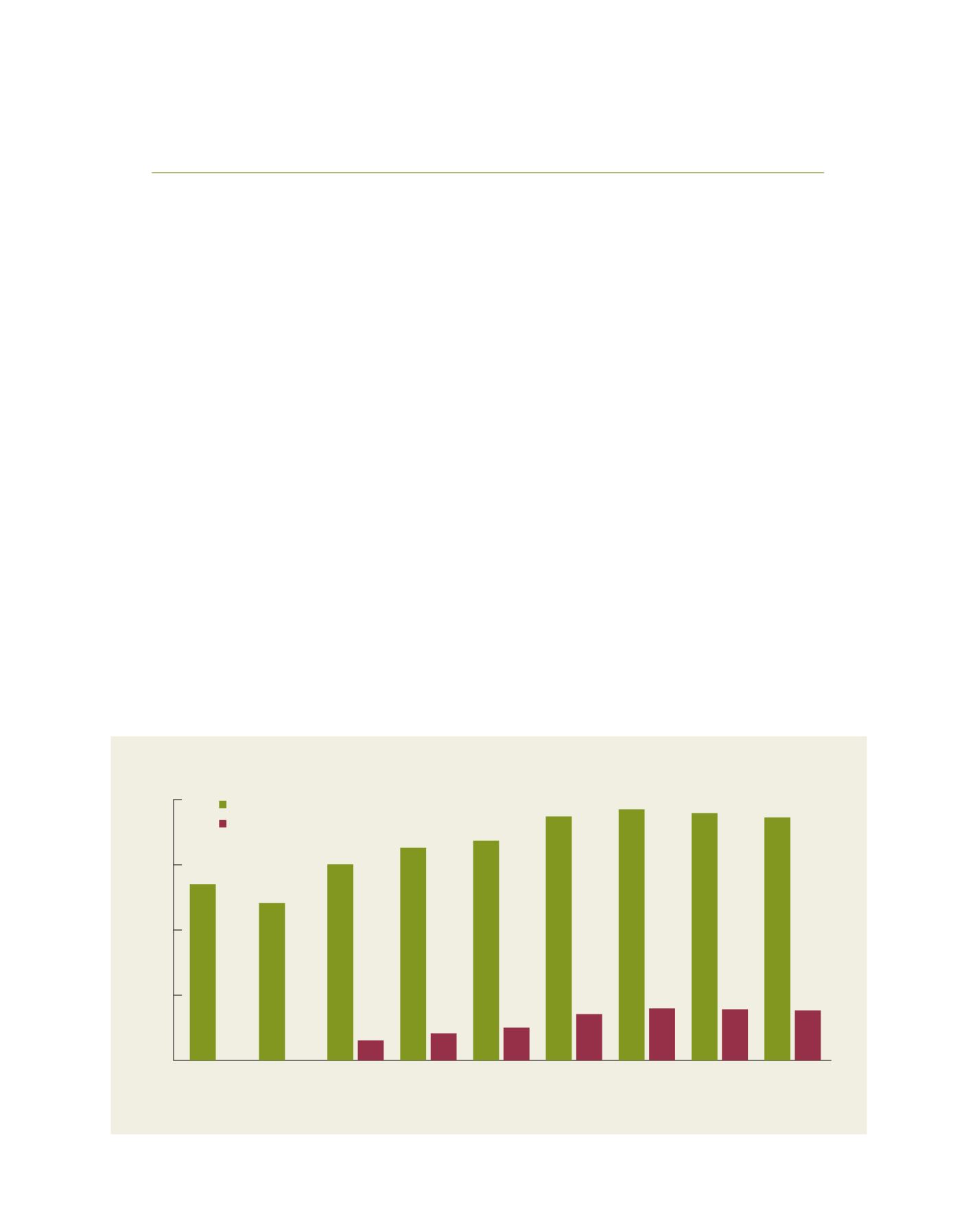
Paternity leave up to 15 days
Paternity leave more than 15 days
2004
2005
2006
2007
2008
2009
2010
2011
2012
Number of fathers taking paternity leave
Source: Ministry of Labour, Family and Social Affairs
A
mong the fields which significantly influence the
quality of family life, the work-family balance is
one of the greatest challenges that parents face.
The problem is manifested in the use and division of time,
consideration of personal needs in the employment field,
and in balancing the requirements of personal and family
life with professional activities. This problem is especially
pressing for women. The employment of women cannot
be equated with that of men, as they do not participate in
the labour market in the same way (for example, women’s
salaries are lower than men’s, unequal gender division of
unpaid work is characteristic, women take leave to care
for family members more often than men).
According to sociologist Maca Jogan, the participation of
women in the labour market in Slovenia has a rather long
history; women have been present in the employment field
since World War II. In accordance with this, a long tradition
of managing the policy of facilitating the connection of profes-
sional work with family life is characteristic of the country.
Slovenia began speedily constructing kindergartens in the
1970s, as well as providing care and school meals for chil-
dren in primary school. Maternity leave and childcare leave
also have a long history in Slovenia, and have been established
practices since the end of World War II.
The current fundamental document defining family policy
in Slovenia is the Resolution on the Foundations for Family
Policy in the Republic of Slovenia, which was adopted in
1993. On the declarative level, this document anticipates
various measures for a better balance between family and
work obligations. Its provisions for childcare, parental
leave and measures related to the working environment are
summarized below.
Organized institutional care of preschool children may
have two purposes: that of education, and of the work-
family balance. The latter is especially highly emphasized
in family policies, as a significant part of the policies on the
work-family balance in the resolution is intended precisely
for this purpose.
Institutional care for preschool children is relatively well-
organized in Slovenia. The majority of kindergartens are
public, but a trend of increasing numbers of private kinder-
gartens may be observed. These, however, are also subsidized
from public funds. Municipalities grant concessions to private