



 184 / 210

[
] 182
E
nsuring
W
ork
-F
amily
B
alance
social and intellectual development.
13
There is therefore a
need to consider a range of workplace and school-based
options to help parents of school-aged children achieve
work-family balance. Although a common option in this
regard is after-school programmes that provide care by
adults in a supervised environment after the school days
ends, other options worthy of consideration and expansion
are those implemented before school and during school holi-
days and vacations.
14
Children with special health needs must be taken into
consideration. The 2011 special issue of
The Future of
Children
also highlighted the importance of considering
the needs of parents whose children have special needs
such as disability, or who require preventative and routine
medical check-ups.
In addition to children, the care needs of the growing
proportion of older people should to be taken into consid-
eration. While the larger number of elderly people is
positive in that it reflects longer and healthier lives relative
to the past, this trend also suggests an increased demand
for long-term, chronic, frail and end-of-life care. This may
require caregivers to ask for time off from work at short
notice or for extended periods of time.
The role of fathers must be taken into consideration.
Although much of the focus has been on women – specifi-
cally mothers – a recent publication by the United Nations
Department of Economic and Social Affairs, titled
Men in
Families and Family Policy in a Changing World,
clearly
articulated that unlike their counterparts in the ‘male
breadwinner-female caregiver’ family model, contemporary
fathers “are no longer mere breadwinners; they are increas-
ingly aware of, and concerned about what they do as fathers
and how they do it.” The publication stressed that many
fathers “would like to have a better-balanced [work-family]
situation, one that would enable them to be more involved
in the care of their children.” The urge to take the role of
fathers into consideration is further underscored by research
evidence showing the critical role that fathers’ presence and
involvement in their children’s lives plays in the children’s
life chances, academic achievement and socioeconomic and
cognitive development and functioning.
Overall the agenda should “have a comprehensive view
of the ‘family’, extending beyond childcare responsibilities
of women, to include any person dependent upon any staff
member (male and female) for care and support, such as
an elder parent or a disabled family member.”
15
It should
further take into consideration the perspectives of employ-
ers and the various options that might make the workplace
more responsive to the needs of families without placing
an undue burden on employers.
16
Image: HSRC
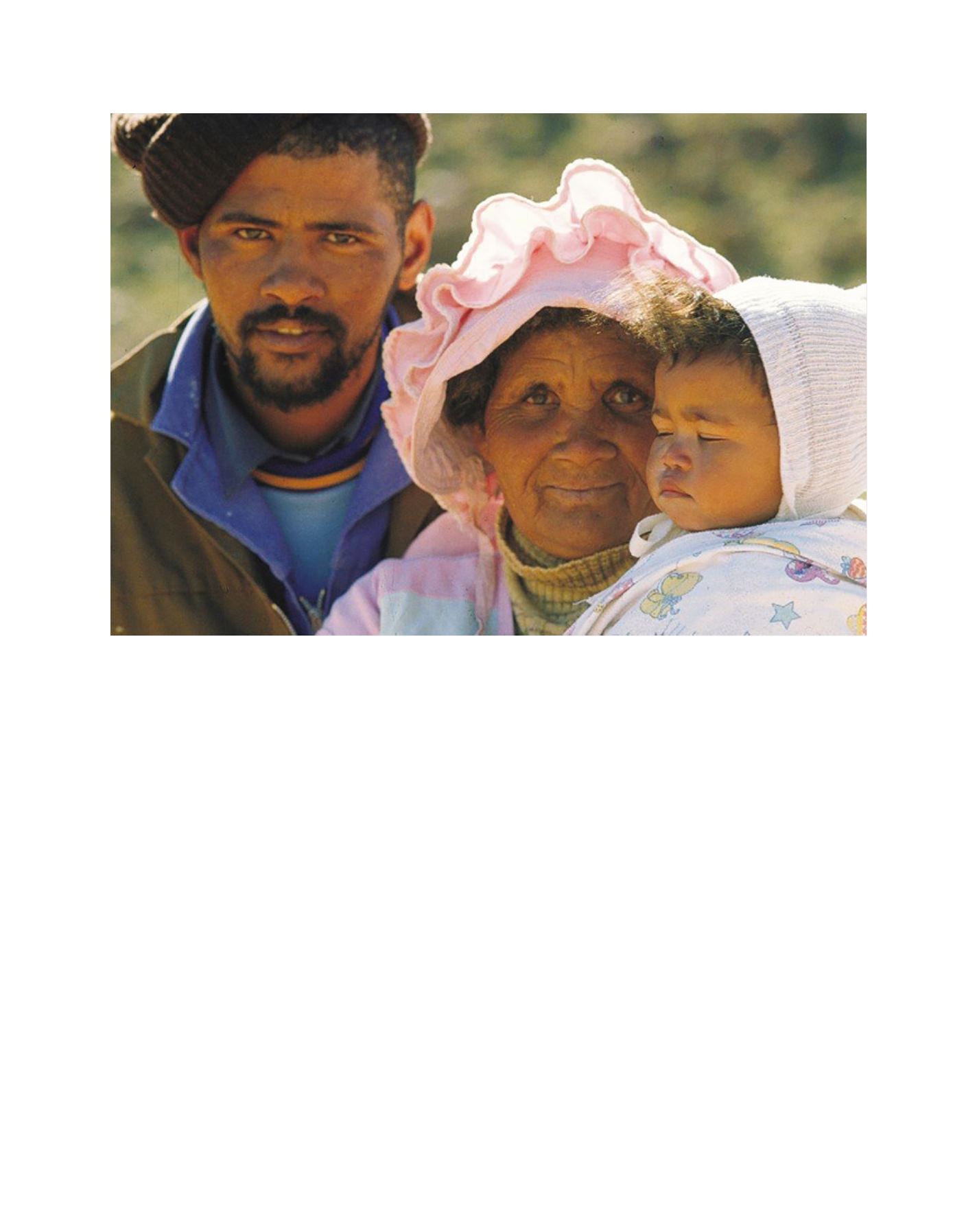
The post-2014 agenda should have a comprehensive view of the family that includes any dependent person, young or old, and considers the role of
fathers and men in general