


 185 / 210

[
] 183
Work, care and family policy in Australia:
a work in progress
Dr Elizabeth Hill, Co-convener, Australian Work and Family Policy Roundtable
E
nsuring
W
ork
-F
amily
B
alance
T
he daily lives of Australian families have funda-
mentally changed over the past two decades, largely
on account of women’s increasing participation in
paid work. Since the International Year of the Family the
participation rate of women aged 25-54 has risen more
than 10 percentage points to 78 per cent.
1
This change
has been largely driven by the participation of mothers
in paid employment, reflecting changing social norms,
enhanced female education outcomes, improved access to
childcare and more flexible work arrangements. Currently
around half of all mothers with a one-year-old child are
employed and almost two thirds of mothers with a young-
est child aged six are working.
2
The increase in maternal
employment has seen a similar increase in the proportion
of couples with dependent children where both parents
are in the labour force, up from 58 per cent in 1994 to
65 per cent in 2007. Single mothers are also increasingly
employed, with participation in paid work rising from 44
to 57 per cent over the past 20 years.
3
Increasing maternal employment has, however, been over-
whelmingly concentrated in part-time work. Australian
women in general have a much higher incidence of part-
time work than men, with three quarters of all part-time jobs
performed by women.
4
Part-time work has become the most
routine strategy used by Australian women with children who
want to combine paid work with childcare, making house-
holds with one full-time worker and one part-time worker the
most common employment arrangement for partnered parents
with school-aged children. More than a third of families fit this
model, up from 28 per cent in 1996. Households supported by
a lone male breadwinner are slowly on the decline (from 32
to 28 per cent), while the proportion of couple-families where
both parents work full-time has remained unchanged for 20
years, accounting for only one fifth of families.
5
Children are not, of course, the only dependents that affect
employment – 12 per cent of Australians have caring respon-
sibilities for people other than children.
6
Among those who are
employed, more than 4 million men and women are responsible
for the care of a person with a disability, chronic illness, frailty
due to old age, or a child under 15 years. This means almost
40 per cent of the Australian workforce has significant caring
responsibilities they must combine with their working lives,
7
making the development of a rational and equitable work and
care regime an urgent issue, essential to Australia’s future well-
being, economic productivity and social inclusion.
Since the International Year of the Family 1994, work,
care and family policy has become a mainstream concern
in the Australian community and an area of substantial
voter interest at the past four federal elections. In the
2013 federal election paid parental leave was a major elec-
tion issue. Childcare policy has also been a priority of the
past three federal governments and is an area targeted for
reform by the current Government. A national disability
care system has also attracted bipartisan support and will
be fully operational by 2016.
Following is a brief assessment of Australian develop-
ments in the three policy areas traditionally highlighted by
the United Nations Secretary-General as providing essen-
tial support for working parents and carers: parental leave,
childcare and flexible working arrangements.
Paid parental leave
In 1994 Australia was one of only a handful of Organisation
for Economic Cooperation and Development (OECD)
countries that did not have a statutory universal paid
parental leave system. In January 2011 a federally funded
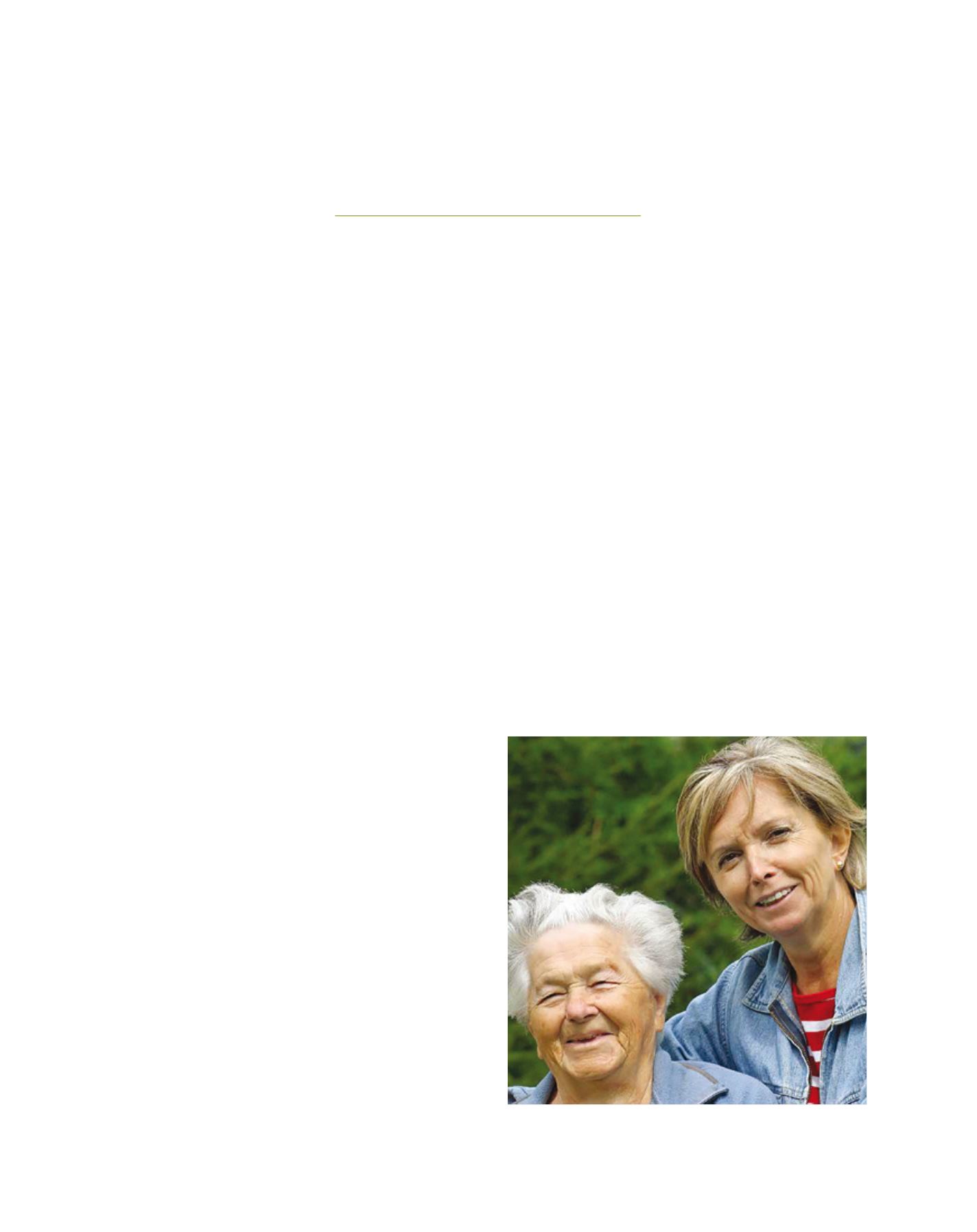
Working carers require job flexibility and respite service to support their
workforce participation
Image: AHRC