


 170 / 210

[
] 168
E
nsuring
W
ork
-F
amily
B
alance
Two measures, intended to reconcile family life with the
working needs of both parents which have had most impact
on local communities, are standardized school hours, and
assistance in creating crèche and out-of-school-hours places,
including the option of having lunch at school.
The standardization of school hours and programmes in
most of the cantons is the result of a concordat signed on
14 June 2007 by the ministers of public education of all 26
cantons. This proposal was put to a popular vote. By April
2009, 10 cantons had agreed to the proposed measure, as a
result of which it became binding on all signatory cantons.
The main provisions were as follows:
• The introduction of two years of infants’ school, starting
at age four, followed by six years of primary education,
then three years of secondary schooling. This means that
all children in Switzerland have the benefit of 11 years of
compulsory education
• Continuous school hours (no blank periods during the
school day)
• The provision of out-of-hours facilities, with lunch served
in the middle of the school day.
The cantons have six years to implement these provisions.
This is a giant step forward in the organization and care of
children in Switzerland, supported by financial subsidies
granted by federal government to encourage the creation of
crèche and out-of-hours facilities.
The example of my own small town, a municipality of 6,000
people situated in the French-speaking part of Switzerland,
speaks volumes. It is true that for many years it had offered
the services of a publicly run crèche and the possibility of
a year of nursery schooling before the start of compulsory
school attendance. In the 1990s, when I was mayor, we
conducted a survey to discover the childcare needs of families
with special reference to the midday break and meal. At that
time, only two families expressed a desire for a facility of this
kind. The younger children started school later and finished
earlier. With no facilities available outside of school hours,
this was a real problem for parents.
Since then, there has been a big change. The ‘HarmoS’
(standardization) policy has led to the creation of two years of
infants’ school, out-of-school-hours facilities and a standard-
ized timetable. All the children go to school and finish at the
same time. If necessary, there are facilities for them to come
to school early in the morning, from 6.30 a.m., have lunch at
school, and stay on at school until 6 p.m.
In 2011, with a federal government subsidy, 60 out-of-school-
hours places were created, catering for 120 different children.
The 60 places for the midday meal are almost always taken.
The hourly rate of payment is calculated on the basis of the
parents’ income and the number of children from the same
family attending:
• for children attending primary school, the highest hourly
rate is SwF6 for one child, SwF4.85 for two children and
SwF4.25 for three children
• the lowest rate is SwF1.30 for one child, SwF1.05 for two
children and SwF0.90 for three children
• for children in nursery school, 80 per cent of these rates
are applied
• the maximum price for the midday meal is SwF9.
In parallel, also with financial assistance from the federal
government, the crèche has expanded its activities. It can now
accommodate 50 different children aged two to four-and-a-half
for full days or half-days, according to need. A nine-bed nursery,
meeting the needs of 24 families, has recently been created on a
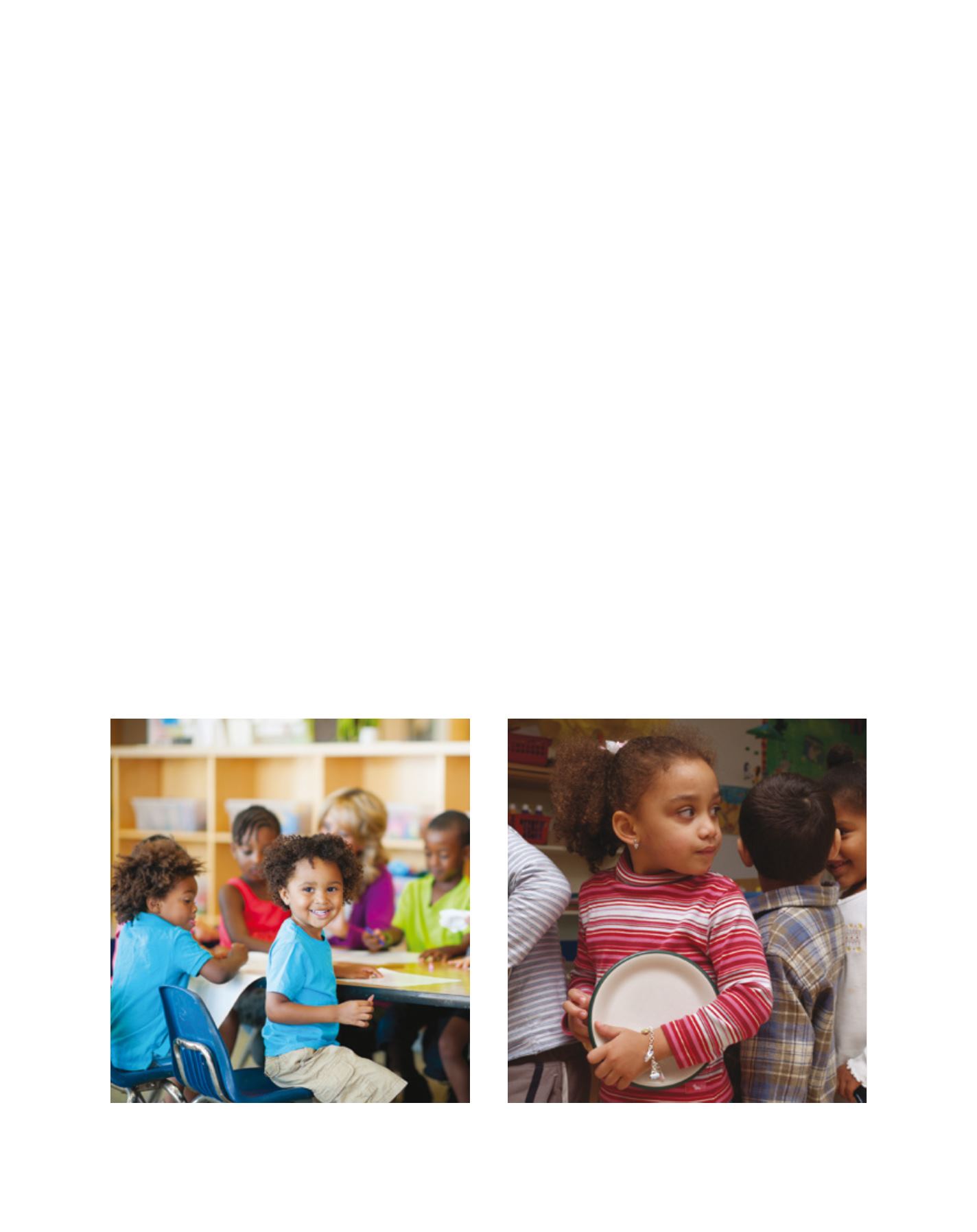
Children drawing at an out-of-school-hours facility: provisions like these are
giant steps in the organization and care of children in Switzerland
Lunch at a crèche: around 40,000 new non-family childcare places have
been created as a result of the federal programme
Image: Christopher Futcher/istockphoto.com
Image: Claude Giger, Basel