


 196 / 210

Lastly, the Government provides individuals and fami-
lies with easy access to Family Life Education programmes
and resources through ‘FamilyMatters!’. This is done by
working with schools, employers, businesses and commu-
nity partners to bring marriage, work-life and parenting
programmes to a broad spectrum of families. These
programmes equip families with the skills and knowledge
to enhance the quality of family life. For example, through
talks and workshops on personal work-life effectiveness,
participants are taught to identify what they value at their
specific life-stage and proactively set aside time to fulfil
these priorities. Participants also learn skills to better
manage their family and work commitments and cope with
work-life challenges.
While we have made significant steps to support families
in their work and family aspirations, challenges remain.
At the level of the family unit, the decline of the extended
family structure and rise of dual-income households creates
a greater need to address care-giving issues. At the organi-
zational level, there is scope to overcome the inherent
barriers to the implementation of work-life programmes.
These barriers include the lack of know-how in terms of
assessing the needs of the organization and the identifica-
tion of relevant programmes, as well as mindset barriers
such as the lack of trust among supervisors in empower-
ing employees to work flexibly. Nationally, more could be
done to align the interests of the different stakeholders to
manage diverse economic and social goals.
The Singapore Government will continue to work with
partners and families to foster a supportive culture and
ecosystem that will help families fulfil their work and
family aspirations.
2014, the biennial Work-Life Excellence Award will again
be given out to recognize employers who implement work-
life as a holistic and effective business strategy that benefits
both the business and the employees.
In addition, the TriCom develops resources to raise and
sustain awareness of work-life strategies and help employ-
ers to apply these strategies. These resources include guide
books such as ‘Energizing Work Culture’, which guides
employers in identifying relevant work-life programmes
based on the profiles and life stages of their employees, as
well as ‘Work @ Home’, which illustrates how employers
can leverage information and communications technology
and implement home-based work for their employees.
The Singapore Government and the TriCom also work
very closely with the Employer Alliance, which is a network
of corporations committed to creating enabling work envi-
ronments to enhance work-life integration. In recent years,
the Employer Alliance has undertaken several key initia-
tives such as an online toolkit on a myriad of work-life
programmes; research on flexible work models; and devel-
opment forums and consultancy clinics to help develop
employers’ capability in assessing their work-life needs and
implementing flexible work arrangements.
In April 2013, the Singapore Government enhanced funding
for flexible work arrangements and introduced the Work-
Life Grant under the WorkPro programme to better support
employers in fostering work-life friendly and more flexible
workplaces. The Work-Life Grant comprises two components:
a developmental grant (up to S$40,000) to help employers
defray the cost of implementing flexible work arrangements;
and a cash incentive (up to S$120,000 over three years) to
sustain higher utilization levels of flexible work arrangements.
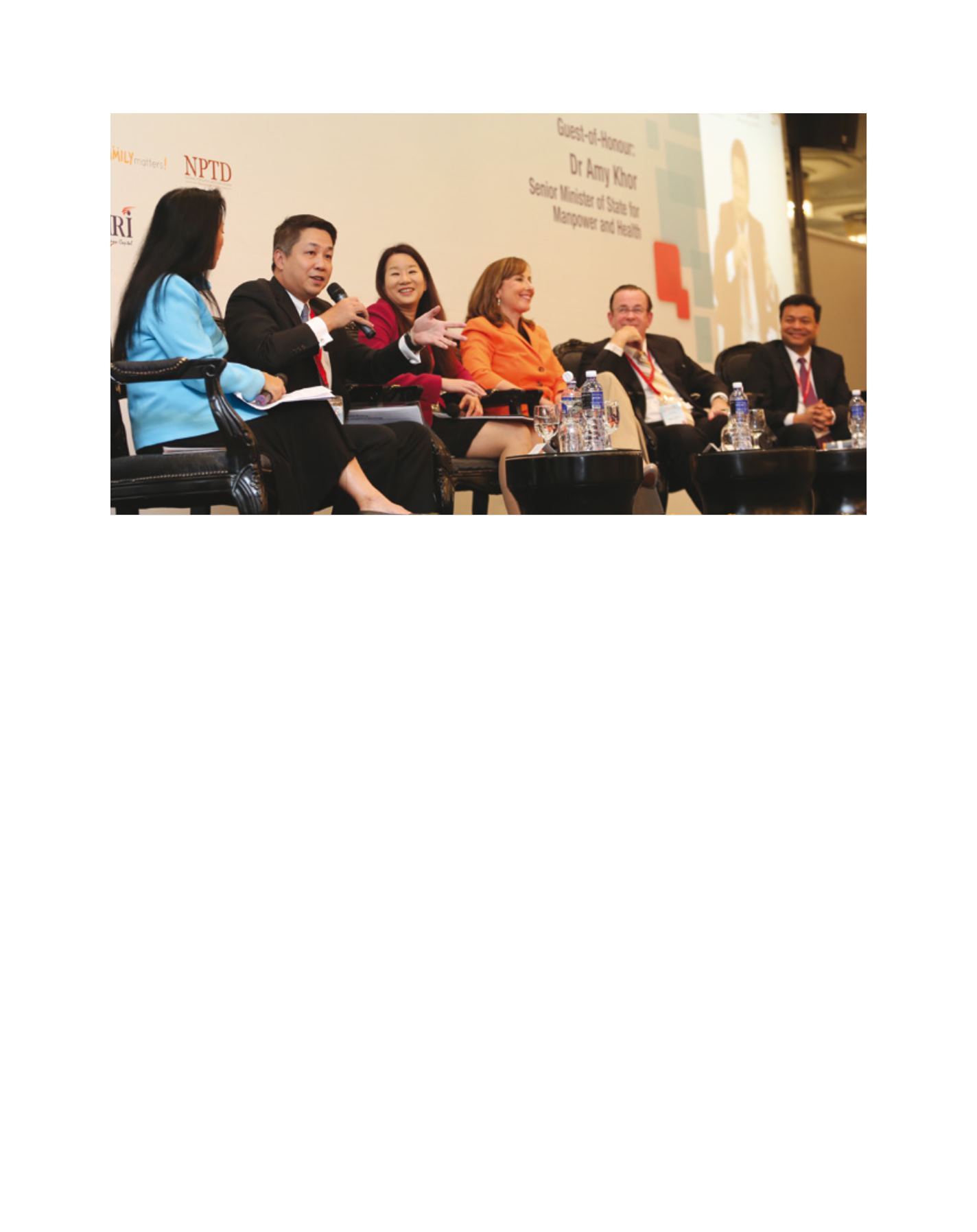
Image: Ministry of Manpower, Singapore
At the annual Work-Life Conference thought leaders share their expertise with employers, human resources practitioners, union officials,
government representatives and international delegates
[
] 194
E
nsuring
W
ork
-F
amily
B
alance