


 199 / 210

[
] 197
E
nsuring
W
ork
-F
amily
B
alance
still performed by women. As for cooking and household
chores, 55.4 per cent of the respondents answered “more work
done by wife” while 26.6 per cent said “mostly wife.” For
childcare responsibilities, 64.8 per cent said “more work done
by wife” while 16 per cent said “mostly wife,” confirming the
reality women are facing in family life.
Creating ‘Career Success Korea’
As it can be inferred from the above discussion, not only has
Korean society experienced a large increase in the demand
for work-family reconciliation over the past 20 years, but the
efforts and determination of the Korean Government to estab-
lish and implement supporting policies have also developed
significantly. The Government now faces the challenges of
identifying the missing links of the past and further improving
its work-family reconciliation policy.
Firstly, it is necessary to remove the visible and invis-
ible obstacles of women’s labour participation so that women
can work without career interruption due to childbirth and
child-rearing. In accordance with this context, President Park
Geun-hye announced on 6 January 2014 that the problem of
career interruption for women is regarded as the top agenda in
her administration’s Three-Year Economic Innovation Plan, and
measures will be devised to correct the situation. Korean society
will have to commit multidimensional efforts to creating a ‘Career
Success Korea’ which enables women to work continuously
without career interruption due to childcare and family respon-
sibilities. In fact, the economic activities of women show large
fluctuations by age group. In particular, women aged 30-44 (a
period mainly devoted to raising children) were found to have
the lowest participation rate in economic activities. More family-
friendly policies are needed to encourage women to use maternity
and parental leaves and to receive childcare service support, in
order to enable them to work without career interruption.
Secondly, efforts are required to reduce the burden of
childcare, which is noted as the largest obstacle in women’s
employment. Childcare support demands a comprehensive
support system according to children’s age from infancy to
primary school. Therefore, after-school childcare services
should be further expanded to support working parents, coor-
dinating with the work-life balance policy scheme.
Thirdly, there should also be efforts within the family to
share domestic work and childcare responsibilities more equally
between men and women. Recently, it has become important to
balance work and family time as the value of family is increas-
ingly emphasized. Such changes have led to greater policy
interest in enabling men and women to reconcile their work and
family life in Korea, demonstrated in the development of the
work-family reconciliation policy. Korea should lessen the risks
of women experiencing difficulties in balancing work and family
life and postponing childbirth in fear of career interruption. Such
change is aligned with the recent emphasis on equal parenthood
in Korean society. Korea should make every effort to support
working parents, especially by employing more parental leaves,
so that child-rearing and family responsibilities as well as work
responsibilities will apply equally to men and women.
Lastly, changes are called for in the work environment and
culture. In particular, there is a need to improve the culture of long
working hours that is deeply rooted in Korean society. In 2010
the Economic and Social Development Commission, consisting
of representatives from labour, management and the Government,
announced the Tripartite Agreement to Improve the Practice of
LongWorking Hours. This agreement upholds a plan to gradually
reduce yearly work hours and to expand job creation and diversi-
fication. As family structures and society needs constantly change,
corporate work culture changes are imperative.
Gender division of labour in the family
A survey of 800 Koreans (percentage in brackets)
Source: Hong, et al (2009)
Mostly husband More work by husband
Equally share More work by wife
Mostly wife
Cooking/domestic work
3 (0.4)
37 (4.6)
104 (13.0)
443 (55.4)
213 (26.6)
Childcare
4 (0.5)
13 (1.6)
137 (17.1)
518 (64.8)
128 (16.0)
0
400
200
600
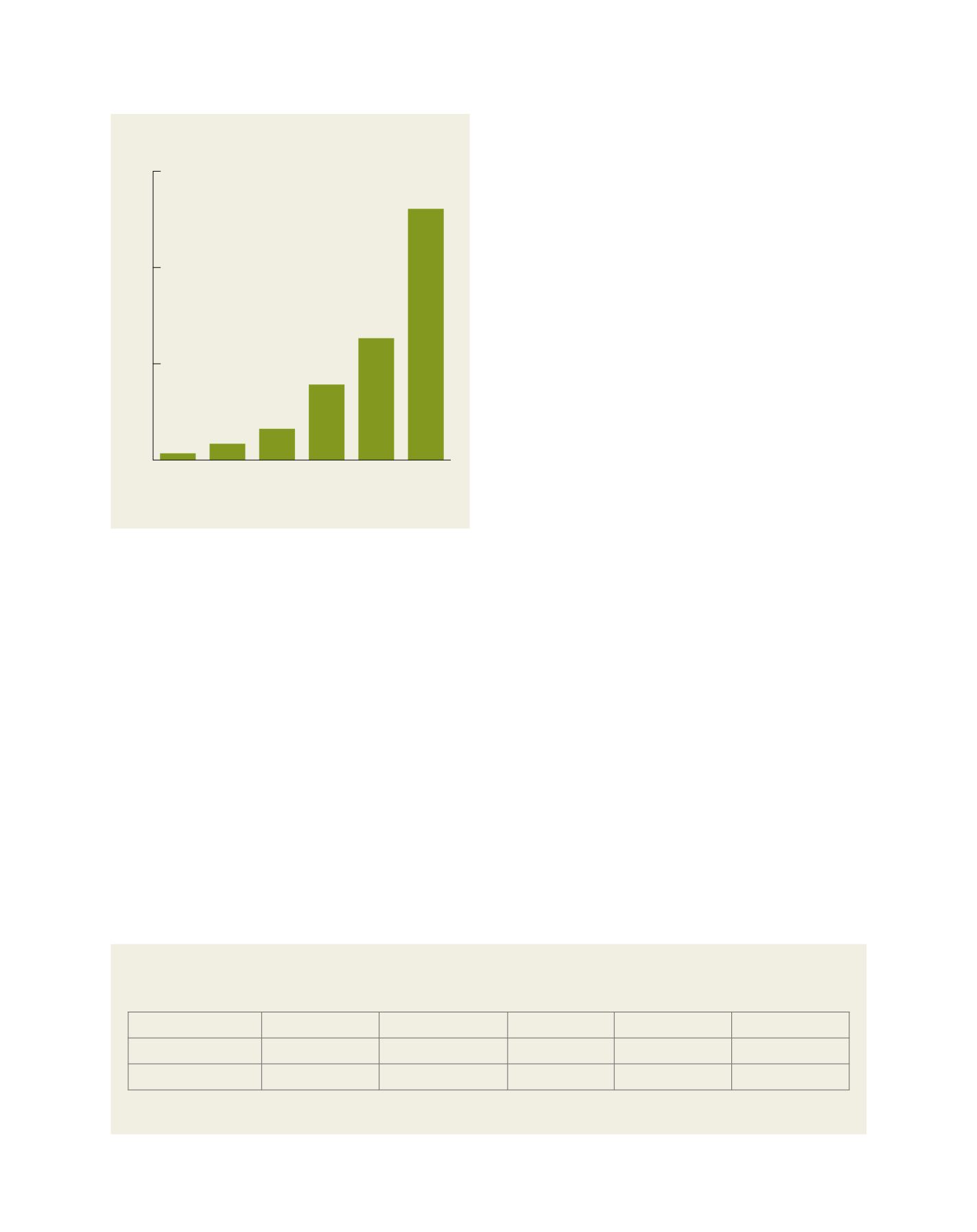
2008
14
2009
34
2010
65
2011
157
2012
253
2013
522
Family-friendly company certification
Source: Ministry of Gender Equality and Family