


 78 / 210

[
] 76
A
dvancing
S
ocial
I
ntegration
and
I
ntergenerational
S
olidarity
Violence was launched with four ‘first-aid sessions’
intended for batterers, so that they would have more under-
standing about anger management and develop non-violent
communication patterns.
Objectives of the BIP include educating abusers on their
accountability by changing batterers’ beliefs, helping them
to find alternatives to abusive behaviours and enhancing
local awareness, as well as accumulating clinical knowl-
edge in handling partner battering. The core contents of
BIP groups are covered in 12 weekly two-hour sessions
including anger management, violence responsibility
enhancement, development of respectful trust and so on.
Partnerships are very important in the identification
and referral of families suffering from violence. Various
have been served by our befrienders since the start of the
Rainbow Pioneers befriender support project for divorced
women and single mothers.
Our specialized services for families suffering from
violence started in 1995. A territory-wide pilot project, the
Batterer Intervention Programme (BIP), was conducted
from 1995 to 2008, enabling batterers to join a 12-session
therapeutic group. Due to the proven effectiveness of the
programme, HKFWS is one of the few recognized organi-
zations on the list of court orders to run anti-violence
programmes since 2008. From 2009 to 2012, BIP groups
were conducted in Integrated Family Service Centers in
order to end violence in intimate partner relationships. In
2013, the Educational Programme on Stopping Domestic
HKFWS anti-violence intervention strategies
Source: HKFWS
Primary level
• Universal preventative intervention for the general public
• Anti-violence education/campaign, promotional and publicity programmes; ambassador programmes; a volunteer
programme to promote peace and to reach ‘hidden’ batterers
Secondary level
• Selective preventive intervention to families or individuals at risk
• Outreach work by large scale outreach visits to community ‘gatekeepers’ to detect high-risk families; district-based sharing
dinners for potential participants of the BIP groups to raise their awareness of domestic violence
Tertiary level
• Indicative preventive intervention to treat individuals with violent behaviours to prevent escalation of violence
• BIP groups using cognitive-behavioural therapy for male/female batterers. BIP Mutual Aid Group for BIP completers
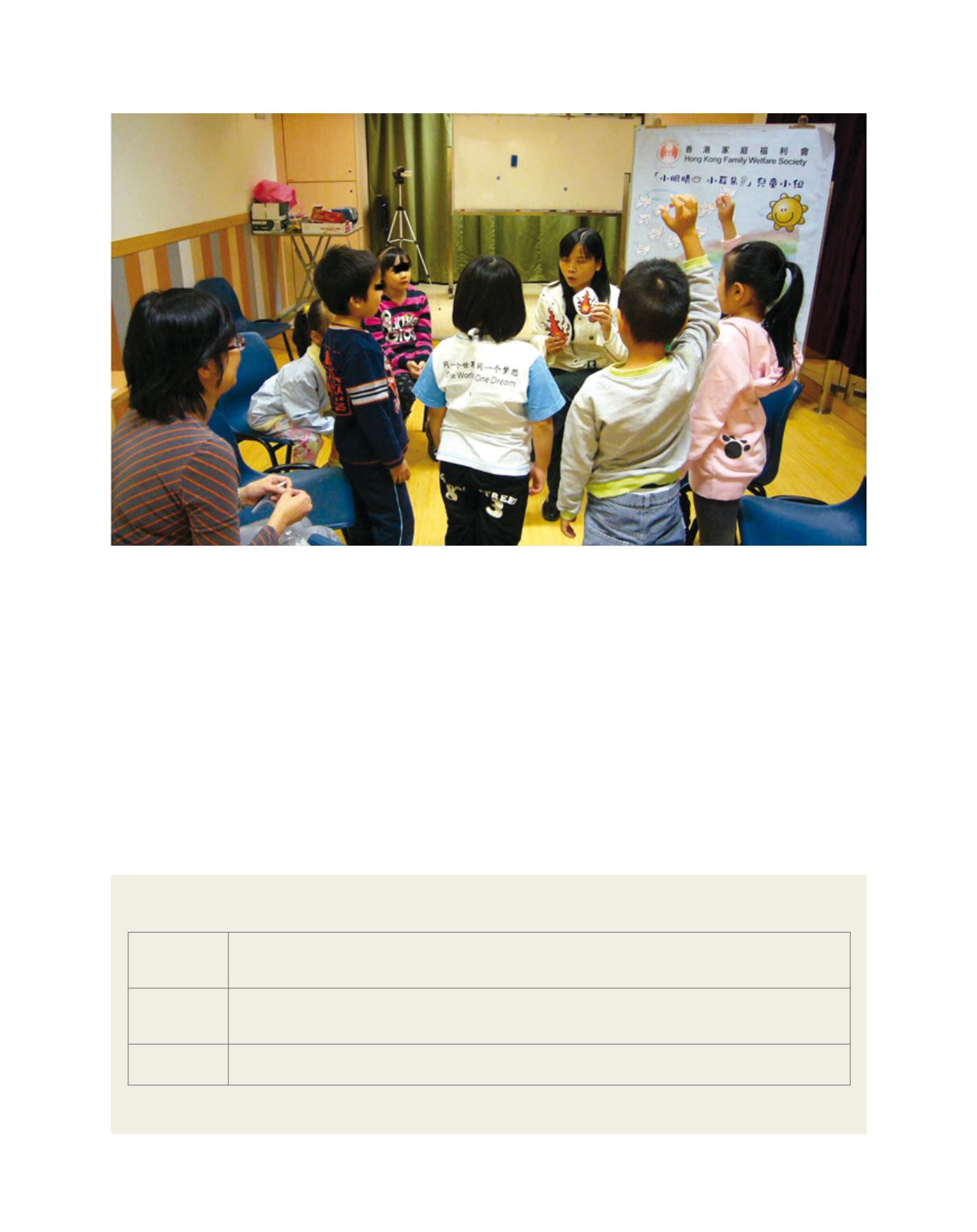
The HKFWS project ‘Little Eyes, Little Ears’ provides guidance on time out and anger management for at-risk children
Image: HKFWS