


 99 / 210

[
] 97
Can or will the family succeed?
A family-centric approach to poverty alleviation
Dr Catherine Bernard, Founder Director, Service and Research Institute on Family and Children
C
onfronting
F
amily
P
overty
I
n societies where male domination is far more prevalent
than gender equality, one would expect the implications
of ‘male power’ to be highly recognized. What we find
instead is that men are rarely mentioned in programmes or
policy documentation with regard to poverty, family break-
down, violence against women, women’s empowerment or
families mired in poverty.
Perhaps it feels more comfortable to use euphemisms such
as ‘feminization of poverty’, ‘deprived children’, ‘marginalized
communities’, ‘below poverty line’ and the like when refer-
ring to the poor. No wonder the impact of poverty on family,
gender equality and child protection is understood vaguely,
and that so much is left to the imaginations of policymakers.
The family is a social unit and family breakdowns have
serious impacts and consequences on each member of that
unit. This basic fact is the reason why poverty must be treated
as a family issue. I have previously identified family break-
down as the womb of social ills,
1
of which poverty is primary
and serves as an incubator for other social ills. These social
ills are not isolated. They have ramifications for present and
future generations. Hence family-centric initiatives necessarily
involve an integrated approach and long-term commitment
to marriage along with concern for the well-being, secu-
rity and education of children. Poverty, on the other hand,
compels families to remain embedded in immediate short-
term concerns because their focus tends to be mere ‘survival’.
It needs to be admitted that society has yet to realize and come
to terms with the fact that marriage and family stability serve
as long-term foundations for eradicating poverty, and form
the basic social protection floor for humankind.
Family life in conditions of poverty is unpredictable. It is
prone to serious vulnerabilities and living itself is a risk. For
the poor, there is no such thing as ‘tomorrow’. Their lives are
subject to different forms of uncertainties and threats, such
as forced evacuation, compelled migration in search of work,
displacement or refugee status because of natural disasters,
water scarcity, unemployment, addictions, hunger, violence,
abuse, seeing homes go up in flames or vanish under water
because factories have to be built or dams made, and many
more experiences. What happens to the children in these
families is of least or no importance in such operations.
Poverty has manifold corrosive effects on a family’s health,
developmental stages and mental capacities and in the physi-
Image: SERFAC
Image: SERFAC
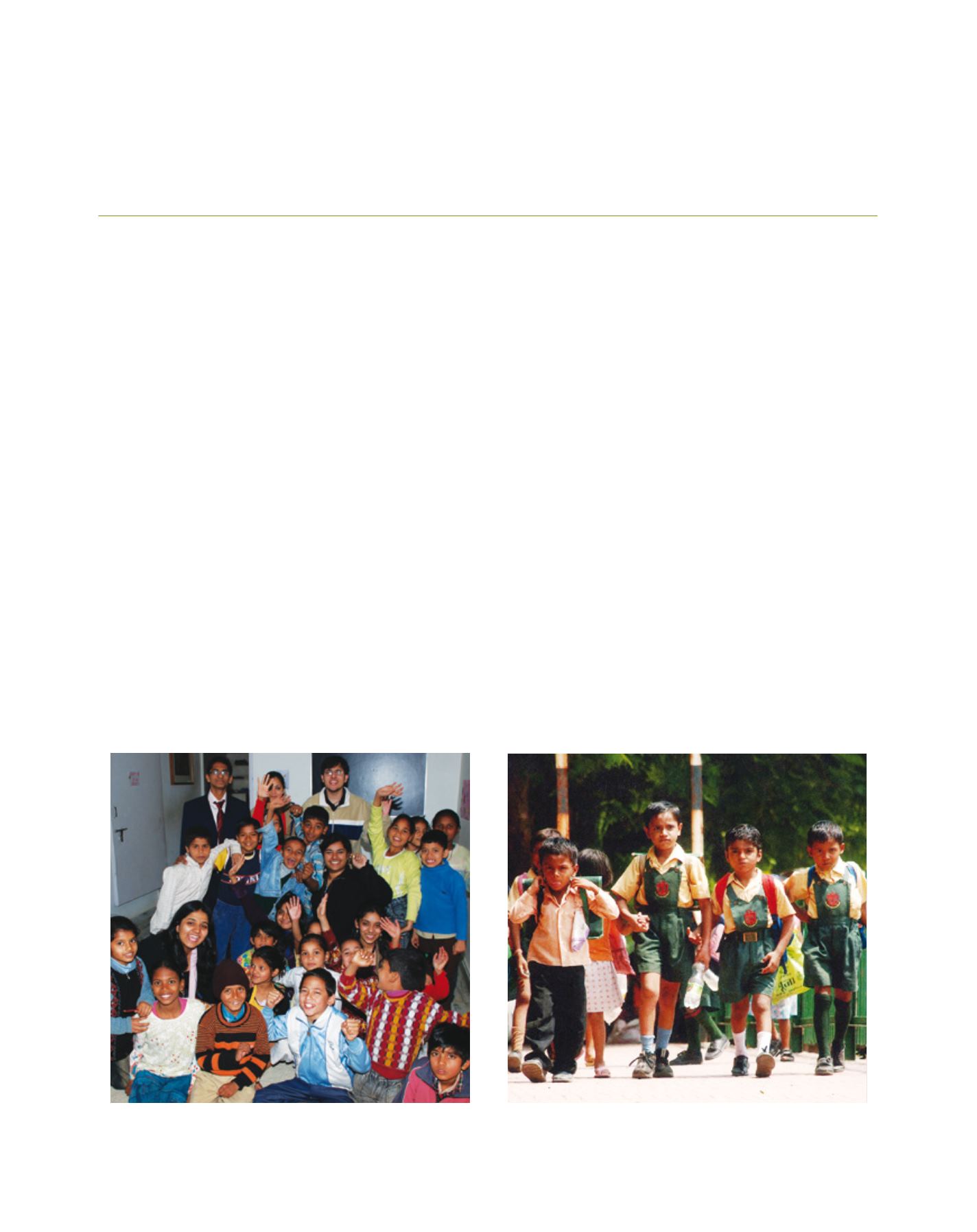
The family is the foundation from which poverty can be minimized and
eliminated, and should be part of any developmental process
Family poverty often gives children responsibilities that inhibit their academic
performance, with many lagging behind or dropping out of school